

Earlier this month while in Qatar, President William Ruto, accompanied by a delegation with Labour Minister Cabinet Secretary Dr Alfred Mutua, addressed both Kenyans and high-level foreign investors in Doha, and explained the power load-shedding that has been taking place in Kenya.
“We have 2,300 megawatts for the entire country,” the president said, with a chuckle in Doha. “So, when we need 1,000 megawatts in one data centre, we have to shut down some other part of the country for a few hours, especially in the evening yet we’ll need 5,000 megawatts (in Kenya’s drive for full industrialization).”
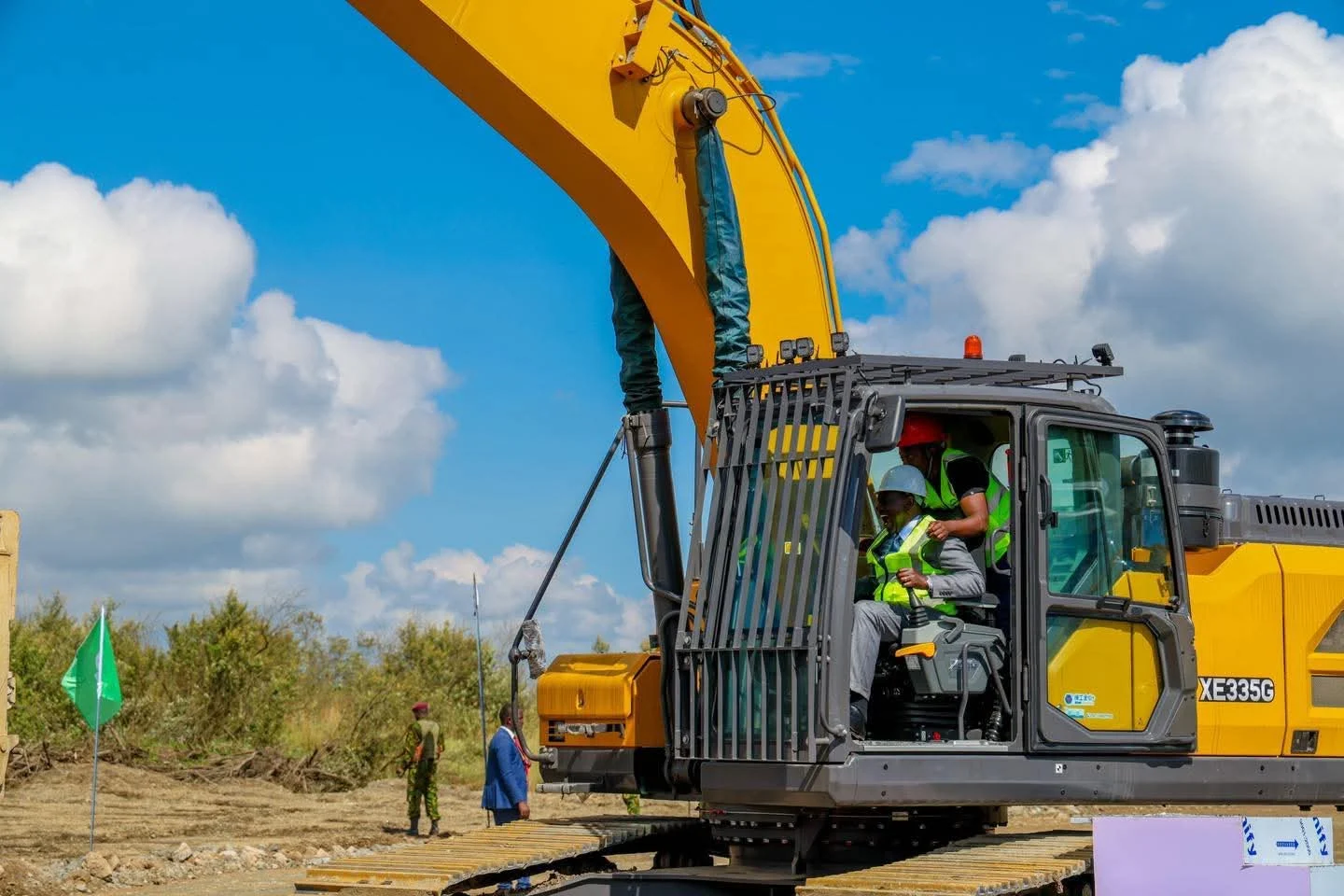
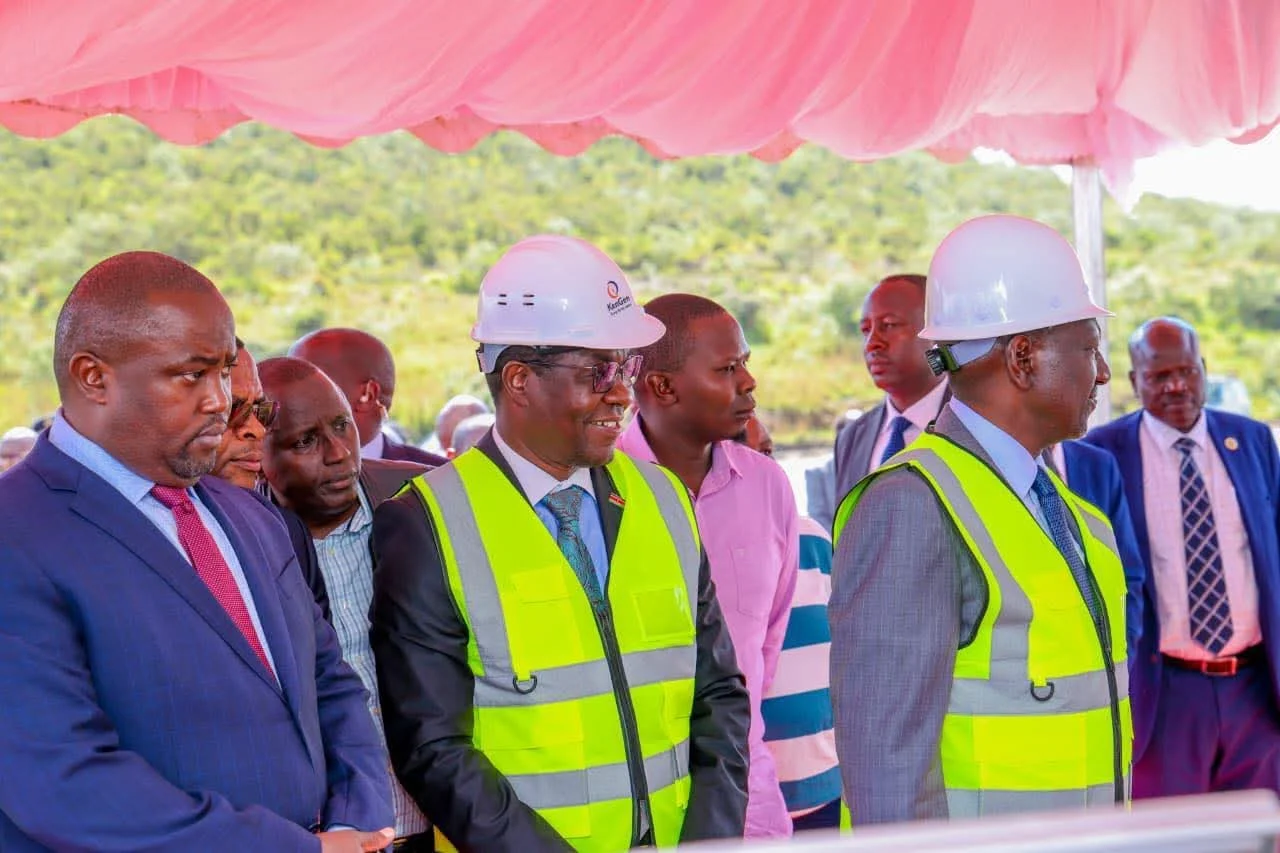
And, on Monday, in keeping with that ambition, the president was in Suswa, alongside Energy CS Opiyo Wandanyi, for the groundbreaking of the 120-megawatt engineering, procurement and construction project by the Suswa Solar Park corporation, whose cost investment is about $ 200 million, lighting the way for other consortia to invest in this kind of projects that provide clean and affordable energy, whose carbon credits can be harvested, across the continent.
That money is a swimming pool in a dam because President Ruto repeated that the State is “seeking investments of about 10 to 12 billion dollars so that we can have the capacity we need” to make acute power shortages a thing of the past and “provide for all our domestic and industrial needs” as a nation, but has expressed confidence that just as with the affordable housing projects, the investment sought can be found.
Kenya has taken on a bold green growth initiative that aims to achieve 100 per cent renewable energy by 2030, President William Ruto has said in the past,;and Suswa is a landmark project, whose goal is the universal 100 % transition to clean energy.
Ruto farther said this comprehensive plan also includes promoting green manufacturing, sustainable agriculture, eco-friendly urbanisation, and green transportation. Currently, Kenya’s grid is 92% renewable, but the Kenya Power & Lighting Company (KPLC) has confirmed that “our capacity is 3,158 megawatts at peak hours,” far less than is needed to satisfy domestic consumers and ramp up electric efficiency with industrial producers.
Nevertheless, the Head of State said that in order for Kenya and the rest of the continent to achieve green industrialization based on renewables, investment, and financing are needed. Energy production and access hold back the rise of the continent; on the other hand, Africa’s renewable energy potential is 50 times the global anticipated electricity demand in 2040.
President Ruto has highlighted the continent’s significant potential for renewable energy, which he believes can support its development goals: “Africa is rich in solar, wind, geothermal, and hydro resources.” But KenGen says that sometimes, especially after sunset, the grid gets overwhelmed, and there is a drop in wind supply due to pressure exerted by the daily energy demands of over ten million customers.
In Doha, president Ruto spoke of the need for Kenya to build 50 mega dams like the High Grand Fort and Soyin-Koru dams, as a crucial first step to power the country towards industrialization. Of particular note is the Grand Inga dam, which could potentially generate up to 40 per cent of the electricity needed on the continent. Suswa is a logical place to set up at for Kenya’s needs.
This underscores the immense scale of Africa’s renewable energy potential as a key driver of sustainable development and Kenya is a potential leader in the renewable energy sector. The continent boasts 60 per cent of the world’s best solar resources. This makes it an ideal location for solar power. In addition, 80% of the new power generation capacity is renewable.
“Africa accounts for over 40% of global reserves of cobalt, manganese, and platinum – key minerals for batteries and hydrogen technologies,” President Ruto once pointed out at the African Union.
President Ruto has often expressed optimism about the continent’s potential to become a global leader in sustainable industrialization. “We, therefore, have an opportunity to lead the world and show that we can industrialise and prosper – and achieve this in a low carbon and sustainable manner, and make this century, an African Century.”
Kenya itself has clean energy resources and the potential to leapfrog the dirty energy practices of the past. By harnessing these resources, we can achieve economic growth while minimising our carbon footprint on the planet. As part of his party’s 2030 Manifesto, Ruto has emphasised the importance of Africa’s role in promoting sustainable equitable economic development, despite being among least responsible for climate change in the world – which is why we could reap big from carbon credits.
“Although we Africans are least responsible for climate change we are the most at risk; we can lead the way in ensuring green growth as a critical pathway to a sustainable future and economic prosperity, decoupling economic development from carbon and the use of polluting energy,” President Ruto said.
Wangari Muchiri, Africa Director for the Global Wind Energy Council says that by prioritizing renewable energy and investing in green growth, Kenya is positioning itself as a leader in the global transition to a more sustainable, low-carbon future. “This will be a great example for other countries in the region and will make Kenyan products more attractive to external markets such as the EU. We look forward to seeing wind energy, which already provides 15 per cent of Kenya’s energy, is a key pillar in the transition to 100 per cent renewable energy.” Muchiri said.
Mohamed Adow, Climate Justice Advocate and Director of Energy and climate think-tank, Power Shift Africa said that “Africa is well placed to take advantage of this moment considering it has more wind and solar energy resources than any other continent on earth. But our leaders need to take a Pan-African approach and work together if we’re going to capitalize on this opportunity.”
Africa suffers disproportionately from the impacts of climate change, and cannot afford to be non-committal on climate action.
Landry Ninteretse, regional director at 350 Africa, a grassroots climate change advocacy organization has said the rallying call to our African leaders to prioritize the transition to renewable energy on the continent is laudable.
Africa suffers disproportionately from the impacts of climate change, and cannot afford to be non-committal on climate action. There must be urgent, concerted efforts to phase out fossil fuels, including gas, and build sustainable, community-centred renewable energy systems, and the Suswa Solar Park is a light swathing away the Dark Ages of dirty energies.
“However, African leaders cannot claim to champion the energy transition while fronting fossil gas as part of the solution and making plans for its expansion,” Ninteretse says. “Leading the way on green growth means accelerating the just energy transition that is indispensable in radically transforming the continent, socially, economically, and ecologically.”
Suswa Solar Park’s groundbreaking may just be that first small step to saying “sayonara” to the load-shedding, after sunset, in some swathes of the country.








Leave a comment