

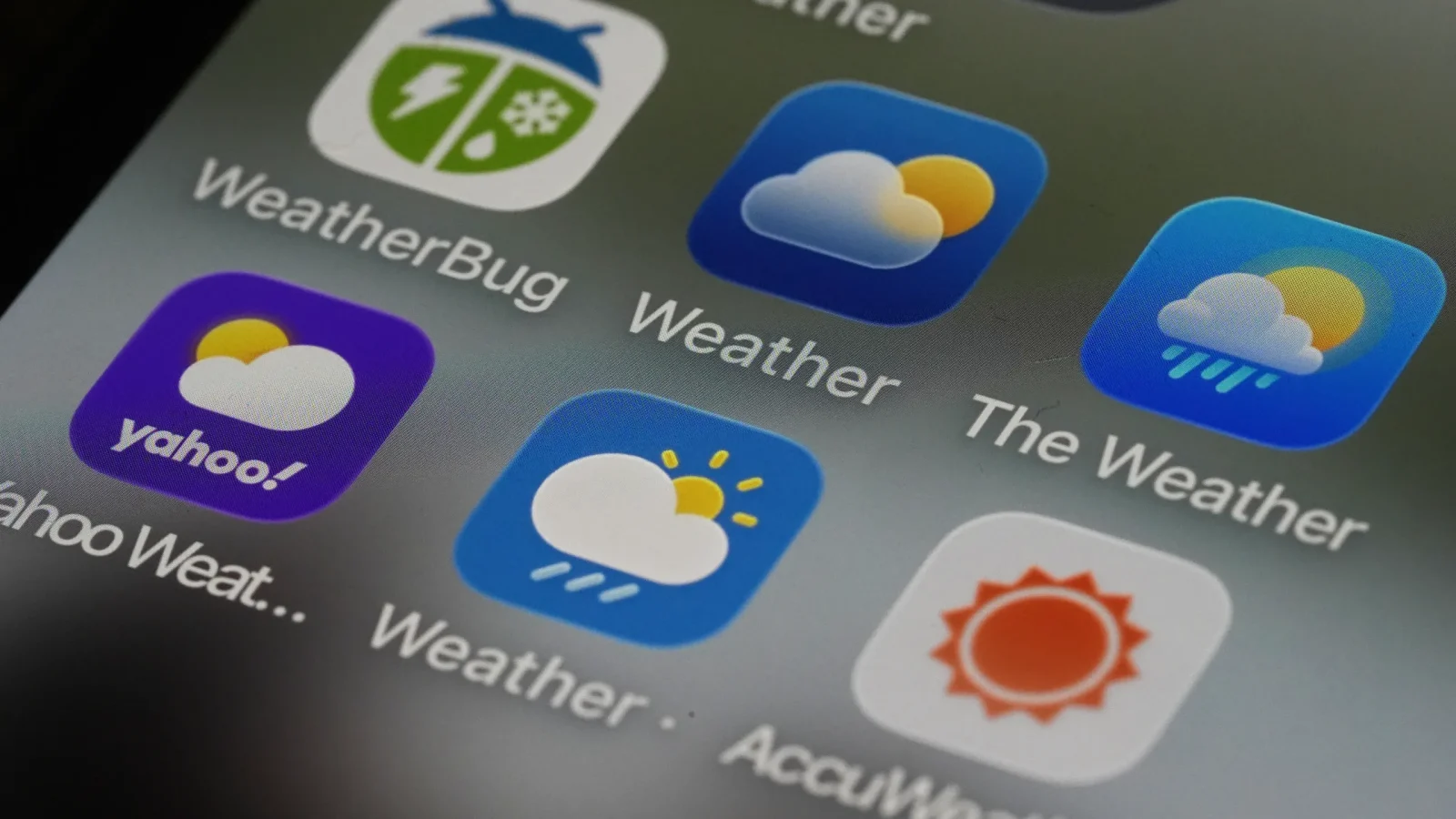
You glance at your phone before stepping out: one app promises sunshine, another warns of showers by lunchtime. A third hedges its bets with “variable cloud” or prettier say, ‘blue skies’ and ‘mild temperatures’. Yet the predictions often clash.
The discrepancies are not primarily a failure of science but a reflection of how modern forecasting actually works.
Weather forecasting has come a long way since our ancestors scanned the skies for shapes of the moon or watched the behaviour of animals. They said, louder and more frequent croaking from frogs signals incoming rain, and when cattle graze together or lie down in groups in a field, it indicates a storm is imminent. That is now gone, per se.
Today, the process is dominated by vast computational power and the laws of physics – but it remains an imperfect science grappling with the atmosphere’s fundamental unpredictability. Curious? Let’s see.
From folklore to supercomputers
Modern forecasts rest on numerical weather prediction models: sophisticated computer simulations that treat the atmosphere like a giant, ever-shifting fluid. These models divide the planet into thousands of small sections. You can think of them as virtual mini-Earths, which feed in real-time observations from satellites, weather stations, buoys and aircraft, then solve complex equations describing how temperature, pressure, moisture and wind interact.
As Météo-France, the French national meteorological service, explains, the models incorporate fundamental physical principles:
“These models are powered by collected weather data and by the physical laws that scientists have described. For example, we know cold air is heavier than warm air, so it tends to sink, while warm air rises. We also know what conditions turn a cloud into rain or hail. All of this knowledge is built into the model, allowing it to predict how a given situation will develop.”
The computing power required is immense. In 2021, Météo-France launched two new supercomputers, Belenos and Taranis, capable of a combined 21.48 petaflops – that is, more than 21 million billion operations per second so the virtual atmosphere can evolve forward in more accurate time.
“Météo France uses supercomputers whose power has increased by a factor of 10 million in 30 years. The latest generation of these giant machines, bundles of cables and steel, was launched in 2021. They can perform up to 21.48 million billion operations per second.”
Many major forecasting centres, from government agencies such as the Kenya Meteorological Department to private providers, run their own models or ensembles of models.
The sources of disagreement
Despite the shared foundation in physics, forecasts diverge for several practical reasons.
First, the atmosphere is chaotic. Small differences in initial conditions or how a model handles sub-grid processes—such as thunderstorm formation—can amplify over time.
Second, as said, modelling choices vary. Different organisations run different models, or ensembles of models, with varying resolutions, physics parameterisations and data assimilation techniques. Some blend multiple sources; others lean heavily on one. Increasingly, artificial intelligence is being layered in to refine outputs or spot patterns humans might miss.
Then comes the final, very human step. Some providers push out raw model output with minimal intervention to move quickly and keep costs down. Others insist on meteorologists reviewing and adjusting the guidance, especially for high-impact events. That human oversight can make a meaningful difference, yet it is under pressure in an era of cost-cutting and instant digital delivery.
The result? A marketplace of forecasts. Consumers see the differences every time they switch between apps backed by different providers. For most daily decisions, the variation is minor.
Yet the democratization of weather information through smartphones has raised public expectations for perfection.
Accurate predictions help save lives, protect property, and underpin multibillion-dollar decisions in agriculture, energy, aviation, and retail. But the same advances that have improved forecasts have also multiplied the sources of variation that people see on their phones.









Leave a comment