

In recent days, hundreds of Burundians have sought travel documents from their embassy in Nairobi amid fears of a government crackdown on foreign-owned small businesses. The Kenyan government announced a 90-day window for undocumented East Africans to regularise their status while insisting that xenophobia, harassment and violence will not be tolerated.
The immediate dispute is familiar: work permits, business licences, immigration rules and competition for increasingly scarce economic opportunities.
But the anxiety surrounding it reveals something deeper. It shows how quickly economic frustration can become a question of identity — and how easily an entire community can be made to feel that its right to belong is conditional.
As Kenya prepares to mark the International Day of Democracy on Sept. 15, that should prompt a more uncomfortable question: What does democracy mean to the person who is afraid that tomorrow they may no longer be welcome?
For Kenya’s LGBTIQ+ community, this is not an abstract question. It is the feeling of watching one’s identity debated in political spaces while one’s humanity disappears from the conversation. It is being reduced to a label before being recognised as a neighbour, worker, voter, professional, parent, friend or fellow human being.
The experiences of LGBTIQ+ Kenyans, migrants, refugees and foreign traders are not identical. Their histories, legal circumstances and vulnerabilities differ profoundly. But there is a common danger in the politics of exclusion: the reduction of complicated national problems to the presence of a particular group of people.
When jobs are scarce, blame the foreigner. When businesses struggle, blame the migrant. When society is uncomfortable with difference, blame the queer person. When public services fail, find another outsider to carry the burden.
This is an old political temptation: find a visible minority and make it responsible for problems that are far more complicated than the people being blamed.
Kenya’s economic frustrations are real. Small traders are struggling. Young people are looking for work. The cost of living remains a source of anxiety. Local entrepreneurs deserve fair opportunities, and immigration laws must be respected.
But enforcing immigration and labour regulations is not the same as creating an atmosphere in which an entire category of people feels threatened.
A government can enforce the law without stripping people of their dignity. It can regulate businesses without encouraging hostility toward the people who operate them. It can prioritise opportunities for citizens without turning foreigners into convenient targets of public anger.
That distinction is fundamental to democracy. Kenya’s Constitution places equality, human dignity, social justice, inclusiveness and human rights at the centre of the republic. Article 27 provides for equality before the law and equal protection and benefit of the law.
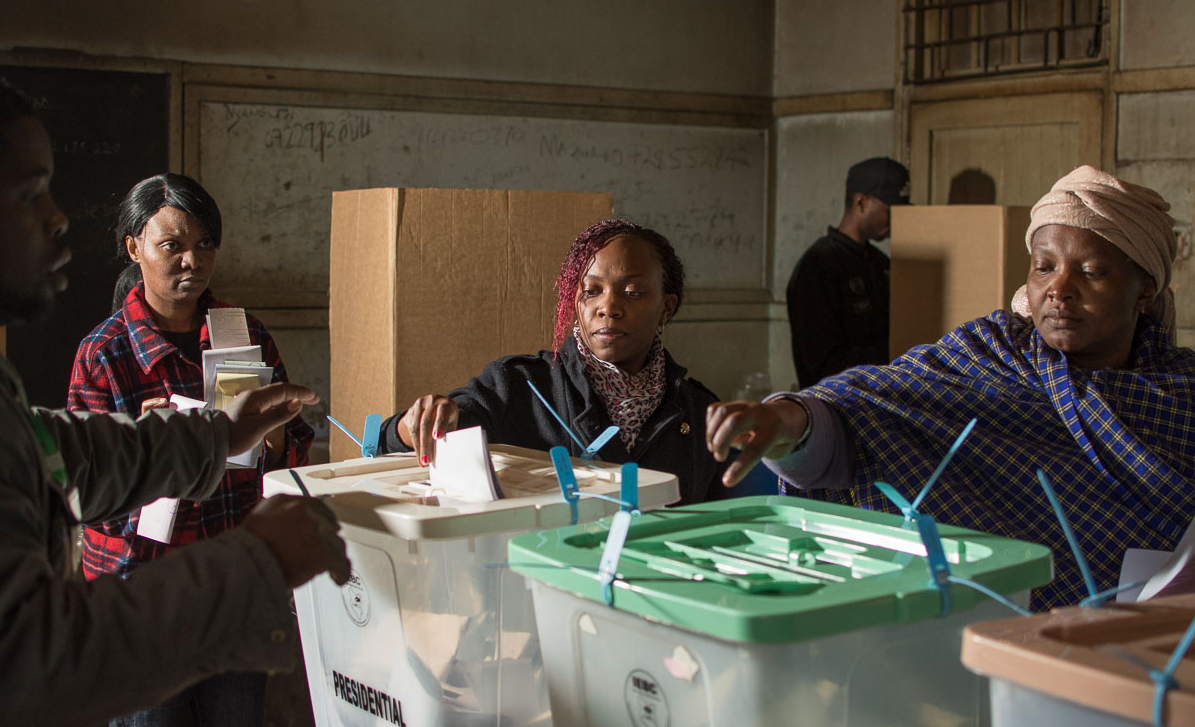
Democracy, therefore, cannot simply mean the right to vote. Voting matters. Elections matter. Institutions matter. But democracy does not end when the ballot box closes. Democracy is also what happens to the person who walks into a government office seeking documentation.
It is what happens when a migrant reports a crime. It is whether a refugee can seek essential services without fear. It is whether a small trader can conduct business without being harassed because of nationality.
And it is whether an LGBTIQ+ Kenyan can participate in public life without being reduced to a political talking point.
Ultimately, democracy is tested by whether the state treats unpopular people with the same seriousness with which it treats the powerful.
This is why the idea behind the “Queering the Ballot” campaign deserves to be considered beyond the LGBTIQ+ rights movement. Its central proposition — that democracy is incomplete when some people are left behind — speaks to Kenya’s wider democratic project.
Marginalisation rarely remains neatly contained. The language used against one minority can become acceptable when directed at another. The machinery of exclusion does not always care about the identity of its next target.
Today, it may be the foreign trader. Tomorrow, the refugee. Another day, an informal worker, a person with a disability, an ethnic or religious minority, or an LGBTIQ+ Kenyan.
That is why communities that have experienced exclusion should be among the first to recognise it when it happens elsewhere.
There is also a lesson here for the rest of us: we should resist the seductive simplicity of blaming ordinary people for structural problems.
The Burundian trader selling clothes in Nairobi did not create Kenya’s unemployment crisis. The refugee running a small business did not design the country’s tax system. The migrant worker did not determine the cost of living. Nor should an LGBTIQ+ Kenyan be made responsible for social anxieties that politicians and communities have failed to resolve.
Citizens have legitimate grievances. But legitimate grievances do not require vulnerable people to become scapegoats. Kenya’s political leaders therefore have a responsibility to choose their language carefully.
Words matter because political rhetoric does not remain at the podium. It travels into markets, estates, workplaces and social media. It can turn suspicion into harassment and, in the worst circumstances, harassment into violence.
Government has a duty to enforce the law. It also has a duty to ensure that enforcement is lawful, proportionate and respectful of human rights. Civil society has a responsibility, too. Organisations fighting for LGBTIQ+ rights should not regard solidarity with migrants, refugees and other marginalised communities as a distraction from their own struggle. It is the opposite.
Solidarity strengthens the democratic principle that rights are not privileges reserved for the popular, the powerful or the politically convenient. And ordinary Kenyans have a choice.
We can choose to believe that dignity is indivisible. Or we can accept a society in which the security and rights of each group depend on whether the majority happens to approve of who they are. The latter is a dangerous road.
Democracy is not tested by how we treat people who look, speak and live like the majority. It is tested by what we do with the rights of people whose presence makes us uncomfortable.
As we mark the International Day of Democracy, perhaps that should be our measure. Not simply how many people vote. Not simply how many institutions we have. Not simply how loudly we proclaim our commitment to constitutionalism.
But whether the person at the margins can look at the country around them and honestly say: I belong here. My dignity matters here. The law will protect me here.
A democracy that cannot offer that assurance to everyone is unfinished. And a country that asks some of its people to live permanently on the edge of belonging cannot honestly claim to have built a democracy for all.

![A packed Kasarani Stadium during the World Athletics Under-18 Championships in 2017. [Photo/ World Athletics]](https://businesstoday.co.ke/wp-content/uploads/2021/10/kenyas-150x150.jpg)











Leave a comment