BUSINESS

Skoot’s Smart Tuk-Tuk Promises to Cut Fuel Costs by 30%

Share
With rising fuel prices and growing pressure to cut emissions, the electric tuk-tuk could offer a timely alternative for drivers trying to protect their margins.
With rising fuel prices and growing pressure to cut emissions, Skoot's electric tuk-tuk could offer a timely alternative for drivers trying to protect their margins.
Share

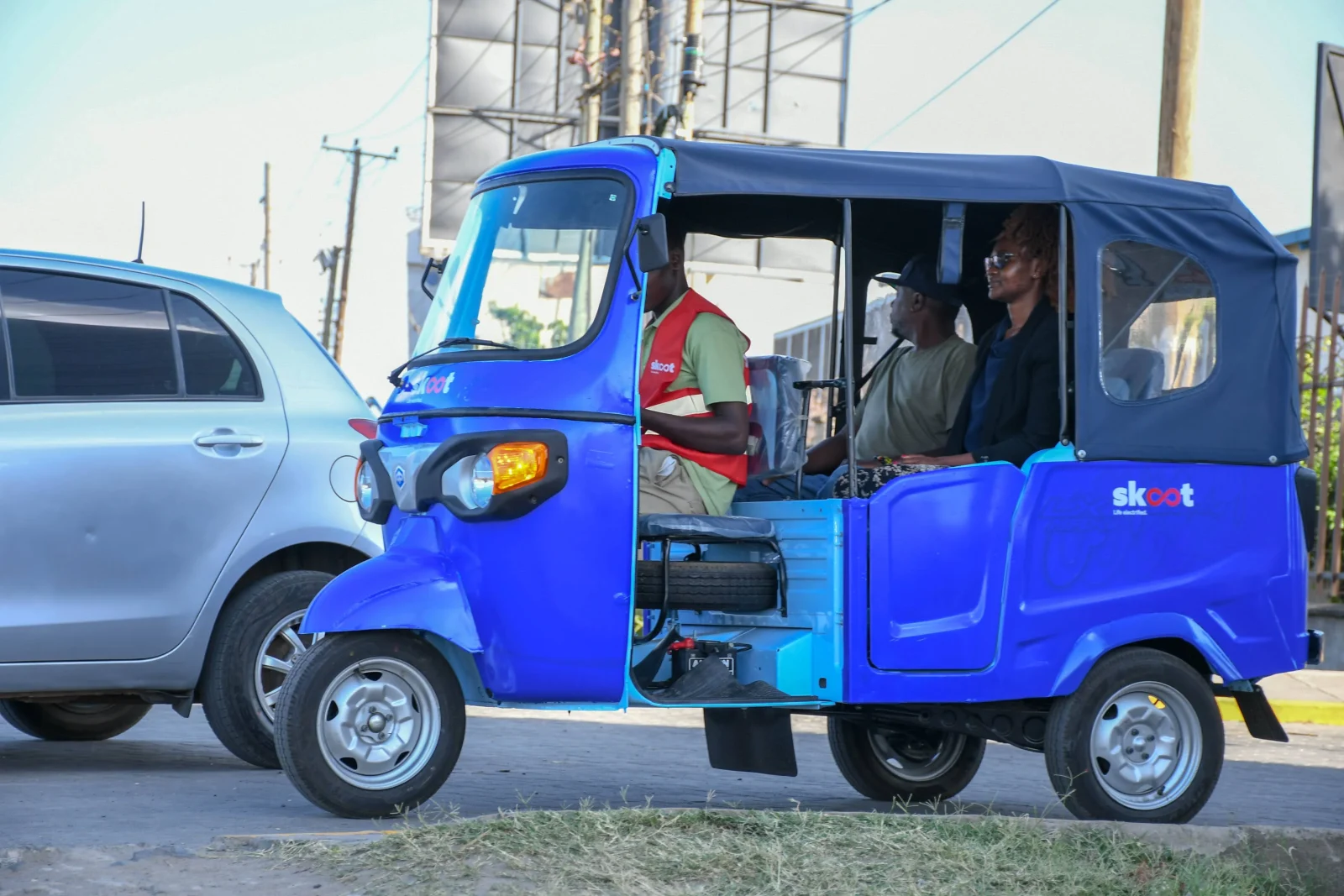
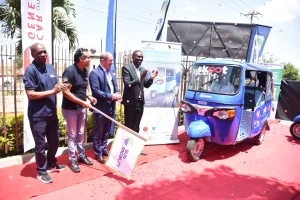
Skoot Technology has launched a new electric tuk-tuk in Kenya, promising drivers lower fuel costs and more earnings in what could shake up the country’s popular three-wheeler transport business.

The new model, dubbed the Skoot e3W, runs on SUN Mobility’s battery swapping technology and will be distributed and serviced locally by Car & General.

The companies are betting that cheaper daily running costs and a digitally connected system will attract ambitious drivers looking to boost their profits.

Fuel savings

A typical tuk-tuk driver in Nairobi travels about 150 kilometres a day. According to Skoot, that distance would cost around Ksh 650 using SUN Mobility’s battery swapping network, compared to about Ksh 850 spent on diesel. That is a saving of up to 30 per cent daily, money that goes straight back into the driver’s pocket.

Battery swaps take just a few minutes, meaning drivers do not have to sit idle for hours waiting for a recharge. Instead of plugging in and waiting, they simply swap out a depleted battery for a charged one at a SUN Mobility station and get back on the road.

The Skoot e3W combines a Piaggio-designed vehicle with SUN Mobility’s “ultrafast” battery swapping platform. Over the past 24 months, Skoot, SUN Mobility and Car & General have been running trials across Nairobi.

Skoot’s Electric Tuk-Tuk Promises Drivers KES 200 Daily Savings

These tests included performance under heavy loads, durability of battery swap cycles, maintenance stress tests and rider experience pilots.

The companies say the vehicle has been revamped to suit Kenya’s road conditions, traffic patterns and driver preferences.

Sacha Cook, CEO and Co-Founder of Skoot Technology, said the launch goes beyond just selling a vehicle.

“Skoot is transforming clean energy and mobility for drivers, homes and businesses. Our unified app and platform make it simpler to work smarter, cleaner and earn more,” he said.

Cook added that the Skoot e3W is designed as an easy-access electric vehicle tailored for working drivers and fully managed through a mobile phone.

“Drivers can manage their lease, see swap station locations and access delivery contracts all from their mobile phone. Smart gas and two-wheelers are coming next, bringing more connected experiences to everyday life,” he said.

The tuk-tuk will be available on flexible daily, weekly or monthly leases starting from KES 1,200 per day, with maintenance included. The digital platform allows drivers to track their work and operations in one place, a feature Skoot believes will appeal to younger, tech-savvy operators.

SUN Mobility, which has scaled its battery swapping network in India, sees Kenya as a key expansion market in Africa.

“SUN Mobility aims to make electric mobility affordable, and after significant success and scale-up in India, we are thrilled to be launching in Kenya with Skoot,” said Ajay Goel, Co-founder and CEO-International of SUN Mobility.

“Our universal battery swapping solutions are built for hard-working two- and three-wheeler drivers everywhere, who depend on us to make their living. Over the coming months, we are expanding the network and launching a series of exciting and affordable vehicles,” he added.

Car & General, which will handle distribution and servicing, says its footprint across the country will support drivers who rely on their vehicles for daily income.

“Our partnership with Skoot allows us to bring dependable electric three-wheelers to drivers who need reliable daily earnings,” George Rubiri, General Manager at Car & General, said.

“With our distribution and servicing footprint and Skoot’s digital tools, we’re confident this product will transform how drivers work,” he said.

Benson K., a driver participating in the Nairobi pilot, described how the Skoot e3W has improved his daily earnings.

“With the Skoot, I get an easy daily rental for my vehicle. I don’t waste time and swap in minutes to get back on the road. My earnings are more stable, and the app makes everything easier, charging, payments and support.”

He noted that the system makes managing his vehicle simple, allowing him to work more efficiently and reliably.

With rising fuel prices and growing pressure to cut emissions, the electric tuk-tuk could offer a timely alternative for drivers trying to protect their margins.

If the promised Ksh 200 daily savings hold, the Skoot e3W may not just be a clean energy solution, but a new business model for Kenya’s three-wheeler economy.

Leave a comment

Leave a Reply

Your email address will not be published. Required fields are marked *

PAST ARTICLES AND INSIGHTS

Related Articles
President Dr William Samoei Ruto
BUSINESS

Govt to Reopen Kenya-Somalia Border in April After 15-Year Closure

After 15 years of closure, Kenya will reopen its border with Somalia...

Joshua Oigara appointed new Stanbic CEO
BUSINESS

Stanbic Announces Joshua Oigara as New CEO

Stanbic Holdings Plc has appointed Joshua Oigara as its new chief executive...

Eveready East Africa business
BUSINESS

Eveready East Africa Retools For Clean Energy Production

Eveready East Africa PLC is branching into an integrated clean energy platform...

National Treasury building. PHOTO/@KeTreasury/X
BUSINESS

Treasury Upgrades IFMIS as State Shifts from Cash to Accrual Accounting

The National Treasury has stepped up plans to transition Kenya from a...