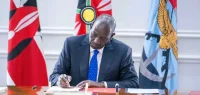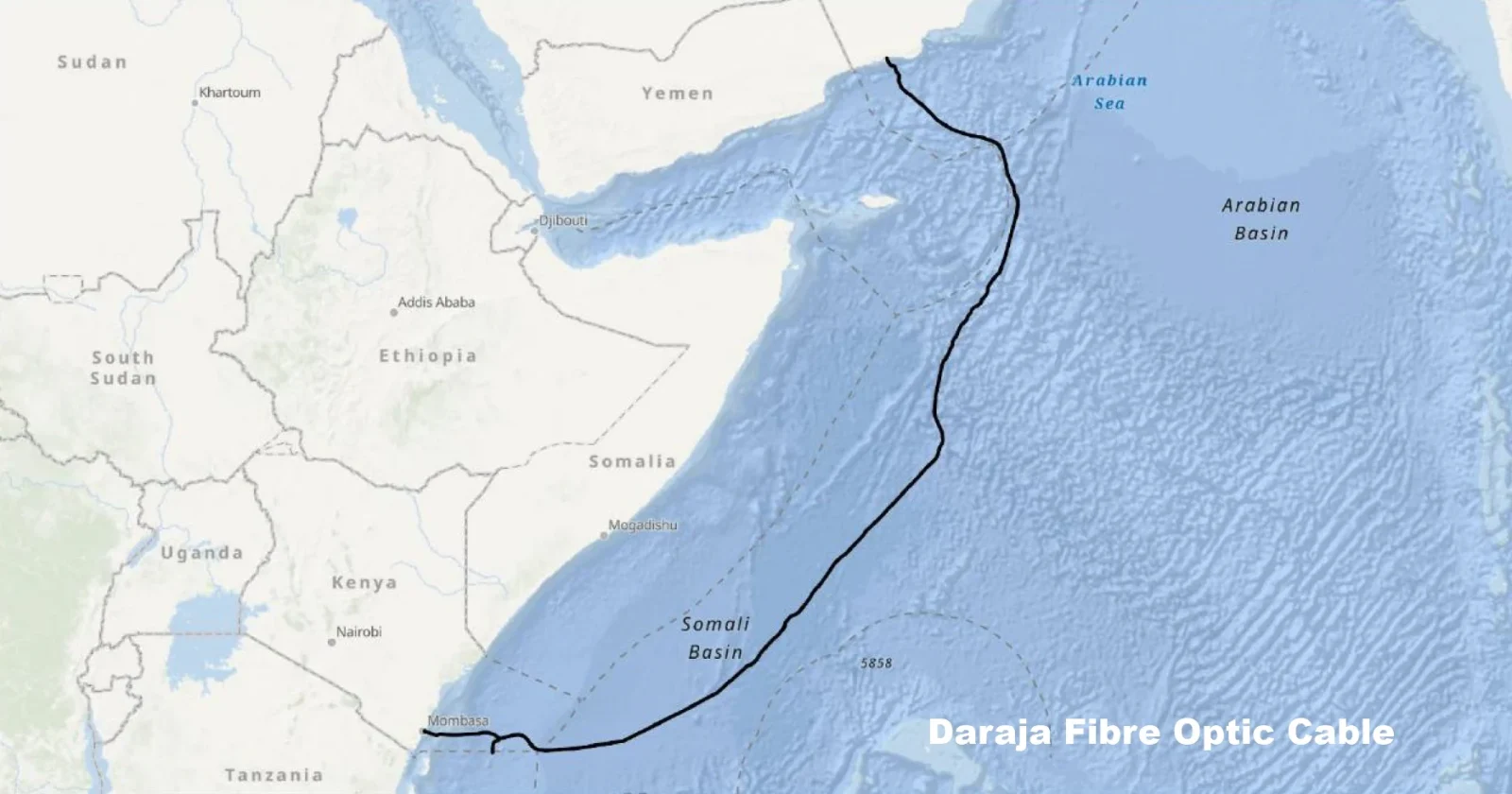
Safaricom Plc and Edge Network Services Limited (Ireland), a subsidiary of US-based tech giant Meta, have signed a deal that will see the laying of a new Undersea Fibre Optic Cable linking Mombasa to Oman. The whole project cost is estimated at US$ 2.9 Billion, with Edge fully funding the Kenyan cable link. Safaricom is to acquire a stake in this cable project, giving the giant mobile operator a cutting-edge shoulder above over the competition.
The 4,108km Daraja Fibre Optic Cable, connecting East Africa to the Middle East, is expected to enhance digital infrastructure connection these regions, providing greater bandwidth and faster internet speeds at millions of data users in Kenya and the region.
Safaricom, on the other hand, will significantly cut huge expenditures it incurs to lease fibre optic cables from third party providers.
Safaricom is undertaking this mega investment at a time when revenues from voice services are stagnating as data and MPESA mobile money services climb higher.
What the Project Means for Safaricom
By investing in its own subsea cable, Safaricom aims to cut dependency on third party cable providers and lower operational costs.
“This deal is a significant strategic milestone for us at Safaricom as we mark 25 years and signals our readiness to transition into a fully-fledged tech company in line with our vision 2030 strategy. It positions us to meet the surging demand for high-capacity, low-latency connectivity which is critical for powering economic growth, cloud adoption, and digital innovation,” said Dr Peter Ndegwa, CEO, Safaricom.
Safaricom fibre leasing agreements
At present, Safaricom has signed a 5-year, three-phased KSh 1.6 billion fibre optic lease agreement with Ethiopian Electric Power(EEP), to provide telecommunication services in Ethiopia, leveraging on EEP’s vast 15,000km fibre optic cable infrastructure.
Safaricom is also leasing fibre optic cables along Kenya’s oil pipeline in a deal with state-owned Kenya Pipeline Company(KPC)
Safaricom has already entered into cable lease agreements with other third party providers, including Voacom Networks Limited. Decko provides it with engineering, construction, cable installation and cable splicing and has worked on Safaricom’s Digital City Fibre Project and the National Optical Fibre Backbone Infrastructure. Other Safaricom partners in Fibre Optic Cable projects include Ericsson(K) Limited.
Safaricom is also in a joint venture within The East African Marine System (TEAMS) Limited, Kenya’s first privately-owned fibre optic cable firm, launched in 2009. Its investments in TEAMS, where it has a 32% shareholding, is now at KSh156.5m according to Safaricom’s 2025 Annual Report.
The Kenyan telco has entered into long-term fibre contracts under which it purchases capacity from fibre networks. The purchase involves making prepayments to acquire indefeasible right of use (IRU) for a fixed period.
The East African Marine Systems Limited (TEAMS) contract was signed on 1st May 2011 and runs for 25 years, Kenya Power and Lighting Company contract signed in February 2010 runs for 20 years as well as a 20-yr contract with SEACOM signed July 1st 2008.
As at end of its 2025 financial year, the Kenya mobile operator had a fibre optic cable footprint measuring 18,300km, a growth of 7.6% from 17,000km deployed in 2024.
By operating its own cable network, the mobile phone company, which is celebrating its 25th Anniversary, will strengthen its grip on Kenya’s telcos business, providing it with light speeds ahead of its competitors.
With improved connectivity and speeds, the mobile operator will provide customers with better and faster video streaming services, access to more online learning tools, cloud computing, and more secure remote working environments.
Meta’s Game Plan in the Cable Project
For Meta, the Oman–Kenya cable fits into its ambition to set up a 45,000km 2Africa subsea cable, designed to encircle the entire African continent and is set to be the longest undersea cable in the world.https://www.youtube.com/watch?v=EulxMCDOE5E
The 2Africa project has already successfully landed in several of its planned 32 African locations, including Lagos and Kwa Ibo in Nigeria.
The new Oman–Kenya route is a vital strategic alternative to the frequently congested Red Sea corridor, immediately improving network reliability and speed for Meta’s regional operations.
The cable features a robust 24-fibre-pair design, promising high-capacity, low-latency connectivity that will significantly enhance the performance and resilience of Meta’s platforms, including Facebook, Instagram, and WhatsApp, platforms that are now popular with individual users, content creators and corporates in Kenya and East Africa.
ALSO READ: Safaricom Hits Speed Bumps in Ethiopian Telco’s Mart