

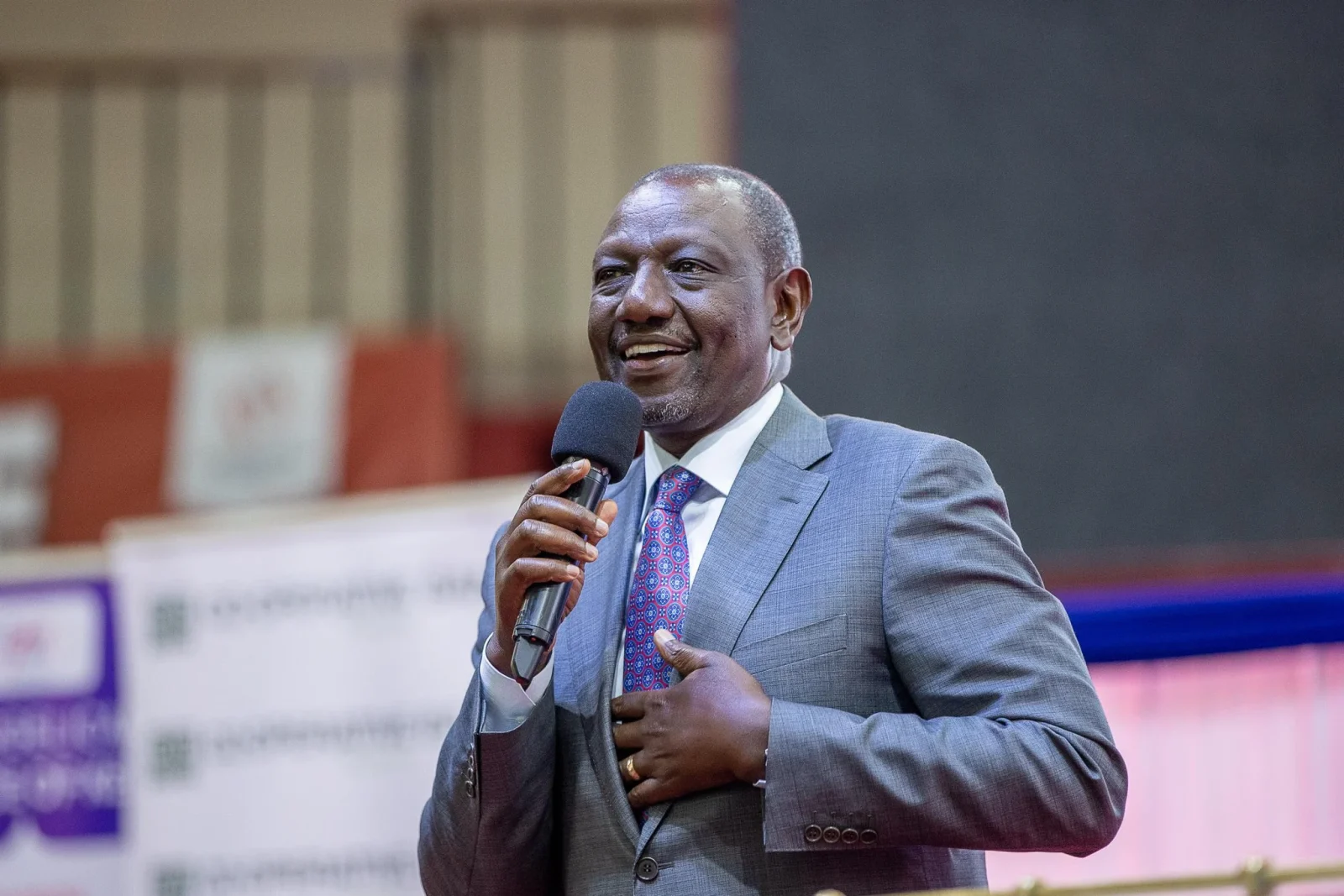
President William Ruto has unveiled plans to create two powerful investment vehicles that he says will help Kenya grow without sinking deeper into debt.
The head of state announced that his government is setting up an infrastructure fund and a sovereign wealth fund, both to be financed by proceeds from privatising key state-owned enterprises.
“We are in the process of having two important funds. One, an infrastructure fund, and the other, which we are going to roll out, a sovereign wealth fund,” Ruto said.
Adding;
“As responsible citizens of the present, we must think about the generations of tomorrow and we must keep for them something, so that tomorrow, they have a place to start.”
Ruto said the first target will be the Kenya Pipeline Company, a strategic state-owned firm that manages petroleum transportation infrastructure within Kenya and to neighbouring countries.
The share sale is expected to raise as much as Ksh 130 billion, about $1.01 billion, which will help kick-start the new investment funds.
The president emphasised that the infrastructure fund will prioritise farming and energy. Agriculture is Kenya’s largest economic sector, and Ruto said more investment is needed to boost crop production for export.
The fund will also finance energy projects to expand the electricity supply. Kenya currently generates about 2,300 megawatts of power, but Ruto said the country needs at least 10,000 megawatts to drive industrialisation.
“For far too long, we have been on an average trajectory, and that is why we are not making progress,” he said.
While those investments improved infrastructure, they also left Kenya with one of the highest debt-to-revenue ratios in Africa. Debt repayments now consume a huge portion of the national budget, limiting the government’s ability to spend on new growth programs.
To break this cycle, Parliament recently passed a new privatisation law, giving the state a clear framework to sell stakes in public enterprises and use the money to seed the new funds.
The sovereign wealth fund is meant to save and grow the proceeds from privatisation and other government income, creating a pool of long-term capital that can be tapped for strategic investments and to cushion the economy in times of crisis.
If successful, the approach could give Kenya a more sustainable path to development and reduce its reliance on debt. However, critics warn that without strong oversight, the funds risk being mismanaged or diverted from their intended purpose.
The privatisation drive, starting with Kenya Pipeline Company, will be a test case for whether the country can balance raising much-needed capital with protecting strategic national interests.










When I look at Nigeria and how Aliko Dangote managed to promote the energely sector….. Oil and gas to be precise, I think Kenya can actually do far much better through this privatization process. The difference is that, Nigeria was done by an individual business Man, but here in Kenya we are going to do it as a people.. (shares trading) this is already a win – win arrangement. Kudos Mr. President