

![Parliament in a past session. [Photo/Parliament of Kenya/Facebook]](https://businesstoday.co.ke/wp-content/uploads/2026/02/Parliament-Kenya.webp)
As Kenyans debate one of the most significant privatisation moves in recent memory, Parliament has reopened public hearings on the government’s plan to sell part of its stake in Safaricom Plc, a company considered a national economic pillar.
On February 3, 2026, a joint sitting of the Departmental Committee on Finance and National Planning and the Select Committee on Public Debt and Privatisation picked up county-level consultations in Nairobi, Mandera, Nyandarua, and Machakos. These sessions are part of a tour covering 30 counties that will run until February 14, 2026.
The focus of these hearings is Sessional Paper No. 3 of 2025, which proposes selling 15 per cent of the government’s current 35 per cent stake in Safaricom.
If approved, this divestiture would offload about 6.01 billion shares and reduce state ownership to 20 per cent. At the offered price of Ksh 34 per share, the sale is projected to raise roughly Ksh 204 billion before other inflows.
The proposed buyer is Vodacom Group, already holding about 40 per cent of Safaricom’s shares. After purchasing the government’s block, Vodacom’s effective control would rise to around 55 per cent, making it the majority shareholder. Public investors on the Nairobi Securities Exchange would hold the remaining 25 per cent.
The sale also includes an upfront payment of about Ksh 40.2 billion linked to future dividend monetisation, boosting total projected proceeds to some estimates near Ksh 244 billion.
Government officials say this structure will support the National Infrastructure Fund and possibly a sovereign wealth fund, helping finance roads, energy, water, and digital projects without adding to public debt.
The government has defended the chosen price and premium. Supporters say that Ksh 34 per share represents a substantial premium over recent trading averages and falls within fair valuation ranges identified by methods like the Gordon Growth Model and price-to-earnings multiples.
Safaricom CEO reassurance
Safaricom’s CEO, Peter Ndegwa, appearing before the committees in January 2026, stressed that the deal will not change the company’s operations or regulatory oversight.
“There will be no transfer of operational control, no dilution of regulatory authority, and no weakening of governance standards arising from the transaction,” Ndegwa said.
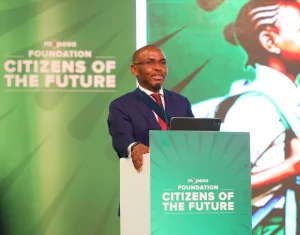
He also emphasised that Safaricom remains fully subject to Kenyan law and regulatory bodies.
Not everyone is convinced. The Institute of Certified Public Accountants of Kenya (ICPAK) has called for more transparent valuation and pricing approaches, warning that heavy reliance on foreign buyers could limit local investor opportunities.
The Consumer Federation of Kenya (COFEK) argued the deal risks Kenya’s economic sovereignty, insisting national assets like Safaricom should remain majority domestically owned.
Lawmakers such as MP Peter Salasya have publicly vowed to oppose any sale they see as benefiting foreign interests, saying they will not approve deals that weaken national control over key infrastructure.
Some analysts and MPs, including Ndindi Nyoro, have labelled the pricing unfair and questioned whether the country might be losing out on better value.
Bankers and stockbrokers have urged broader public participation, with suggestions to set aside a portion of the shares for Kenyan retail and institutional investors to deepen the capital markets.
After the county hearings end on February 14, the joint committees will compile all feedback, refine their findings, and submit a final report to Parliament. Lawmakers will then debate the recommendations and decide whether to approve, amend, or reject the sessional paper under constitutional timelines.
Public participation—via in-person views and electronic submissions—continues to shape what could be one of Kenya’s most significant corporate and fiscal decisions in decades.






Leave a comment