

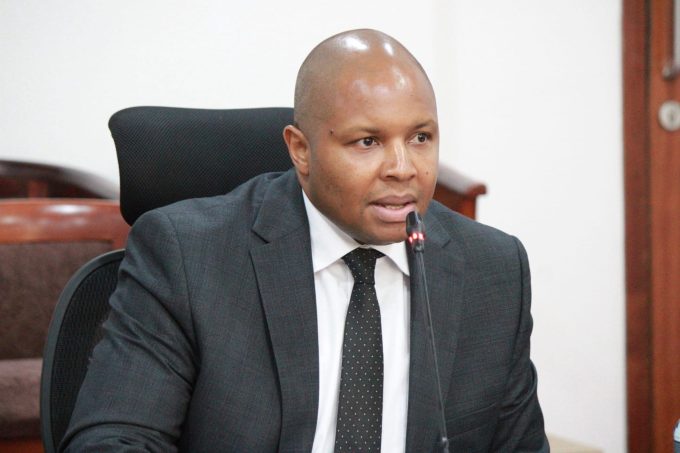
![CS Ezekiel Machogu disclosed that President William Ruto had directed the National Treasury to set the capitation per junior secondary student at Ksh15,000 per learner. [Photo/ UNICEF]](https://businesstoday.co.ke/wp-content/uploads/2023/01/UNICEF-Roysambu-6.jpg)
The government has announced that learning in junior secondary schools will be free.
This follows concerns raised by parents and teachers’ unions on the potential introduction of school fees for junior secondary despite the Constitution guaranteeing free learning for primary and secondary school students (although secondary school students still pay various fees). Students transitioning to junior secondary in the Competency-based Curriculum (CBC) era, were considered primary school students under the previous 8-4-4 system.
Cabinet Secretary Ezekiel Machogu sought to calm fears, assuring parents that the government had set aside funds for children entering junior secondary. Speaking to journalists on January 16, he disclosed that President William Ruto had directed the National Treasury to set the capitation per student at Ksh15,000 per learner.
“No school should charge any fees for grade 7 learners unless such schools are boarding wings,” he asserted, noting that the government would spend Ksh9.6 billion to enable free learning in junior secondary schools.
“Because Junior Secondary is from grades 7, 8 and 9, we have worked on a figure that the amount being given to a student be Ksh15,000 almost equal to what is paid for Senior Secondary school learners,” Machogu continued.
READ>Elon Musk to Disrupt Safaricom, Zuku in 2023
He highlighted the Constitutional requirement for the government to foot the learning bill for primary and secondary school students in public institutions. The CS stated that the government currently offers Ksh22,244 and Ksh1,420 respectively as capitation per student in secondary schools and primary schools.
On the transition to junior secondary, parents will however have to dig into their pockets to purchase new uniforms. Machogu stated that the new uniforms were necessary for a distinction to be made, especially considering the students will join grade seven in the same institutions where they attended grade six.
“At this particular point, since it is secondary, the uniform will not be the same and each board of management will be able to make decisions on the colour and type of uniform students will be put on,” the CS noted.
NEXT READ>Kenyan Pension Funds Looking To Intensify Investments In Alternative Assets In 2023











Leave a comment