

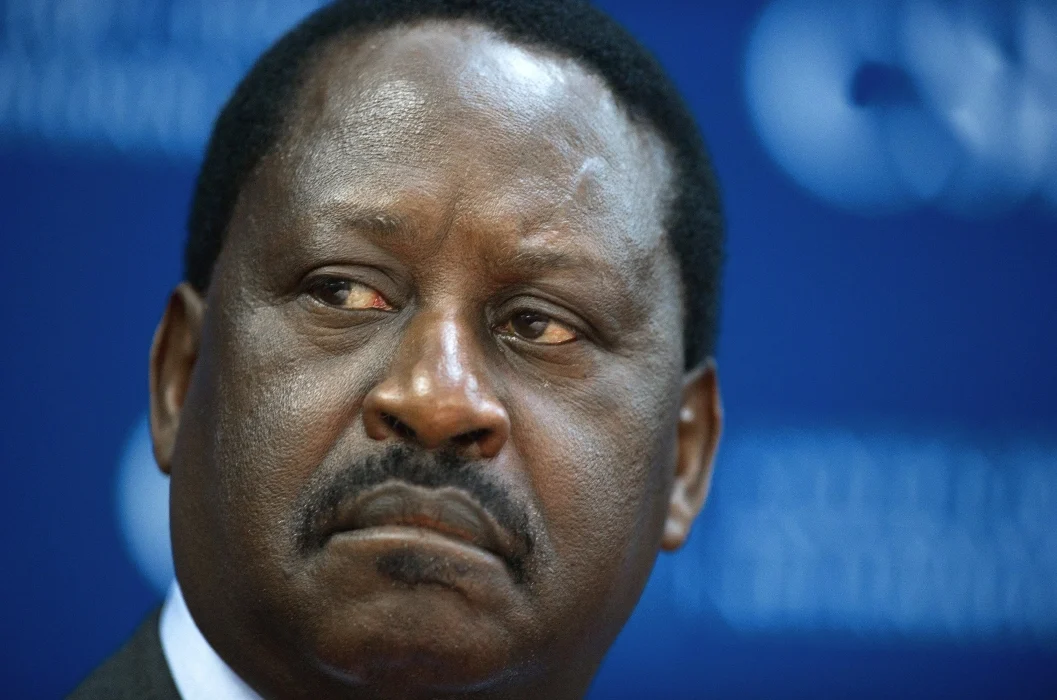
It has taken me time to pen this tribute to Baba Raila Amolo Odinga, unlike in the years when I worked in the newsroom, when his story was not just news, but the very lifeline of media existence. Even now, it feels unreal that Baba is no more. The news of his passing reached me in the quiet of dawn, through one of our media family WhatsApp groups. A veteran journalist I once worked with at the Nation Media House had posted a short message: “Just in case you haven’t heard, Agwambo died last night.”
The message appeared in the middle of another chat, ironically, one about how technology is reshaping the newsroom. For a moment, I froze. Then instinct took over. The old newsroom reflexes came alive, cross-checking, verifying, refreshing. At first, the story appeared only on a few unfamiliar outlets, and I wanted to believe it was fake. But as I scrolled through more platforms, the whispers turned into confirmation. Every post, every update, tightened the reality. It was true. Baba was gone.
The Man Who Made the News
Even then, it was difficult to say it aloud. To many of us who grew up in the journalism environment through his era, Baba’s name was beyond any subject line, it was an anchor, a heartbeat. I covered Raila through his political and presidential bids and his tireless struggle for multiparty democracy, a time when one careless sentence against the ruling class could land a journalist in jail. It cost Baba years of detention, yet his resolve never broke. His courage became both a headline and a lesson in endurance.
His father, Jaramogi Oginga Odinga, had passed on just as I joined the newsroom. But Raila’s name was already towering, bold, unpredictable, magnetic. That marked the beginning of an era when the camera could not move away from him for decades to follow.
Raila Odinga’s story sold newspapers. Whether he opposed the establishment or walked beside it, he guaranteed readership. During my 16 years at the newspaper’s graphics desk, I saw it repeatedly: whenever we lacked an exclusive, the news editor would ask, “Where’s Raila today?” or “What has he said?”
His presence was the surest formula for visibility and survival. When our paper missed him on the front page but another carried him, we could almost predict the next morning’s disaster. Stacks of unsold copies piling up at the vendor stalls. Baba was not just a political figure; he was a full-fledged media institution. He taught newspapers both good and bad habits, many relied on him to sell, some were launched around his story, and a few may find it hard to exist in his absence.
Raila in the Record Books
When I later joined the government publishing house, the story followed me, because how could it not? We began a national series titled Kenya’s Presidential Cabinets, tracing Cabinets from independence onward. And just like in the newsroom, the Odinga name refused to be left out.
In Kenyatta’s Cabinet, we featured Jaramogi Oginga Odinga under the headline “The Doyen of Kenya’s Politics.” That same phrase would later echo through his son’s political legacy. Raila appeared again in Moi’s Cabinet, Kibaki’s Cabinet, and even in Uhuru’s Cabinet, not always as a minister, but as a presence, a spirit that shaped the country’s political direction.
> Former US President Barack Obama Mourns Raila Odinga, Praises His Fight For Democracy
Across those volumes, one headline kept resurfacing: “Raila Odinga: The Enigma of Kenya’s Politics.”
Every time we reached his section, the same challenge emerged. What to leave out. His story was so layered that editing became an act of painful decisions. His life contained enough milestones to fill entire books, and yet, the essence was always bigger than the pages could hold.
We always reserved his story for the most seasoned writers, instructing them to handle it with care, not to glorify, not to sanitise, but to capture truthfully the complexity of a man who embodied contradiction and conviction in equal measure.
The Unpredictable Master of the Script
Raila had a way of disorganising the media, and perhaps that’s why we admired him. Just when every newsroom thought it could predict his next move, he tore the script. His handshakes , first with President Mwai Kibaki, later with President Uhuru Kenyatta, redefined Kenya’s political map each time. They were not just acts of reconciliation; they were statements of statesmanship. To the media, they were pure gold, unexpected, bold, and impossible to ignore.

Each move reaffirmed one thing: Raila Odinga did not follow the story, he was the story. He was as comfortable in the middle of chaos as he was in the calm after it. And even when controversy surrounded him, he turned turbulence into theatre, strategy into suspense.
A Nation Paused
Now, the question that lingers is this: how will the media survive without him in the picture? Will the rhythm of Kenyan news ever sound the same again? Many newsrooms will have to rethink their models. Someone once joked that they might have to build another Raila Odinga just to stay afloat. But there can never be another.
Let’s give it to Baba, he was an icon of everything: hope, resilience, vision, and the restless energy that keeps a nation alive. He graced every major event, leaving behind colour, conviction, and conversation. He was celebrated and vilified in equal measure, loved and misunderstood, yet never ignored.
To be Raila Odinga was to live as both man and myth, the headline and the history, the subject and the symbol. The country came to a standstill the moment news of his passing broke. No one was ready. Even the machinery of the state seemed unsure how to handle the moment, how to choreograph a farewell for a man who had always written his own script.
> President William Ruto Emotionally Mourns ‘Patriot and Peacemaker’
Across Kenya, people stayed awake, not because they had to, but because they couldn’t sleep. They wanted to witness every frame of his final journey. The media, too, could not turn away. Broadcasts froze, playlists went silent, and even commercial slots were suspended. For once, every network, every camera, every newsroom spoke the same language: Baba.
No one dared switch channels. No one wanted another story. For that moment, Kenya was united under one headline: the end of an era. Many events will pass unnoticed during this period, and that’s alright. Raila Odinga’s story has a million angles, enough to fill our pages, screens, and memories for generations to come.
You were the story. You were the headline. You were the heartbeat.
And you will be missed, forever.
Rest in Eternal Peace, Baba Raila Amolo Odinga: The Enigma of Kenya’s Politics and Media.
Edward Mwasi is a Media Strategy and Innovation Consultant, (CbiT). [email protected].












Leave a comment