

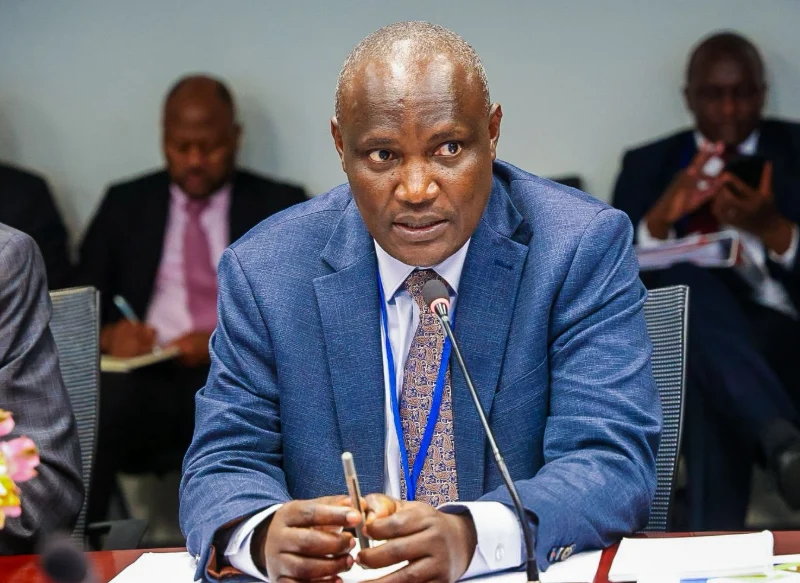
Kenya’s push to tax international payment giants has opened a fresh battle over who should benefit from the country’s booming digital economy, with Treasury Cabinet Secretary John Mbadi insisting the new proposals are designed to make foreign firms pay their fair share without hurting consumers.
The Finance Bill 2026 proposes changes that would allow the government to impose withholding tax on fees earned by global card companies such as Visa and Mastercard whenever Kenyans make card payments through local banks.
The Treasury wants interchange fees and merchant service fees to be legally classified as management or professional fees under the Income Tax Act, a move that would automatically make them taxable in Kenya.
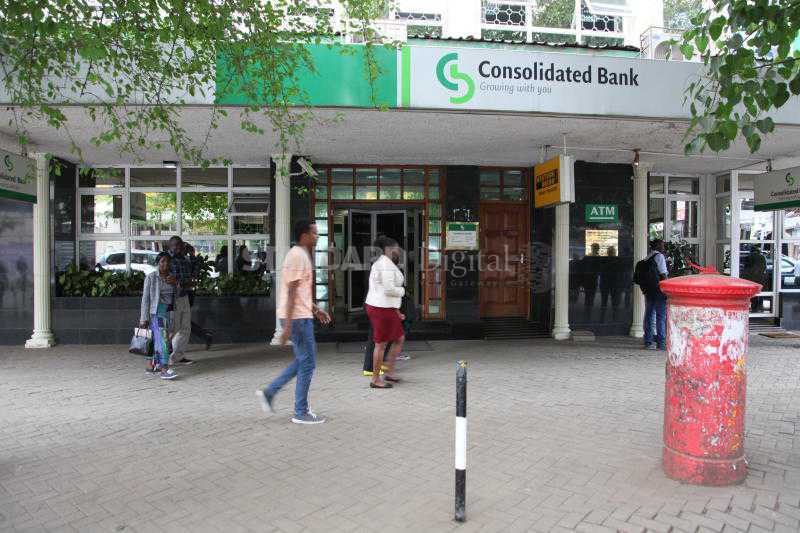
The proposal has already sparked concern within the banking and business sectors, with fears that financial institutions could eventually transfer the extra costs to customers through higher charges on card transactions.
But Mbadi has dismissed those concerns, saying the government is not targeting ordinary Kenyans.
“We are not introducing these measures to punish consumers,” Mbadi said while defending the proposals. “The intention is to ensure companies making money from Kenya’s financial system also contribute taxes here.”
The CS argued that Kenya’s digital payments industry has expanded rapidly over the last decade, generating huge revenues for international payment processors while local tax collection has remained limited.
From supermarkets and fuel stations to online shopping platforms and hotels, card payments have become increasingly common across the country as banks continue pushing cashless transactions. Treasury officials say the growth means foreign payment firms are now earning substantial income from the Kenyan market.
The proposed changes come months after the Kenya Revenue Authority lost a major court dispute involving Absa Bank Kenya over the taxation of interchange fees.
In its ruling, the Supreme Court found that the fees did not qualify as management or professional fees under the existing law, effectively blocking KRA from collecting withholding tax from the transactions.
The Finance Bill 2026 now seeks to change the wording of the law entirely, giving tax authorities a direct legal path to pursue the payments.
The latest proposals form part of the government’s broader effort to increase tax collection as Kenya continues struggling with debt repayments, pressure from international lenders and growing expenditure demands.
However, the Finance Bill has also faced resistance from Kenyans already frustrated by the high cost of living and repeated tax increases in recent years.
Several controversial proposals included in the earlier draft triggered immediate public backlash, especially planned taxes on bottled water, mobile phones, financial services and second-hand clothes, popularly known as mitumba.
Critics warned that taxing smartphones and financial services would make digital access more expensive at a time when millions of Kenyans depend on mobile technology for business, education and communication.
Mitumba traders also strongly opposed the proposed levy on second-hand clothing imports, arguing that the sector supports thousands of small businesses and provides affordable clothing for low-income households.
Following public pressure and consultations with stakeholders, Mbadi confirmed that some of the most unpopular proposals had been removed from the final version of the Bill.
“After listening to concerns raised by Kenyans and various sectors, some proposals have been dropped,” the CS said.
The Treasury now appears keen to present the revised Finance Bill as a more balanced approach focused on sealing tax loopholes instead of aggressively introducing new levies on consumers.
Still, economists say the debate over the Bill reflects a larger challenge facing the government — how to raise more revenue without increasing financial pressure on households and businesses already struggling with inflation and rising living costs.
Attention is now shifting to Parliament, where lawmakers are expected to debate the proposals in the coming weeks before the Bill is either approved, amended further or rejected.













Leave a comment