

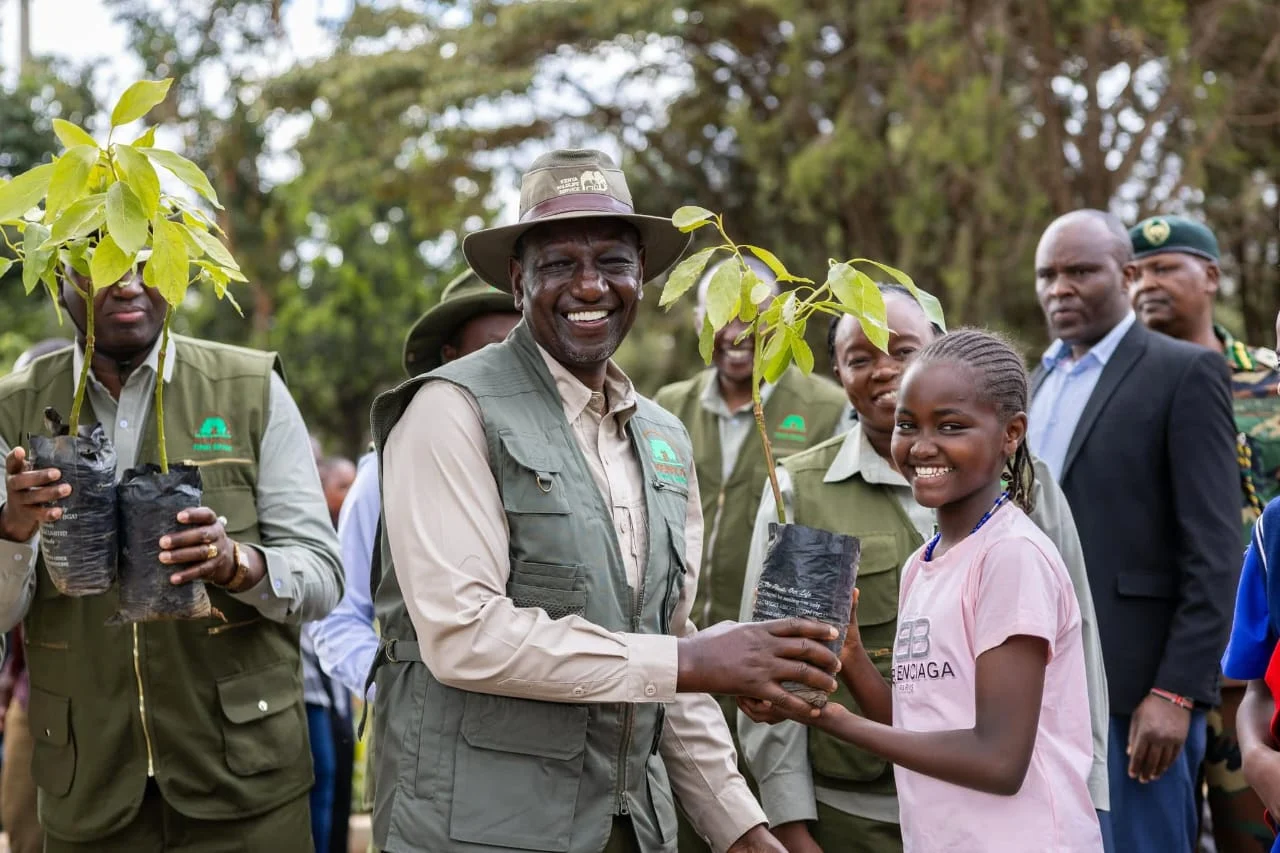
Kenya marked this year’s Mazingira Day with a renewed national focus on environmental restoration and urban regeneration, as leaders, communities, and youth groups united under the rallying call, “Restoring the River, Rebuilding the City.”
Speaking during the commemorations in Nairobi on Friday, President William Ruto said Mazingira Day was not just about tree planting but about reclaiming the country’s natural ecosystems and rebuilding urban spaces for future generations.
“Mazingira Day is a bold commitment to restore what we’ve lost, our rivers, forests, and wetlands, while transforming our cities into clean, green, and resilient spaces,” Ruto posted on X.
The day’s centrepiece was the Nairobi River Regeneration Project (NRRP), a flagship initiative under the Ministry of Environment, Climate Change and Forestry that seeks to turn the heavily polluted river corridor into a model of sustainable urban development.
Restoring the River, Rebuilding the City
According to the ministry, the Nairobi River Regeneration Project is more than a cleanup effort. It is a comprehensive urban renewal programme designed to tackle flooding, pollution, waste management, and informal settlements.
Through expanded stormwater drainage, improved sewerage systems, and the redesign of riparian zones, the project aims to rebuild the city from its rivers outward. The approach integrates housing reforms, green infrastructure, and waste solutions to promote both environmental health and social equity.
Environment Cabinet Secretary Dr Deborah Barasa described the initiative as a blueprint for a cleaner, healthier, and more inclusive Nairobi.
“By rehabilitating our rivers, we are restoring the soul of our city. This is how we rebuild dignity, restore livelihoods, and create shared prosperity,” she said on social media.

Communities at the Heart of Regeneration
At the core of the Nairobi Rivers Regeneration Project are communities reclaiming their environment and redefining urban living. Youth collectives such as Komb Green Solutions in Korogocho and the Kilimani Project Foundation have become the face of people-driven change, transforming once-polluted stretches into green public spaces.
Grassroots innovators are leading waste management drives, eco-entrepreneurship, and community mapping to ensure regeneration reflects local realities.
“Regeneration begins with citizens, the people who live, work, and play along these rivers,” said Environment PS Festus Ng’eno in a post. “From community clean-ups to green start-ups, Kenyans are demonstrating that sustainability is not a slogan; it’s a daily practice.”

The ministry emphasizes that community leadership is what makes the initiative sustainable. By combining town halls, digital mapping, and participatory forums, residents influence decisions on sanitation, housing, and land use, ensuring policies are both people-centred and practical.
Greening the Nation
In addition to the river regeneration focus, Mazingira Day also advanced Kenya’s 15 billion Tree Growing Programme, part of efforts to achieve 30 per cent tree cover by 2032. President Ruto led a tree planting drive in Nairobi, while counties across the country organised similar activities.
Education institutions joined in, with pupils planting fruit trees under the theme “Citizen-Centric Tree Growing and Environmental Stewardship.”
“Every Kenyan must be part of this transformation,” said Dr Barasa. “Whether you plant a fruit tree, clean a riverbank, or recycle waste, you are building a greener nation.”
A Shared National Responsibility
The government’s vision for Mazingira Day aligns with Kenya’s climate resilience goals and the Bottom-Up Economic Transformation Agenda (BETA), which identifies environmental restoration as key to sustainable development.
Through projects like the NRRP, the state seeks to reduce urban flooding, curb pollution, and create thousands of green jobs while improving public health and urban mobility.
“We are not just planting trees; we are growing hope, dignity, and opportunity,” President Ruto said.
As Kenya transitions from one-off clean-up exercises to integrated regeneration, Mazingira Day is fast becoming a national symbol of renewal, where citizens, government, and communities come together to restore balance between people and planet.
From Korogocho to Karura, the message was clear: sustainability starts at home, and regeneration begins with us.
Read: Nobel Prize Celebrates Wangari Maathai on Mazingira Day
>>> Absa to Plant 10 Million Trees by 2025 in Sustainability Drive










Leave a comment