

Kenya’s cement manufacturers are raising concerns over new government charges on exported clinker, warning that the additional costs could undermine local production, affect export earnings and discourage further investment in the industry.
The Kenya Association of Manufacturers (KAM) says the proposed application of a two per cent mining royalty and a one per cent Mineral Development Levy on exported clinker could make Kenyan products more expensive in regional markets.
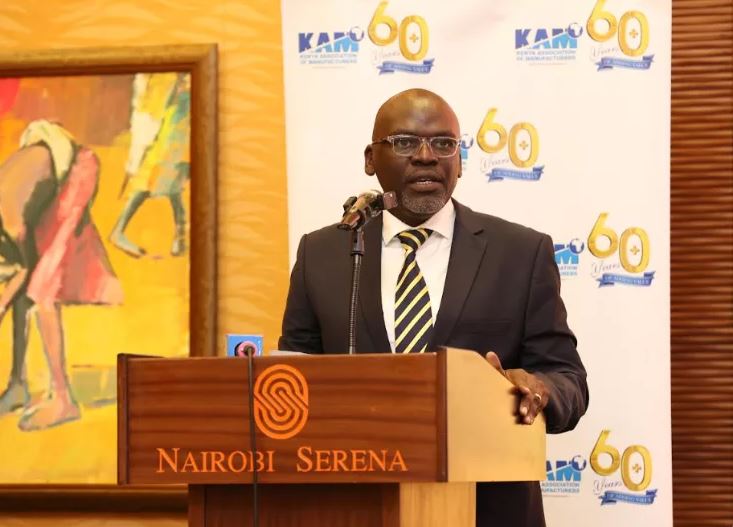
The association raised the concerns during a meeting with Principal Secretary in the State Department for Mining, Harry Kimtai, where manufacturers discussed the implementation of the Mining Regulations, 2024.
KAM Chief Executive Tobias Alando said the proposed charges could affect the progress made by cement producers in developing local clinker manufacturing facilities and reducing reliance on imported supplies.
“These proposed charges could erode the gains made by the cement industry in transitioning from heavy reliance on imported clinker to domestic production and exports,” Alando said.
Manufacturers argue that clinker should not attract the same treatment as naturally occurring minerals because it is produced through an industrial process involving the heating of limestone and other raw materials.
Clinker is an essential ingredient in cement production. It is made by heating limestone, clay and other materials in large industrial kilns at high temperatures. The resulting material is then ground with gypsum and other additives to produce cement.
KAM maintains that imposing mining-related charges on exported clinker would introduce another cost for manufacturers who have already invested in processing locally available raw materials.
The association warned that the additional expenses could force producers to increase their selling prices, making Kenyan clinker less attractive to buyers in neighbouring countries.
The concerns come as the country increases its capacity to manufacture clinker locally following years of dependence on imports to supply cement factories.
Several companies have committed billions of shillings to new production facilities. Devki Group has invested approximately Ksh 70 billion in its clinker and cement project in Ngaaie, Kitui County.
Bamburi Cement is also undertaking a Sh32 billion clinkerisation plant project in Matuga, Kwale County. The facility is expected to increase its annual production capacity by 1.6 million tonnes.
Other investments include Rai Cement’s Sh30 billion factory project in Kisumu and Devki Group’s investment in West Pokot.
These projects are expected to strengthen domestic manufacturing by increasing the supply of locally produced clinker and reducing the need for imported materials.
Kenya has also established itself as a clinker exporter. In 2024, the country exported approximately 1.81 million metric tonnes of the product, valued at about $114.56 million, equivalent to Sh14.89 billion.
Manufacturers fear additional export charges could hurt the country’s position in the regional market, especially if competing suppliers offer their products at lower prices.
The dispute comes after the government introduced a 17.5 per cent Export and Investment Promotion Levy on imported clinker in July 2023. The measure was intended to encourage domestic production and reduce the industry’s dependence on foreign supplies.
The government has also been pursuing a wider plan to increase mining’s contribution to the economy from approximately one per cent of Gross Domestic Product to 10 per cent by 2030.
The proposed Minerals, Mining and Beneficiation Policy 2026 seeks to attract investment in mineral processing, expand local value addition, create employment and increase export earnings.
However, manufacturers want the government to consider the costs of additional taxation when implementing policies affecting industrial production.
KAM says regulations should encourage companies to invest in local processing facilities rather than introduce charges that could make their products less competitive.
The association has indicated that it will continue engaging government institutions to address the proposed levies and seek a predictable taxation framework for manufacturers.






Leave a comment