

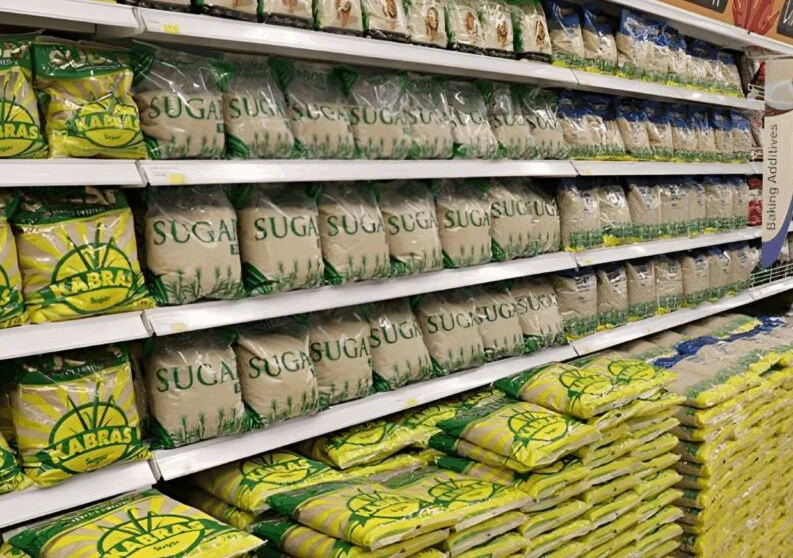
Kenya’s sugar industry is showing signs of recovery following a series of reforms introduced by the government, with stakeholders reporting improved governance, increased farmer support, higher production and growing prospects for sugar exports.
Industry players say the turning point came with the enactment of the Sugar Act, 2024, which restored a dedicated legal framework for the sector after years of operating under the Agriculture and Food Authority (AFA).
Charles Atiang’, a sugar sector stakeholder, described the law as the most significant reform in decades.
“The most important thing that we must be grateful about is the enacting of the Sugar Act 2024 into law. This is one big step we made giving money back to sugar to run the sugar sector. Before in 2001 we had Sugar Board but it was disbanded and we were moved to AFA, but this did not go well for the sector and it deteriorated because it lacked clear regulations,” he said.
He noted that sugarcane farming is capital intensive and requires adequate funding for land preparation, planting and crop management, adding that the remaining challenge is the full implementation of the new law.
The reforms have also given the Sugar Directorate administrative autonomy from the main AFA structure, a transition that has been in place for the last 17 months. Officials say the move has enabled more focused management of the industry and improved service delivery to farmers.
Seed cane and soil testing programme
Kenya Sugar Board officials say efforts are now focused on improving cane productivity through better seed varieties and scientific farming practices.
“Kenya Sugar Board has tried in putting efforts on matters of land testing working in collaboration with Kenya Sugar Research and Training Institute on testing soil conditions and how to get right seeds during planting season. There is a major programme targeting support provision of seeds to farmers and at the moment already one billion shillings has been set aside for seed cane development,” said Sugar Board official Erick Okola.
Farmers are being encouraged to conduct soil fertility assessments before planting to ensure land suitability, improve yields and maximise returns from sugarcane cultivation.
The Kenya Sugar Research and Training Institute (KESERETI) is also supplying clean, fast-growing and high-sucrose seed cane varieties. Stakeholders say the new varieties mature in about 14 months, compared with older varieties that took nearly 24 months, enabling farmers to harvest earlier and increase incomes.
Fertiliser support expanded to cane farmers
Officials say sugarcane farmers are now receiving subsidised fertiliser and quality seed cane in a more timely manner. The fertiliser subsidy programme, which had largely focused on maize farmers, has been expanded to include sugarcane growers.
Stakeholders say prompt payments for delivered cane are also helping farmers reinvest in their farms and sustain production.
Production rises above average
The reforms are already being reflected in production figures.
“Currently the sugar sector is performing well. Last month alone we manufactured 90,000 tonnes, which is an excess of 10,000 tonnes compared to the average monthly production of sugar which stands at about 80,000 tonnes. In the next five months we are seeing a possibility of starting to export sugar to the international markets,” Okola said.
If sustained, the higher output could reduce Kenya’s dependence on imported sugar and potentially position the country as a net exporter.
Modern farming practices promoted
Agronomists say increasing sugar production will depend on boosting cane yields through improved farming methods.
“To increase sugar productions we must also ramp up cane production. This can be achieved through good agronomic practices such as proper use of fertiliser, weed control through modern technology and also control of pests and diseases,” said agricultural expert Paul Were.
Farmers are being trained on land preparation, drainage management, pest and disease control and the use of certified seed cane. Stakeholders are also discouraging farmers from planting a single variety across entire farms, recommending a mixture of improved varieties to reduce disease risks and improve resilience.
Fresh investment in sugar factories
The government’s factory leasing programme has also attracted new private investment aimed at reviving struggling sugar mills.
Sugar sector official Ezra Okoth said firms including SOIT, Transmara and another investor from Mombasa are expected to take over the management of some factories.
He said the initiative is expected to improve factory efficiency, increase productivity and strengthen the sugar value chain. Some factories are also diversifying into ethanol and other by-products, creating additional markets for sugarcane and increasing the crop’s economic value.
Competition expected to benefit farmers
Stakeholders believe increased factory competition will improve cane harvesting and encourage more production.
“Having many sugar factories will encourage competition. In places like South Nyanza where we have Ndiwa and Transmara factories, farmers are no longer complaining about their cane not being harvested when ready; the only complaint is on delayed payment,” Were said.
He added that new investors are likely to introduce technologies such as tissue culture that could produce seed cane maturing in as little as eight months.
Calls for full levy implementation
Despite the progress, stakeholders say several challenges remain. They are pushing for full implementation of the Sugar Development Levy, including the proposed 15 per cent allocation for farmer organisations and industry development, arguing that only a small portion currently reaches farmers.
They also called for stronger agricultural extension services, saying many growers still lack adequate technical guidance on modern sugarcane farming practices.
Even with those concerns, industry players say the reforms have restored confidence in a sector that had long struggled with governance problems, low productivity and delayed payments, and they believe continued implementation could place Kenya’s sugar industry on a sustainable growth path.
Read: Why Kenya Has Reduced Sugarcane Price From Ksh5,750 to Ksh5,500 per Tonne
>>> CS Mugaa Issues Update on Large-scale Sugarcane Project at Bura Irrigation Scheme













Leave a comment