

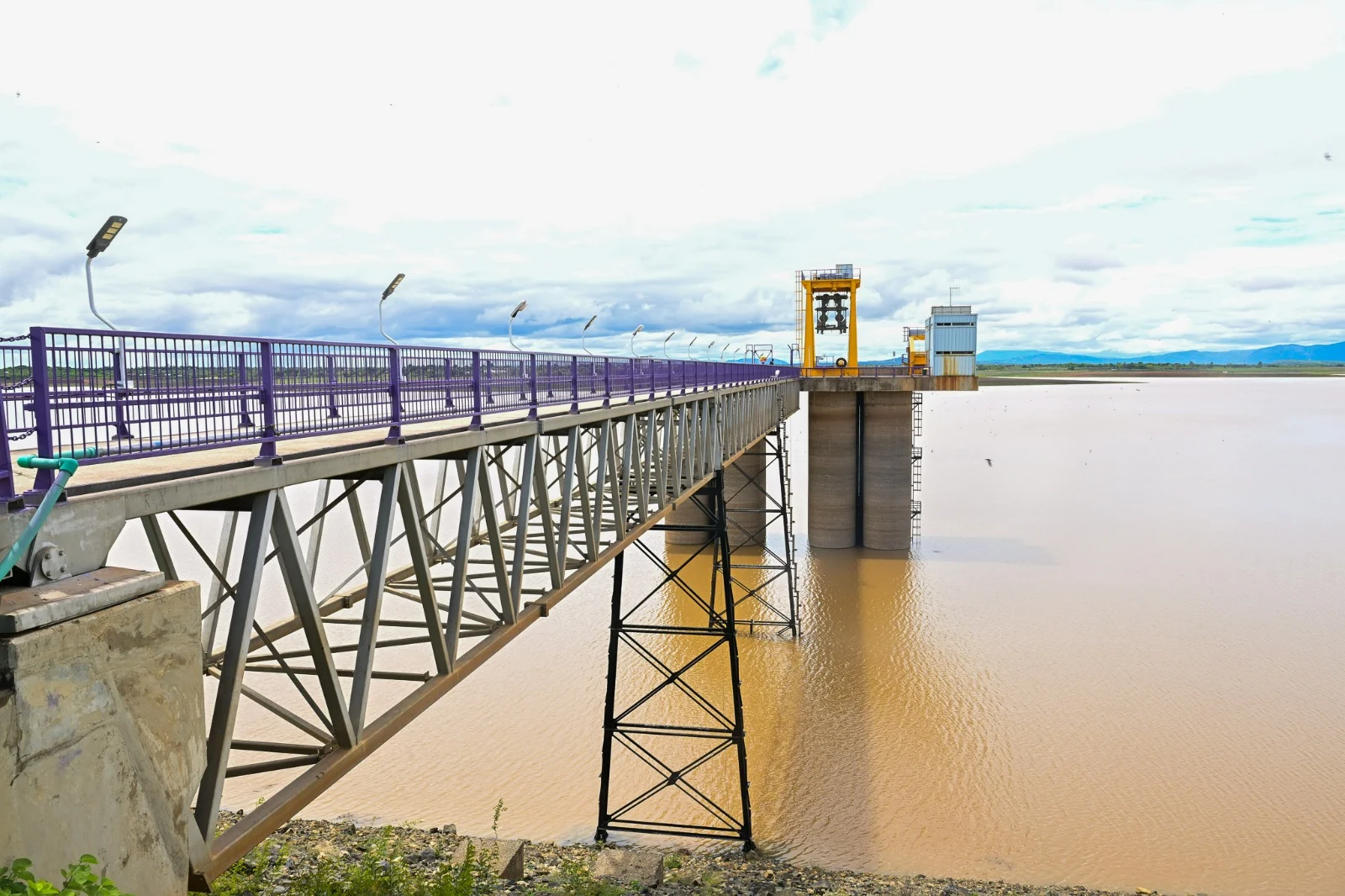
KenGen(Kenya Electricity Generating Company) plans to raise the Masinga Dam’s spillway by 1.5m, increasing the reservoir storage by 170hm3. Masinga Dam is the main component of the Seven Forks Dam infrastructure. This undertaking comes after the power generating firm saw its capital projects frozen by parliament for close to 8 years.
Its expansion and upgrade thus means more storage capacity and consistent water release downstream. This upgrade is also expected to improve utilization and availability of downstream Kamburu, Gitaru and Kindaruma plants.
According to KenGen, the Masinga Dam upgrade will reduce generation volatility during dry periods, leading to higher effective capacity factor and not necessarily new MW. The plan will also support base-load hydro stability, lowering reliance on expensive thermal generation.
KenGen has resumed working on production capacity building, which has slowed down since 2018 when parliament froze new PPAs.
Investment insiders expect enhanced production capacity to increase revenues for KenGen and profitability, which will price positively in the share price performance. Current dam level readings indicate that KenGen’s major water reservoirs are operating safely within optimal ranges.
In December 2025, Masinga dam recorded a water level height of 1,054.49 meters against a maximum of 1,056.50 and a minimum operational level of 1,037 meters.
Similarly, KenGen reported that Kamburu stood at 1,005.04 meters, Gitaru at 923.18 meters, Kindaruma at 780.05 meters, and Kiambere at 697.44 meters, all above their respective minimum operating levels.
KenGen has maintained a strong performance despite the parliamentary freeze and amid a rising demand for electricity that hit a peak demand of 2,392MW in August 2025. This is a 5% increase from the 2024 peak.
KenGen Power Generating Capacity as at close of 2025
KenGen’s installed capacity of 1,786 MW including geothermal, hydro, wind, and thermal generation, produced 8,482GWh of electricity, up 1% from 2024.
Looking ahead, the company said it remains focused on delivering its G2G 2034 Strategy, which aims to accelerate renewable energy development and diversify revenue streams.
Its current project pipeline of 253MW includes the 63MW Olkaria I project, the 42.5MW Seven Forks Solar Project, and the 8.6MW Gogo Hydro Power Plant upgrade.
KenGen has been advancing its regional expansion strategy, with the upcoming geothermal drilling project in Ngozi, Tanzania, marking a significant milestone in its cross-border dealings and ambitions.
The electricity generating firm, has also been on a steady financial performance plane, posting a net profit of KSh 10.5 Billion for the financial year ended 30th June 2025. This is a 54% rise from KSh 6.80 Billion recorded at the June end-year period in 2024.
KenGen attributes its improved financial performance to stronger operational efficiency, cost optimization, and increased generation from its diversified energy portfolio. The listed power generating firm also reported a 42% rise in pre-tax profit to KSh15.47 billion.
The company enters 2026 with a near-term project pipeline of 252MW, including the 63MW Olkaria I Rehabilitation, the 42.5MW Seven Forks Solar project and the expansion of the 8.6MW Gogo Power plant in Migori County.
These new projects are expected to strengthen the country’s grid reliability, support industrial expansion and accelerate Kenya’s transition to a fully renewable power producer.
“Our investment priorities will continue to deliver sustainable energy, create value for shareholders and support Kenya’s industrial transformation,” said Engineer Peter Njenga.
KenGen is the leading electricity generation company in the Eastern Africa region with an installed generation capacity market share of more than 60%.
The company’s primary business is to provide safe, reliable, and competitively priced electric energy for the country in an environmentally friendly and sustainable manner while creating value for its stakeholders.
Today, KenGen Plc has an installed generation capacity of 1,786 MW, of which over 90% is drawn from green sources namely: Hydro (826 MW), Geothermal (754 MW), Wind (25.5 MW). The balance is from thermal.
ALSO READ: KenGen to Pay Government KSh 4.2 Billion As Dividends



![Parliament in a past session. [Photo/Parliament of Kenya/Facebook]](https://businesstoday.co.ke/wp-content/uploads/2026/02/Parliament-Kenya-200x143.webp)



![Parliament in a past session. [Photo/Parliament of Kenya/Facebook]](https://businesstoday.co.ke/wp-content/uploads/2026/02/Parliament-Kenya-680x486.webp)





Leave a comment