

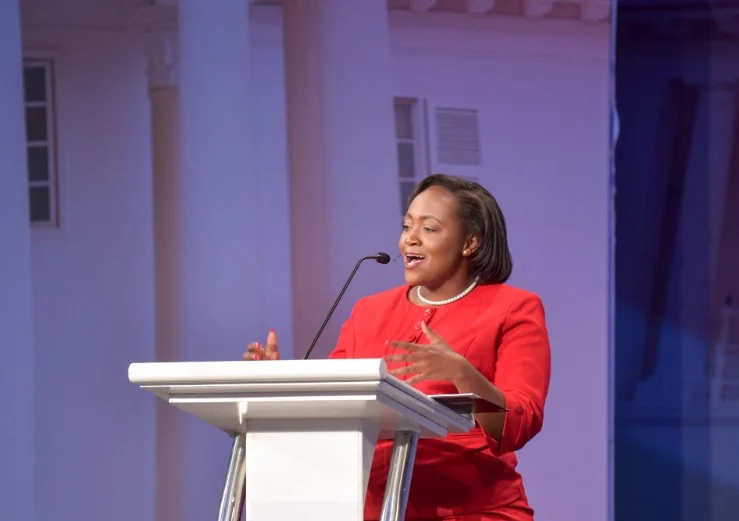
Former 2022 presidential running mate Justina Wamae has weighed in on Diageo’s decision to sell its controlling stake in East African Breweries Limited (EABL), pointing to long-standing structural problems in Kenya’s beverage industry as a key factor behind the move.
In a post shared on Thursday, Wamae argued that the operating environment in Kenya has become increasingly difficult for large manufacturers.
She cited high production costs, widespread counterfeits and heavy taxation as major constraints to growth.
“Diageo exits Kenya – nikama hawataki twende Singapore pamoja. High cost of production, counterfeits, high taxation, etc., will stagnate everything,” Wamae wrote.
Her comments followed an announcement made a day earlier, on December 17, 2025, in which British multinational Diageo confirmed it had agreed to sell its 65 per cent stake in EABL to Japanese beverage giant Asahi Group Holdings.
The deal is valued at $2.3 billion, or about Ksh 300 billion, and is one of the largest foreign acquisitions ever recorded in Kenya’s corporate sector.
As part of the transaction, Diageo will also sell its 53.68 per cent shareholding in UDV (Kenya) Limited, a key spirits producer.
Taken together, the deal values EABL at approximately $4.8 billion. Once completed, Asahi will become the majority owner of EABL’s beer and spirits businesses across Kenya, Uganda and Tanzania.
EABL is one of East Africa’s oldest and most recognisable companies, having been founded in 1922. The firm manufactures and distributes beer, spirits and ready-to-drink beverages, with popular brands such as Tusker, Senator, Serengeti, Kenya Cane and Chrome forming part of its portfolio. Through long-term licensing agreements, EABL will continue producing and distributing Diageo brands, including Guinness, Johnnie Walker and Smirnoff Ice.
For the financial year ended June 2025, EABL reported net sales of Ksh 128.8 billion, EBITDA of Ksh 33.3 billion and a regional workforce of more than 1,500 employees. The company has assured investors and the public that the transaction will not disrupt its day-to-day operations, balance sheet or existing obligations. This includes its Ksh 20 billion medium-term note programme, which remains in place.
EABL on NSE
Under the terms of the deal, EABL will continue to be listed on the Nairobi Securities Exchange, as well as on stock exchanges in Uganda and Tanzania.
Asahi has said it intends to work closely with EABL’s current management and staff to support long-term, sustainable growth in the region, signalling continuity rather than a radical operational overhaul.
Diageo, on its part, has explained that the sale is in line with its global strategy to streamline operations, exit non-core assets and reduce debt, while still maintaining a presence in key markets through licensing and brand partnerships.
The company has emphasised that East Africa remains strategically important to its global footprint, even as it steps back from direct ownership.
Counterfeit
Wamae’s remarks have reignited debate around the broader challenges facing Kenya’s alcohol and beverage industry. Counterfeit and illicit alcohol continues to be a major concern, with authorities regularly conducting crackdowns that have led to the seizure and destruction of fake products worth millions of shillings.
These illicit brews not only pose serious public health risks but also undercut legitimate manufacturers by offering cheaper, untaxed alternatives.
Taxation has also been a long-running pain point for industry players. Excise duty increases on alcoholic beverages, often introduced as part of broader revenue-raising measures, have raised retail prices and squeezed margins.
Industry stakeholders have repeatedly warned that high taxes push price-sensitive consumers toward unregulated products, worsening the counterfeit problem and reducing overall tax compliance.
In addition, manufacturers continue to grapple with high energy costs, rising raw material prices and a volatile currency, all of which increase the cost of doing business.
These pressures have made Kenya a more challenging market compared to some emerging economies that offer lower production costs and more predictable regulatory environments.
The Asahi-Diageo transaction is expected to be completed in the second half of 2026, subject to approvals from competition and regulatory authorities in Kenya, Uganda and Tanzania.
As the process unfolds, the deal is likely to remain under scrutiny, not just because of its size, but also because it highlights deeper questions about Kenya’s investment climate and the reforms needed to retain and attract multinational manufacturers.













Leave a comment