

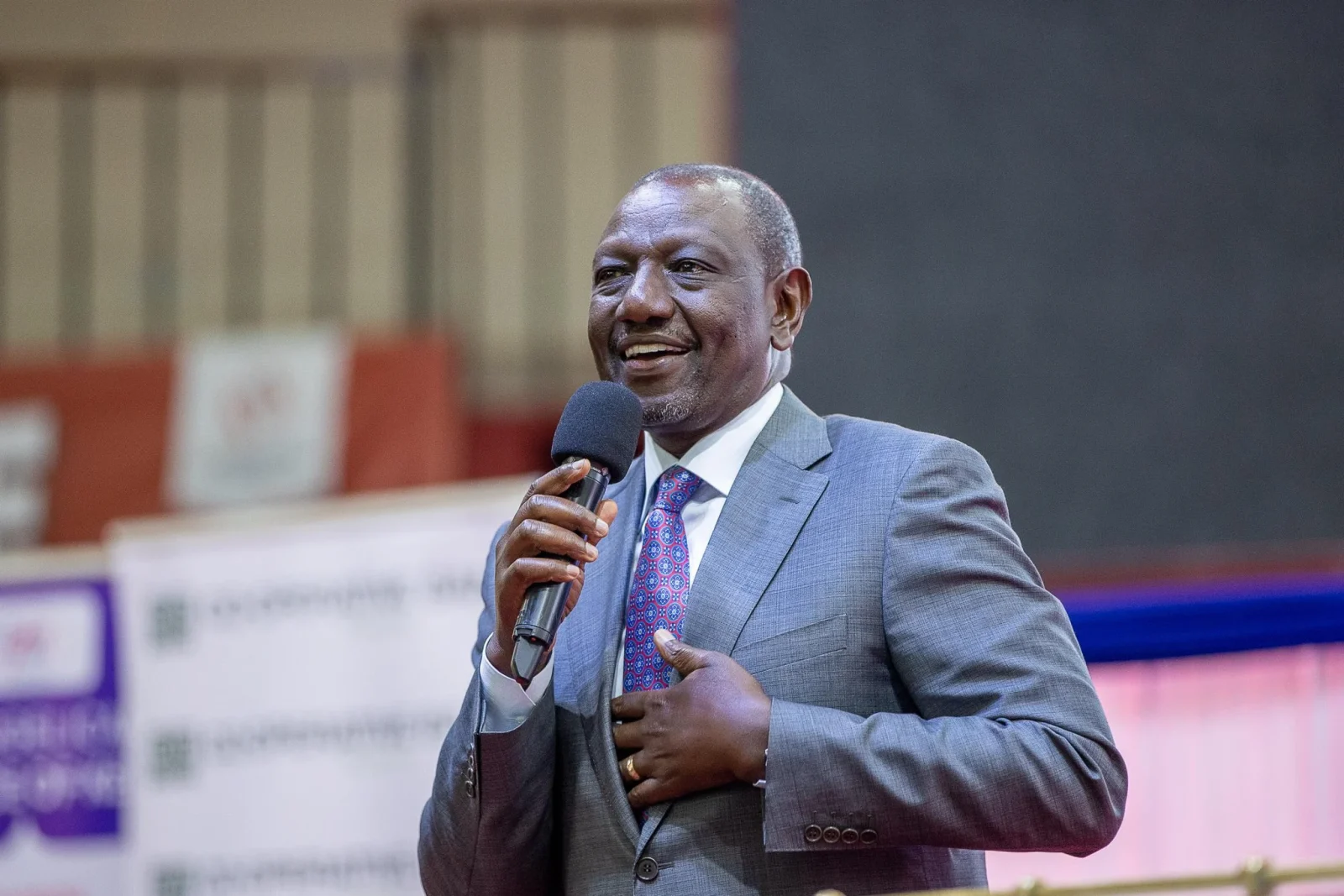
Investor activity at the Nairobi Securities Exchange (NSE) has picked up sharply following the signing of the Privatisation Act, 2025, into law by President William Ruto last week.
The new law opens the way for the government to sell shares in key state-owned corporations as part of a plan to raise revenue, reduce public spending, and attract private investment.
The Privatisation Act, 2025, replaces the 2005 legislation and gives Parliament a central role in approving privatisation programmes. It also establishes a new Privatisation Authority to oversee the process in place of the old commission.
The Treasury Cabinet Secretary will now be responsible for identifying state corporations for sale and submitting a privatisation programme to the National Assembly for approval.
According to the law, the process must involve public participation, expert consultation, and transparency. Parliament is required to consider and approve the programme within 60 days.
Each approved programme will remain valid for up to eight years. The Act also allows various methods of privatisation, including initial public offerings, public tenders, and pre-emptive rights.
At least 11 parastatals have been listed for privatisation. They include Kenya Pipeline Company (KPC), Kenyatta International Convention Centre (KICC), Kenya Literature Bureau, New Kenya Co-operative Creameries (NKCC), Mwea Rice Mills, National Oil Corporation of Kenya (NOCK), Kenya Seed Company Limited, Western Kenya Rice Mills Ltd, Machining Complex, and Kenya Vehicle Manufacturers Limited.
The once-thriving textile firm Rivatex East Africa Limited has already been leased to ARISE Integrated Industrial Platforms, a foreign investor, on a 21-year deal. However, most of the market attention is focused on KPC, the country’s main fuel transport and storage firm.
The government plans to sell a 65 per cent stake in KPC through a public offering and retain 35 per cent ownership. The sale is expected to raise at least Sh100 billion, with the listing likely to happen before the end of the year—earlier than the initial target of March 2026.
NSE Chairman Kiprono Kittony confirmed that investors are showing strong interest ahead of the planned KPC listing.
Recent data shows that the NSE 20 share index rose by 1.45 per cent last week to 2,984.54 points, while the NSE 25 climbed by 2.11 per cent to 4,682.27.
The NASI All-Share index, which reflects the overall market performance, increased by 2.21 per cent to 176.39 points. The N10 index, which tracks the market’s 10 most liquid stocks, gained 0.55 per cent to 1,767.79 points.
Market capitalisation rose to Sh2.78 trillion, representing a 2.21 per cent increase from the previous week. The total turnover for the top five companies was Sh1.04 billion, accounting for 68.63 per cent of total trading. The most active counters were Safaricom, KCB, KPLC, Equity, and KenGen.
The government’s broader goal is to use privatisation to unlock the value of underperforming state corporations, attract private-sector investment, and widen public ownership of national assets through the capital markets. It also seeks to ease pressure on public finances by cutting reliance on taxpayer funding for struggling entities.
President Ruto has described the move as a key part of his administration’s plan to promote efficiency and innovation in state-run enterprises.
He said the sale of government stakes will help channel more resources into infrastructure, social programmes, and economic development.
The momentum at the NSE suggests growing investor confidence as Kenya prepares for one of its biggest privatisation waves in two decades.












Leave a comment