

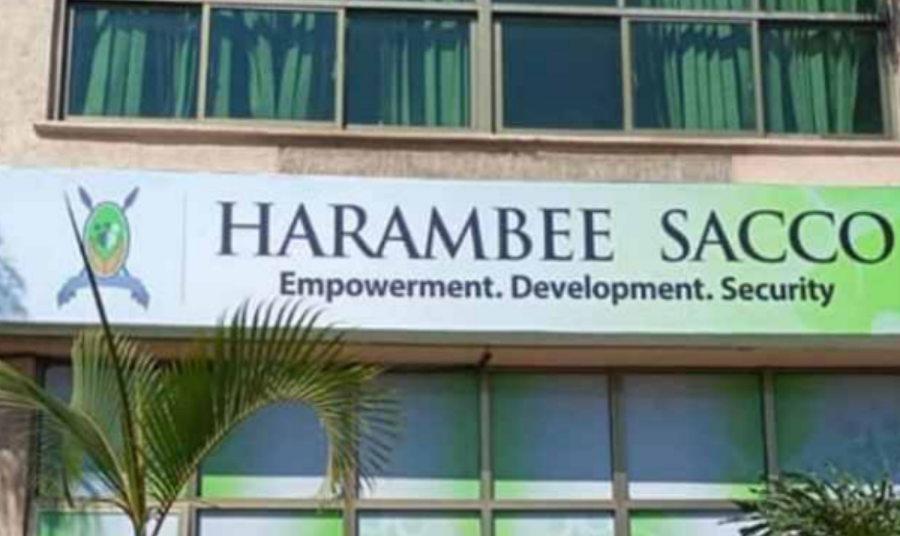
Harambee Deposit Taking SACCO has taken a major financial hit after writing off more than Ksh 230 million linked to an unreconciled bank account, while continuing to treat over Ksh 42 million invested with the troubled Kenya Union of Savings and Credit Cooperatives (KUSCCO) as fully impaired.
The lender disclosed the losses in its audited financial statements for the year ended December 31, 2025, offering another glimpse into how Kenya’s cooperative sector is still dealing with the fallout from the KUSCCO financial scandal that has affected dozens of savings and credit societies across the country.
According to the accounts, the largest adjustment relates to Ksh 230.37 million held in a bankers’ cheque control account that management was unable to reconcile despite its review of historical records. The SACCO said there was not enough documentation to support the balance, forcing it to recognise the full amount as an expected credit loss in line with international accounting standards.
“The expected credit loss allowance includes a full provision for an unreconciled and unsupported bank account balance amounting to Sh230,368,657, provided for in the earliest period as required by IAS 8.”
IAS 8 requires companies to correct accounting errors from previous periods once they are identified, even if the issue originated several years earlier.
In addition to the write-off, Harambee DT SACCO maintained a full impairment on Sh42.02 million deposited with KUSCCO. The provision remained unchanged from the previous financial year, reflecting continued uncertainty over whether the funds will ever be recovered.
The lender said, “KUSCCO deposit savings held by the Society were fully provided at an amount of Sh42,024,896 both in the current and prior year.”
The continued provisioning mirrors the approach taken by many SACCOs across Kenya since KUSCCO’s financial troubles came to light. Institutions that had invested surplus funds with the umbrella cooperative body have been forced to recognise expected credit losses under IFRS 9 because of doubts over recoverability.
Despite the sizeable provisions, Harambee DT SACCO still delivered a stronger financial performance in 2025. Total assets grew to Ksh 41.29 billion from Kshv37.63 billion a year earlier, reflecting continued growth in member deposits and lending activities.
Its net loan book also expanded to Sh34.28 billion, underlining sustained demand for credit among members. The SACCO further reported a higher surplus after tax and said it remained adequately capitalised, with several prudential ratios staying above the minimum levels required by the Sacco Societies Regulatory Authority (SASRA). However, management acknowledged that some regulatory ratios still need improvement.
The KUSCCO crisis has become one of the biggest financial scandals ever to hit Kenya’s cooperative movement. A forensic audit commissioned by the government uncovered widespread governance failures, alleged misappropriation of members’ funds, manipulation of financial statements and weak internal controls. Investigators estimated that the losses linked to the organisation could reach about Ksh 13 billion.
The revelations triggered investigations by regulators and law enforcement agencies, while many SACCOs were forced to reassess the value of their investments with KUSCCO. Several societies have since incurred substantial impairments running into billions of shillings collectively, significantly affecting their earnings even where their core businesses remained profitable.
In response to the crisis, the government appointed a new board and management team to stabilise KUSCCO, strengthen governance and pursue recovery of lost assets. Authorities have also introduced reforms aimed at restoring confidence in the cooperative sector, which serves millions of Kenyans through savings, affordable credit and investment products.
Even so, many deposit-taking SACCOs have chosen to maintain full provisions against their KUSCCO deposits until there is clear evidence that recoveries will be made. Harambee DT SACCO’s latest financial statements show that while its core operations continue to grow, the effects of historical accounting issues and the lingering KUSCCO crisis are still weighing on its books.















Leave a comment