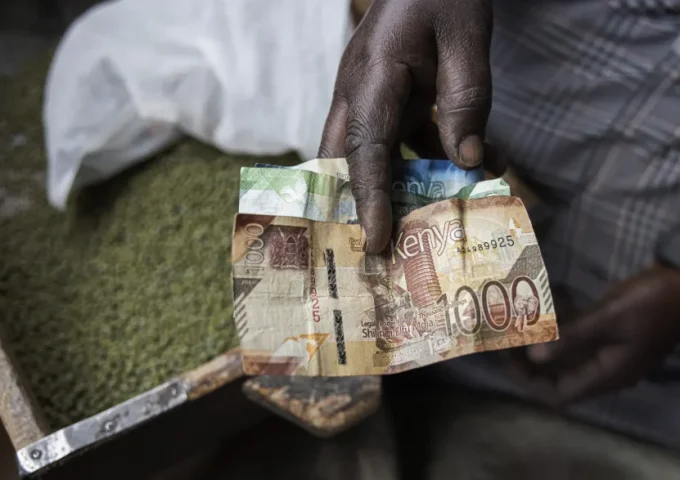
A clear shift is emerging among Kenyan workers, with many choosing to build their own financial safety nets as economic pressure continues to bite.
Findings from the latest Financial Wellness Monitor by Old Mutual show that side hustles and small businesses are no longer optional for many households, but a necessary part of survival.
The study, released on March 25, 2026, indicates that nearly half of working Kenyans are now running businesses, while others are actively searching for additional income streams.
About 30 per cent of respondents reported an increase in earnings compared to last year, largely driven by extra income outside formal employment. This points to a growing culture of self-reliance, with more people tapping into informal trade, digital work, and entrepreneurship to bridge income gaps.
“Kenyans are not waiting for the economy to improve. In the face of economic pressure, they are actively engineering their own recovery, adapting, innovating, and finding new ways to improve their financial position,” the report notes.
Even so, the gains are happening alongside significant financial strain. A large portion of households are still struggling to keep up with daily expenses. Four in ten Kenyans are borrowing money just to cover basics such as food, rent, and transport, while more than half say their debt levels have either remained high or increased over the past year.
Spending habits are also under pressure, with 46 per cent admitting they frequently exceed their budgets. This reflects the widening gap between income and the rising cost of living, which continues to erode purchasing power.
“The 2025 report paints a picture of a nation in transition. Kenyans are resilient and entrepreneurial. But without stronger support in financial literacy, savings discipline, retirement planning, and protection, this progress risks remaining short-term,” said Vuyokazi Mabude, Head of Knowledge and Insights at Old Mutual.
The report focused on employed individuals earning at least Ksh 12,000, aged between 20 and 59, and reveals a population trying to balance ambition with financial pressure.
One of the standout trends is the rise in people holding multiple jobs. About 26 per cent of Kenyans now fall into this category, up from 20 per cent a year earlier. For a quarter of them, these side activities bring in more income than their primary jobs, highlighting a shift in where real earning power lies.
At the same time, financial responsibilities are growing heavier. Nearly half of respondents are supporting both younger and older dependents, a situation commonly referred to as the sandwich generation. Many are not only providing for their children but also assisting parents and siblings, stretching already limited resources.
The pressure is evident in everyday life. More Kenyans are falling behind on rent, struggling with utility bills, and dipping into savings just to get by. The number of people unable to keep up with rent has risen sharply, while those relying on their savings to survive have also increased.
Despite this, there are small signs of improvement in financial confidence. Satisfaction levels have risen compared to 2024, with younger people in particular expressing a more positive outlook.
In fact, 70 per cent of those surveyed expect their financial situation to improve within the next six months, largely due to hopes of a better economic environment.
Savings culture is also gradually strengthening. Over half of respondents say they can sustain themselves for at least three months without income, an improvement from last year. However, a significant portion of the population remains financially vulnerable, with limited buffers to absorb shocks.
The report also shows a shift in priorities. More Kenyans are focusing on securing stable income, reducing expenses, managing debt, and building emergency funds. There is also growing caution around investments, with many preferring safer, lower-risk options.
Overall, the findings highlight a balancing act, a population pushing forward through innovation and hard work, but still weighed down by high costs, debt, and expanding responsibilities.
A recent Financial Wellness Monitor Report by Old Mutual has shown that...
A difficult mix of grounded aircraft, rising costs and global supply chain...
CBK(Central Bank of Kenya) invites bids for two long-term Treasury Bonds worth...
Kenya could face a tighter fuel supply in the coming weeks unless...
Leave a comment