


Government of Kenya has directed National Treasury to begin the process of clearing payment arrears, especially cash owed to suppliers and contractors, by releasing a cheque of KSh 255 Billion.
Government operations have been hit severely for nearly two decades as it struggles to settle bills for services delivered to it. Suppliers and contractors have repeatedly raised concerns over delayed payments, crippling their businesses, disrupting cash flows, and eroding confidence in Government procurement systems.
Government approval of the payment of KSh255 billion in pending bills, marks a significant step toward addressing long-standing financial obligations owed to suppliers and contractors.
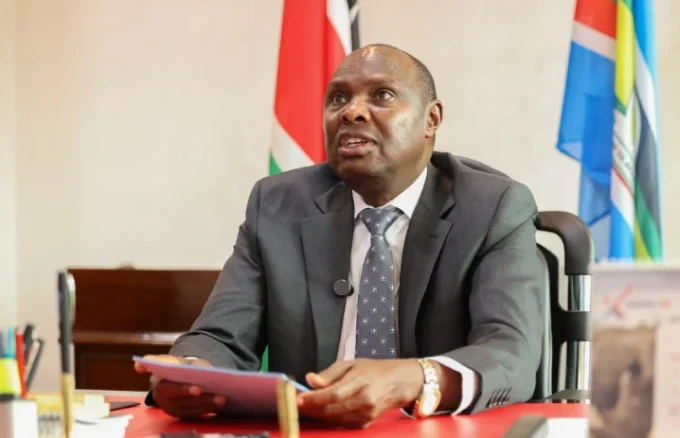
Dr Chris Kiptoo, Principal Secretary for the National Treasury and Economic Planning, confirmed the payments approval during the 2026 Legislative Retreat in Naivasha.
The payments form part of the Sh606 billion accumulated in pending bills and follow a rigorous verification process conducted by the Pending Bills Verification Committee.
Dr Kiptoo confirmed that KSh80 billion in the road sector has already been cleared, while the remaining KSh175 billion will be settled progressively in the coming months.
The Government has assured suppliers that all verified bills will be paid within the next two fiscal years, as Cabinet approval is sought to clear the balance.
Dr Kiptoo acknowledged that delays in clearing these bills were largely linked to fiscal deficits, as the Government grappled with shrinking revenues and reduced tax collections.
He emphasized that the approval of KSh255 billion is not only a financial intervention but also a confidence-building measure aimed at restoring trust between the government and the private sector.
Out of the projected KSh4.6 trillion budget for the 2026/2027 financial year, KSh1.8 trillion—representing 48 percent of collected revenues—is earmarked for interest payments on loans, leaving limited room for development expenditure.
From the KSh 2.8 trillion allocated to ministerial budgets, the education sector will receive the largest share at KSh 767 billion, followed by energy, infrastructure, and ICT at KSh 595 billion, and national security at KSh 300 billion.
Dr. Kiptoo warned that the country’s public debt, which stood at KSh 12 trillion as of September 30, 2025, is unsustainable and continues to reduce the budget available for critical development projects.
To address these challenges, the Government is implementing a series of reforms. These include strengthening tax administration, prioritizing incomplete projects, reducing non-essential expenditure, and adopting e-procurement for the KSh 2.5 trillion procurement kitty.
State corporations are also undergoing mergers, restructuring, and dissolutions, with reforms expected to be completed by year-end. Privatization remains a key pillar of the government’s fiscal strategy. Proceeds from the ongoing sale of government-owned entities, including Kenya Pipeline, will be channelled into the Infrastructure Fund to provide long-term financial capacity for national projects.
Dr. Kiptoo also highlighted positive economic indicators, including rising exports, a stable shilling, foreign reserves of USD 12 billion (KSh1.5 trillion), and diaspora remittances totalling USD 5.04 billion (KSh649.5 billion). These parameters, he noted, demonstrate resilience in the economy despite fiscal constraints. National Assembly Budget Committee Chair Kimani Kuria defended the government’s plan to sell 15 percent of its shares in Safaricom, projecting that the move will raise KSh244 billion to fund infrastructure projects. Kuria argued that such measures are necessary to create fiscal space and reduce reliance on debt.
National Assembly Majority Leader Kimani Ichung’wa attributed the pending bills crisis to entrenched cartels within Treasury and county offices.
He alleged that senior county officers had withheld released funds to extort suppliers, thereby worsening the crisis. Ichung’wa challenged critics of the Safaricom share sale to propose viable alternatives for raising funds.







Leave a comment