

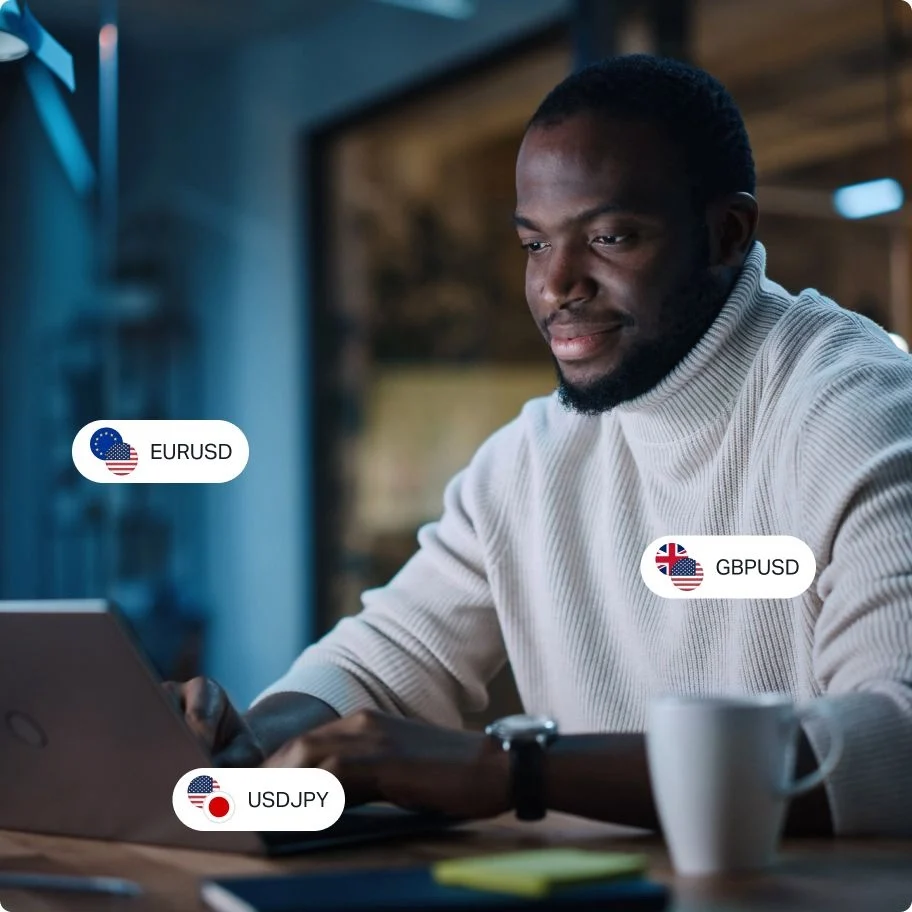
The first time you see a live forex price feed, it’s hard not to stare. Numbers ticking up and down, little spikes on charts, currency names that sound familiar and strange at the same time. For a lot of Kenyans who decide to give forex a try, that first look is a mix of curiosity and, if we’re honest, a bit of confusion.
And that’s normal. Nobody is born knowing what a pip is, or why the price of the euro can suddenly drop after a speech from a central banker halfway across the world. Those things take time to understand.
What Exactly is Forex Trading?
In simple terms, it’s buying one currency and selling another, usually at the same time, in the hope that the value changes in your favor. You might trade the US dollar against the Japanese yen, or the British pound against the euro. It happens in pairs, and you’re always watching how those two values move in relation to each other.
The forex market doesn’t run like a single stock exchange with a bell to open and close the day. Instead, it’s a web of banks, brokers, and trading platforms that pass the baton from one financial hub to another. It starts in places like Sydney and Tokyo, then shifts to London, and eventually New York. For a trader in Kenya, that means the market is awake almost whenever you are, Monday through Friday.
Before You Click Anything
If you’ve been wondering how to start forex trading in Kenya, the short answer is: slowly. Rushing is the fastest way to lose money. A sensible starting point is opening a demo account with a trusted broker. Exness, for example, gives beginners access to real-time pricing and lets them practice without risking actual funds.
A demo account isn’t just “training mode.” It’s where you figure out how to use the trading platform without fumbling when it counts. You’ll learn how to open and close trades, adjust order sizes, set stop-loss levels, and see how prices react when news breaks.
Spend some days, maybe weeks, in that environment. Watch how different currency pairs behave. Notice how a quiet Tuesday morning feels compared to a Friday afternoon when markets are bracing for weekend uncertainty.
Forget the Idea of Trading Without a Plan
It’s tempting to jump into trades because you “have a feeling” or saw a tip on social media. That’s a good way to drain your account. A trading plan doesn’t need to be complicated, but it should be yours, not something copied from a stranger.
Think about how much you’re willing to risk per trade. Decide whether you want to trade actively several times a day or hold positions longer. Set clear rules for when to enter and exit. If you can’t explain your plan to someone else in a couple of sentences, it’s probably not ready.
Risk Management is Not Optional
Losses will happen. What matters is how you contain them. Many traders stick to risking one or two percent of their total account on a single trade. That way, even a bad streak won’t wipe them out.
Stop-loss orders can help enforce this discipline by closing a trade automatically if the market moves too far against you. Position sizing, simply deciding how big or small each trade should be, is just as important.
Don’t Rush the ‘Practice’ Stage
There’s a pattern that catches a lot of beginners: they win a few trades on a demo account, feel unstoppable, switch to real money, and lose quickly. The fix is to stay in demo until you can follow your plan consistently, even on days when the market is unpredictable.
Try trading when the market is slow and when it’s moving fast. See how your strategy holds up during a major news event, and adjust where necessary. The point is to be ready for all types of days, not just the easy ones.
Tools Matter More Than You Think
Some traders love multi-screen setups with detailed charts and technical indicators. Others prefer to keep it simple. Either way, you need tools that give you clear market data and let you act quickly.
If you’re often away from your desk, the best forex trading app in Kenya from Exness lets you check prices, read charts, and place trades right from your phone. It’s handy for those moments when you’re out and spot a move you don’t want to miss.
Stay Plugged into the World
Currencies react to more than just charts. Interest rate decisions, election results, commodity prices, even a natural disaster in a key region can move them. Sometimes the reaction is instant; other times, it builds slowly.
Following financial news and keeping an eye on an economic calendar will help you see what might cause the next move. Many traders blend technical analysis (patterns, indicators, chart setups) with fundamental analysis (economic and political factors). That mix often provides a clearer picture.
Your Mindset Will be Tested
Forex trading has a way of exposing your habits and emotions. You might find yourself hesitating at the wrong time or holding onto a bad trade hoping it will turn around. These aren’t “technical” problems; they’re psychological ones.
Keeping a trading journal can help. Write down why you took a trade, what happened, and how you felt before, during, and after, over time, you’ll start to notice patterns in your decision-making, both good and bad.
Learning from Others Without Copying Blindly
Kenya now has a growing community of forex traders, from online groups to in-person meetups. Being part of these circles can keep you motivated and help you learn from people who’ve been in your position.
But there’s a caution here: what works for someone else might not work for you, treat advice as raw material you can shape into your own approach, not a shortcut you can follow without thinking.
Building Confidence the Right Way
Confidence in trading isn’t about feeling sure every trade will win. It’s about knowing you’ve done the work to create a plan, tested it, and can stick to it even on a bad day. That kind of confidence builds slowly.
Start small with your live account. The goal is to get comfortable managing real trades without the pressure of risking too much. As your experience grows, you can scale up your trade sizes.
Final Thoughts
Some people see forex trading as a sprint, but the traders who last see it more like a marathon. They’re patient and they treat it as a skill to be developed, not a lottery ticket.
If you take the time to understand the market, use a plan, manage your risk, and keep learning, you’ll be in a much better position to handle both the wins and the losses.






Leave a comment