

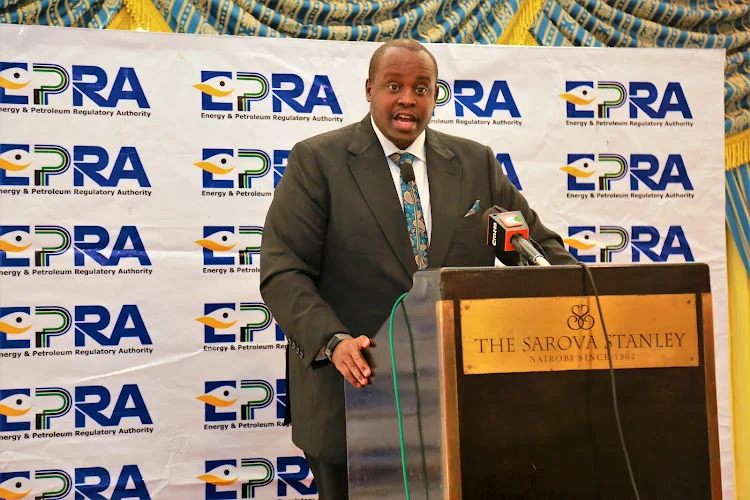
EPRA has quietly hit the reset button on how power projects will make money, and it comes right after Parliament reopened the door to new electricity deals.
In gazette notices, the Energy and Petroleum Regulatory Authority revoked three key tools that have long guided pricing and investor returns in the electricity sector.
The regulator scrapped the Guidelines for the Computation of Allowed Return on Equity, the Guidelines for the Computation of Allowed Return on Investment, and the benchmark generation tariffs for geothermal power, all issued under Section 163(3) of the Energy Act, 2019.
“Pursuant to section 163 (3) of the Energy Act, 2019, the Energy and Petroleum Regulatory Authority revokes the Guidelines for the Computation of Allowed Return on Equity for generation, transmission and distribution projects in the country,” EPRA Director-General Daniel Kiptoo Bargoria said.
“Pursuant to section 163 (3) of the Energy Act, 2019, the Energy and Petroleum Regulatory Authority revokes the Guidelines for the Computation of Allowed Return on Investment for generation, transmission and distribution projects in the country,” he added.
In another notice, EPRA also withdrew the benchmark tariffs that had guided geothermal pricing, signalling that even one of Kenya’s biggest renewable energy sources is now moving into a new pricing regime.
The changes come at a time when the power sector is reopening after Parliament lifted the moratorium on new Power Purchase Agreements (PPAs) in November 2025, ending a freeze that had lasted for more than two years.
Lawmakers approved a new framework allowing future PPAs to be signed in Kenya shillings, foreign currency, or a mix of both, a move aimed at reducing currency risk for projects with high local costs while still making room for foreign financing.
Parliament also introduced tighter oversight and transparency rules targeting Independent Power Producers, including a requirement for the Business Registration Services to submit a full register of owners, beneficial owners, shareholders and directors of all IPPs operating in Kenya within six months.
Any future amendments or variations to PPAs will also require the Attorney-General’s involvement, including advisory and negotiation roles, in a move meant to strengthen accountability around contract changes.
With the moratorium now lifted, the Ministry of Energy and EPRA are expected to shift new power procurement toward competitive auctions, guided by gazetted indicative tariffs and the Least Cost Power Development Plan, signalling a move away from negotiated contracts toward price-based competition for new generation capacity.













Leave a comment