

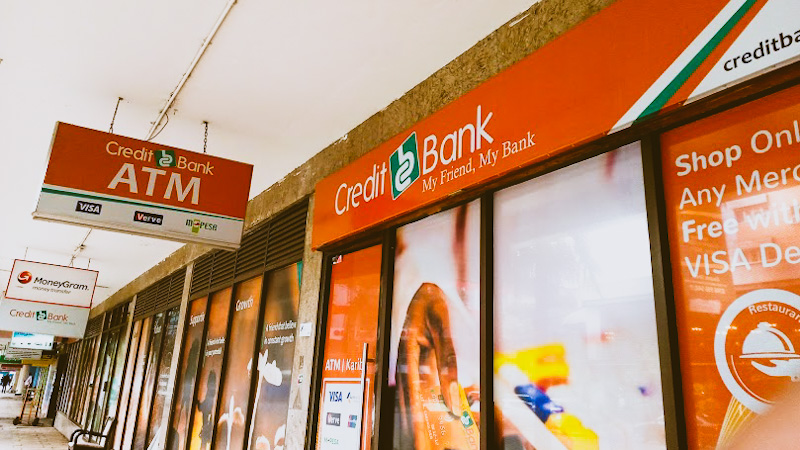
Credit Bank has reported a reduced pre-tax loss of Ksh 26.6 million in the first quarter of 2026, compared to Ksh 68 million recorded in a similar period last year, as the lender intensified efforts to strengthen its liquidity position and prepare for higher capital requirements in Kenya’s banking sector.
The performance comes at a time when the banking industry is operating under significant pressure from a difficult macroeconomic environment. Rising global inflation, driven in part by ongoing geopolitical tensions and conflict in the Middle East, has pushed up energy and food prices while also disrupting global supply chains and shipping routes.
These developments have slowed global growth and created uncertainty in emerging markets such as Kenya, where both consumers and businesses are becoming more cautious in borrowing and spending.
Against this backdrop, Credit Bank adopted a conservative strategy focused more on protecting its balance sheet than pursuing aggressive loan expansion. Loan growth was deliberately slowed to Sh15.8 billion as the bank tightened lending standards to reduce exposure to defaults. This approach affected short-term earnings but was aimed at improving long-term asset quality in a rising non-performing loan environment.
Industry data from the Central Bank of Kenya shows that gross non-performing loans rose slightly to 15.6 per cent in March 2026 from 15.4 per cent in December 2025, reflecting increased repayment stress across sectors. In response, Credit Bank strengthened its loan recovery processes, increased provisions for potential losses, and restructured several distressed facilities to protect its portfolio.
At the same time, the bank made strategic shifts in its income structure. Rather than relying heavily on credit expansion, it increased exposure to government securities and high-interest-earning deposits. These instruments provided more stable returns in a volatile market and helped cushion the impact of slower lending activity.
Despite the cautious approach, Credit Bank’s financial position improved in several key areas. Liquidity rose significantly from 15.5 per cent to 22.74 per cent, indicating stronger short-term cash buffers and improved capacity to meet obligations. Paid-up capital remained at ksh 1.48 billion, while capital adequacy ratios stayed strong, reflecting overall resilience in the bank’s financial structure.
The lender’s asset base also continued to expand, with total assets increasing to Sh28.3 billion from Sh26.3 billion in the same period last year. Customer deposits grew from Ksh 19.3 billion to Ksh 22.9 billion, a sign of continued confidence from depositors despite the uncertain economic environment.
Stricter banking regulations
This performance also comes as Kenya enforces stricter banking regulations under the Business Laws (Amendment) Act of December 2024. The law requires banks to gradually raise core capital from Sh1 billion to Sh3 billion by the end of 2025, and eventually to Sh10 billion by 2029. The policy is designed to strengthen financial stability, but has placed additional pressure on mid-sized lenders to raise new capital or seek strategic investors.
In response, Credit Bank is pursuing a capital raise of Ksh 4.5 billion through private placement, supported by its shareholders. The move is expected to help the bank meet regulatory requirements ahead of schedule while also positioning it for future growth when economic conditions improve.
Management says the bank remains focused on building a stronger and more resilient institution that can withstand market cycles. The strategy prioritises capital strength, risk management, and customer trust as key pillars for long-term stability.
Overall, Credit Bank’s first quarter results reflect a cautious but deliberate transition, where short-term profitability is being traded for stronger liquidity, improved resilience, and regulatory readiness in a challenging financial environment.

![Parliament in a past session. [Photo/Parliament of Kenya/Facebook]](https://businesstoday.co.ke/wp-content/uploads/2026/02/Parliament-Kenya-150x150.webp)











Leave a comment