

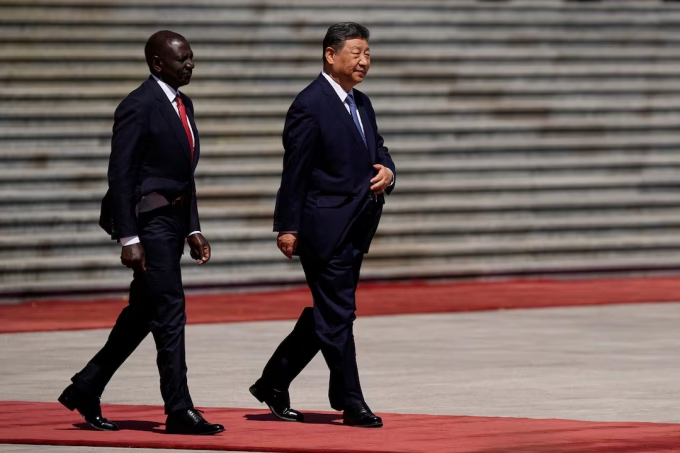
![Chinese leader Xi Jinping has repeatedly called for the "Sinicisation of religion" [Getty Images]](https://businesstoday.co.ke/wp-content/uploads/2026/03/79696fc0-1c15-11f1-ac19-759eff7f5cf1.webp)
China has passed a broad new “ethnic unity” law that will require minority children to learn Mandarin from early childhood through high school, a move officials say will boost integration and economic opportunity but which critics argue could accelerate cultural assimilation.
The legislation, approved at the close of the annual session of China’s parliament, sets out measures aimed at strengthening cohesion among the country’s 56 officially recognized ethnic groups. While framed as a development and modernization initiative, analysts warn it may further weaken minority languages and traditions.
Under the new framework, Mandarin will become the primary medium of instruction across the education system. Previously, students in regions with large minority populations — including Tibet, Xinjiang and Inner Mongolia — could receive much of their schooling in native languages such as Tibetan, Uyghur or Mongolian.
Scholars say the law reflects a broader policy shift toward centralization of cultural and linguistic identity. Some observers see the provisions as part of a longer-term push to standardize national identity around the dominant Han majority, which accounts for more than 90% of China’s population.
Officials in Beijing have defended the initiative, arguing that Mandarin proficiency is critical for improving employment prospects and ensuring equal access to economic development. They describe the legislation as essential to building what they call “modernization through greater unity.”
The law also introduces legal grounds for penalizing parents or guardians accused of fostering views deemed harmful to ethnic harmony. It encourages the creation of “mutually embedded” communities — a policy analysts say could lead to the dispersal of concentrated minority neighborhoods.
China has faced sustained international scrutiny over its policies in minority regions. Human rights organizations have documented large-scale detentions and alleged abuses in Xinjiang, while tighter controls on religious and cultural institutions have been reported in Tibetan areas. Authorities have consistently denied allegations of systemic repression.
Protests have periodically emerged in Inner Mongolia and elsewhere over language policy changes, underscoring tensions between development-driven integration and cultural preservation.
China’s constitution formally guarantees ethnic groups the right to use and develop their own languages and systems of local autonomy. Critics, however, contend that the new law consolidates a long-running shift toward assimilation, aligning with President Xi Jinping’s emphasis on national unity and social stability.
Analysts say the policy signals an intensifying focus on economic integration and centralized governance, raising concerns about further erosion of linguistic diversity and local cultural practices.















Leave a comment