

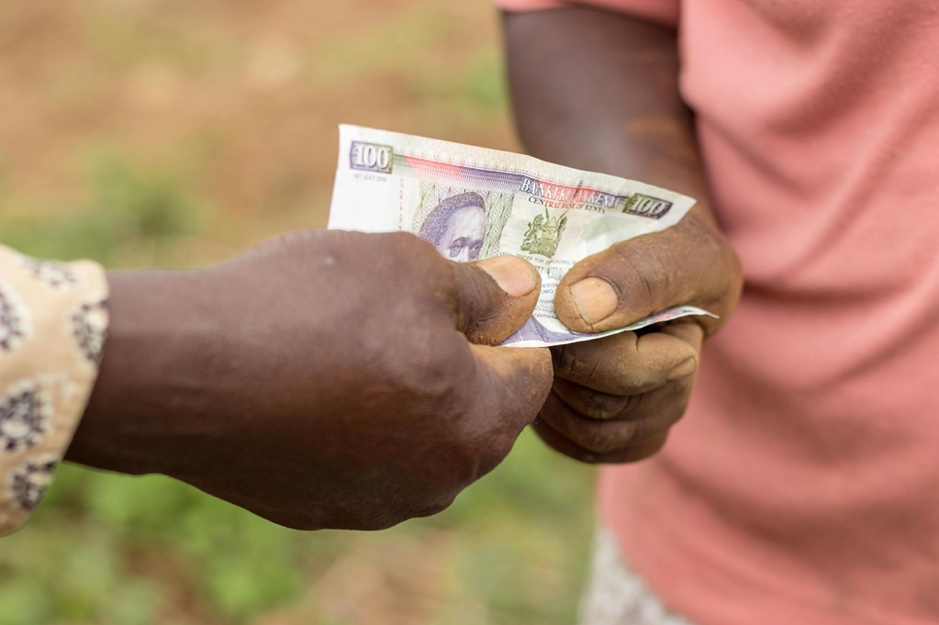
While the use of cash and the advent of cashless societies continue to be a subject of debate for economists around the world, cash remains the backbone of economies across Africa. Yet, although digital payments are also expanding rapidly, hard currency continues to underpin daily trade and livelihoods. In several countries, efforts to reduce the use of cash have sparked controversy, economic disruption, and renewed debate about the role of currency in African development.
Cash remains essential
Many industry stakeholders continue to view cash as an essential component of everyday economic life. While digital payment systems offer convenience, they have also revealed structural and societal limitations that a growing number of countries are reluctant to accept.
In spite of these concerns, several African countries have experimented with policies designed to limit or reduce the use of cash. Indeed, a number of factors are interplaying leading to a reshaping of the financial landscape across the huge continent, including the expansive unbanked population, an imbalance in financial inclusion, cross-border transaction agendas and infrastructure challenges. Preserving the ability to use cash and ensuring that banknotes are secure, reliable, and trusted, therefore remains a practical necessity rather than an ideological choice.
According to Thomas Savare, CEO of French security banknote printing firm, Oberthur Fiduciaire, “Cash is—and will remain—a key instrument of the economy, even in the most developed countries, and a cornerstone of society. That is certain. Surprising as it may seem, global demand for cash is steadily increasing. It peaked during the Covid crisis, declined slightly in the two years that followed, but the underlying trend remains upward. Around 95% of cash demand originates outside Europe and the United States, in regions experiencing strong economic growth and rapid demographic expansion. Together, these factors are driving sustained demand for banknotes.”
Cash still plays a central role in daily economies
In many African economies, cash is far more than a transactional tool, it is the lifeblood of commerce and the most trusted source of financial transaction. In Nigeria, for example, where roughly 90% of transactions occur in cash, physical currency dominates markets, small business transactions, and the informal economy despite growing digital alternatives. This is a reality that policymakers and citizens alike cannot afford to overlook.
Despite this, in early 2023, Nigeria’s attempt to redesign and replace its higher-denomination naira banknotes became a flashpoint as authorities sought to accelerate digital payments and formalise financial flows. The Central Bank of Nigeria (CBN) introduced new notes for the ₦200, ₦500 and ₦1,000 denominations with the aim of improving currency integrity and encouraging formal financial participation.
But the rollout delivered too few new notes into circulation, triggering a severe cash shortage that reverberated across the economy, with many turning to the black market to procure banknotes. The CBN’s governor at the time, Godwin Emefiele, was subsequently charged with four counts of criminal activity, including the illegal redesign of Naira notes, disobedience to the direction of law, and illegal act causing injury to the public, all of which he has vehemently denied.
The shortage strained consumers and businesses heavily reliant on physical money. At banks and ATMs, long lines became common as Nigerians struggled to access the cash needed for basic expenses. It also highlighted severe deficiencies in Nigeria’s critical banknote production infrastructure, low public trust and the lack of a robust public awareness campaign. The episode highlighted that policies aimed at reducing cash use must be calibrated to on-the-ground realities where cash remains essential, particularly in informal sectors that lack digital access or trust.
In this context, secure and reliable banknotes are essential. Citizens must be able to use money that cannot be easily counterfeited. This is where high-security banknote producers come into focus.
Printing capacity
Moreover, only a small number of African countries have the industrial base to print banknotes domestically. Morocco and Nigeria, for example, possess national printing facilities. Yet even in these cases, key technologies, substrates, inks, or security features are often sourced from specialised private suppliers.
According to an overview by Africa.com, more than two-thirds of African countries still rely on external partners for part or all of their currency production, which can be a strategic advantage. Outsourcing currency production allows countries to tap into state-of-the-art technologies that would be costly and complex to develop domestically. It also provides valuable flexibility, enabling governments to scale production up or down depending on demand without heavy fixed investments. Perhaps most importantly, scale effects and competition among providers helps drive down costs, ensuring access to high-quality banknotes and coins at more competitive prices than many small national facilities could achieve on their own.
So dependence is not a weakness in itself. It reflects a rational division of labour in a field where innovation cycles are fast and counterfeiting techniques evolve constantly. What matters is not where a banknote is printed, but whether it is secure, available, and trusted by the population
The pitfalls in cashless policies
Across Africa, central banks and governments are promoting digital finance as a path to transparency, inclusion, and economic modernisation. In Nigeria, digital payment volume surged, with one industry estimate finding that electronic transactions reached a record ₦1.07 quadrillion in 2024, reflecting rapid uptake of mobile and electronic systems, as the government tries to encourage hybrid payment systems in a country still predominantly cash-based.
Yet this shift has exposed deep divides. For many citizens, access to digital financial tools remains limited by infrastructure, connectivity, and trust issues. A 2025 study on digital banking acceptance in Nigeria found that while awareness of digital options improved during cash shortages, acceptance and use still lagged, especially without robust communication and infrastructure support.
Kenya, on the other hand, is often cited as a global success story for mobile money, illustrates a different but equally important reality: digital payments can scale rapidly without eliminating the need for cash. Despite widespread use of mobile platforms, cash remains essential for interoperability, resilience, and inclusion, particularly during network outages or in low-connectivity areas. The persistence of cash alongside digital tools underlines that cashless policies rarely replace cash entirely; they coexist with it.
Indeed, Kenyan policymakers have been so supportive of cash as and tool for social inclusion, that they have proposed a ban on “cashless only” transactions under $775 as a means to protect consumers lacking access to digital platforms. “A majority of Kenyans still rely on cash transactions while some older people do not know how to use mobile money services, making it discriminatory to deny them access to services or buying goods in cash,” explained Suba South MP, Caroli Omondi. Indeed, such occurrences demonstrate that cash remains structurally embedded in economies, and attempts to marginalise it too quickly tend to generate friction rather than efficiency.
Securing banknotes matters
As such, preserving cash is inseparable from preserving trust in the banknote itself. Counterfeiting risks, supply disruptions, and declining note quality directly undermine confidence in currency. This is where specialised banknote producers play a structural role. The technical complexity of currency production means that even countries with domestic facilities continue to rely on external expertise, notably from firms such as Oberthur Fiduciaire, Crane Currency or Giesecke+Devrient. Their integrated capabilities, spanning high-security design, advanced printing, and currency management, reflect the scale of investment and continuous innovation required to sustain resilient and secure cash ecosystems.
Indeed, trust in cash depends on the physical quality of the banknote itself. Oberthur Fiduciaire has developed advanced capabilities in producing high-security elements, including sophisticated security threads designed to resist counterfeiting while remaining easy to authenticate. More broadly, banknote production typically relies on partnerships with specialised private firms that invest heavily in research and development.
Given the expertise, capital intensity and continuous innovation required, outsourcing can be a sound economic choice for central banks. As illustrated by technologies such as Anima (an animated micro-lenses thread) and Bioguard (an anti-virus, anti-bacterial and anti-fungal technology) the most effective approach balances digital innovation with a robust cash ecosystem that preserves freedom of payment choice and keeps banknotes secure and trustworthy.
As African economies continue to modernise their payment systems, the challenge is not to choose between cash and digital finance, but to recognise their complementarity. Cash remains a stabilising force in periods of disruption, a tool of inclusion where digital access is limited, and a backbone of informal economic activity. Preserving it through secure, high-quality banknotes therefore remains a matter of economic pragmatism, not nostalgia.















Leave a comment