

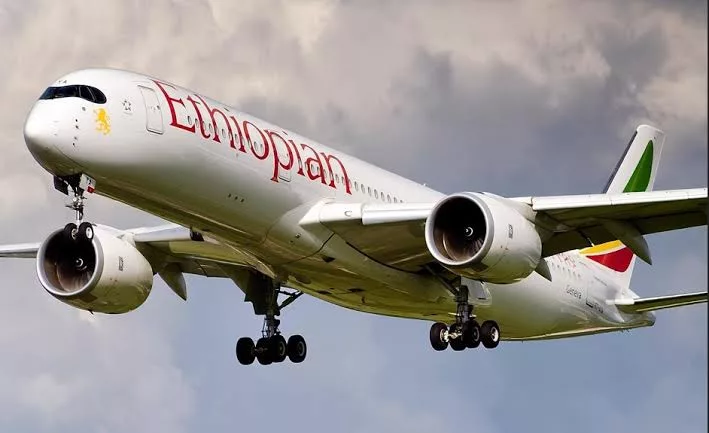
Seven years after Ethiopian Airlines Flight 302 crashed on its way to Nairobi, families of 32 Kenyans who died in the disaster are set to receive a combined Sh11.3 billion from Boeing.
The payments are part of a wider compensation process involving the two fatal Boeing 737 MAX crashes that claimed 346 lives in Indonesia and Ethiopia.
Flight 302 left Addis Ababa for Nairobi on March 10, 2019, but crashed minutes after takeoff near Bishoftu, Ethiopia. All 157 people on board died.
Kenya was among the countries most affected by the tragedy, with 32 Kenyan citizens losing their lives in the crash.
The other disaster involving the aircraft occurred in Indonesia on October 29, 2018, when Lion Air Flight 610 crashed into the Java Sea shortly after leaving Jakarta. All 189 people aboard that aircraft were killed.
Investigations into both crashes found that the aircraft’s Manoeuvring Characteristics Augmentation System, commonly known as MCAS, played a major role in the accidents.
Kenyan families to share Sh11.3 billion
The latest compensation payments follow the completion of legal proceedings in the United States. Ribbeck Law Chartered, which represents families of victims, said Boeing had released the final $944 million for 346 victims’ families.
For the Kenyan families, the combined payment will amount to $87.34 million, equivalent to about Sh11.3 billion. The average works out to approximately $2.73 million, or Sh353 million, per victim, although the actual amount received by individual beneficiaries can vary.
Manuel von Ribbeck of Ribbeck Law Chartered said the cases had involved extensive legal work across several countries because the victims came from different parts of the world.
“We handled a highly complex matter that required international coordination across more than 35 countries where the victims resided,” von Ribbeck said.
He added that the firm’s legal work had now been completed in the United States, Africa, the Middle East and Asia, allowing the payments to proceed.
Compensation fund for 346 victims
The compensation is linked to agreements reached between Boeing and the United States Department of Justice following the crashes.
An earlier $500 million fund was established under a 2021 agreement between Boeing and US authorities to compensate relatives and beneficiaries of the 346 people who died.
A further $444.5 million fund was created under a new agreement reached in 2025. The two funds bring the total set aside specifically for victims and their families to $944.5 million, or roughly Sh122 billion.
The newer fund is being distributed separately from private civil claims. Families receiving money from it do not automatically give up their right to pursue other legal claims against Boeing.
The arrangement is also designed to ensure that money allocated to victims does not simply return to Boeing if a beneficiary is unable to receive it. Unclaimed allocations can instead be redistributed among other eligible beneficiaries.
Beyond compensation, Boeing has also been required to put more money into improving its safety and compliance systems.
Under the 2025 agreement, the company is expected to spend at least $455 million on compliance and aviation safety measures and appoint an independent consultant to assess its progress.
The measures follow intense scrutiny of the development and certification of the 737 MAX after the two crashes.
For the families who lost loved ones, however, the financial payments cannot erase the tragedy.
Dr Mohamad Farrag, whose 26-year-old brother Abdel Hamid Farrag Mohamed Megali died aboard Flight 302, said his family had been left dealing with a loss that money could never repair.
“There is no amount of money in the world that can bring my brother back,” he said.
His brother was a research assistant and PhD candidate in animal nutrition and was close to completing his doctorate. He also ran an agricultural business and helped support his pregnant wife, young son, parents and younger siblings.
For the Kenyan families, the latest payments bring some financial relief after years of legal battles. But they also serve as a reminder of the human cost behind one of the aviation industry’s most serious safety crises in recent years.
The Boeing 737 MAX was grounded worldwide after the two crashes, forcing the manufacturer and regulators to confront serious questions about aircraft design, pilot training, safety oversight and the systems used to certify new planes.
The compensation process may now be reaching its final stages, but for the families who lost relatives, the consequences of the March 2019 crash will continue long after the money has been paid.




Leave a comment