

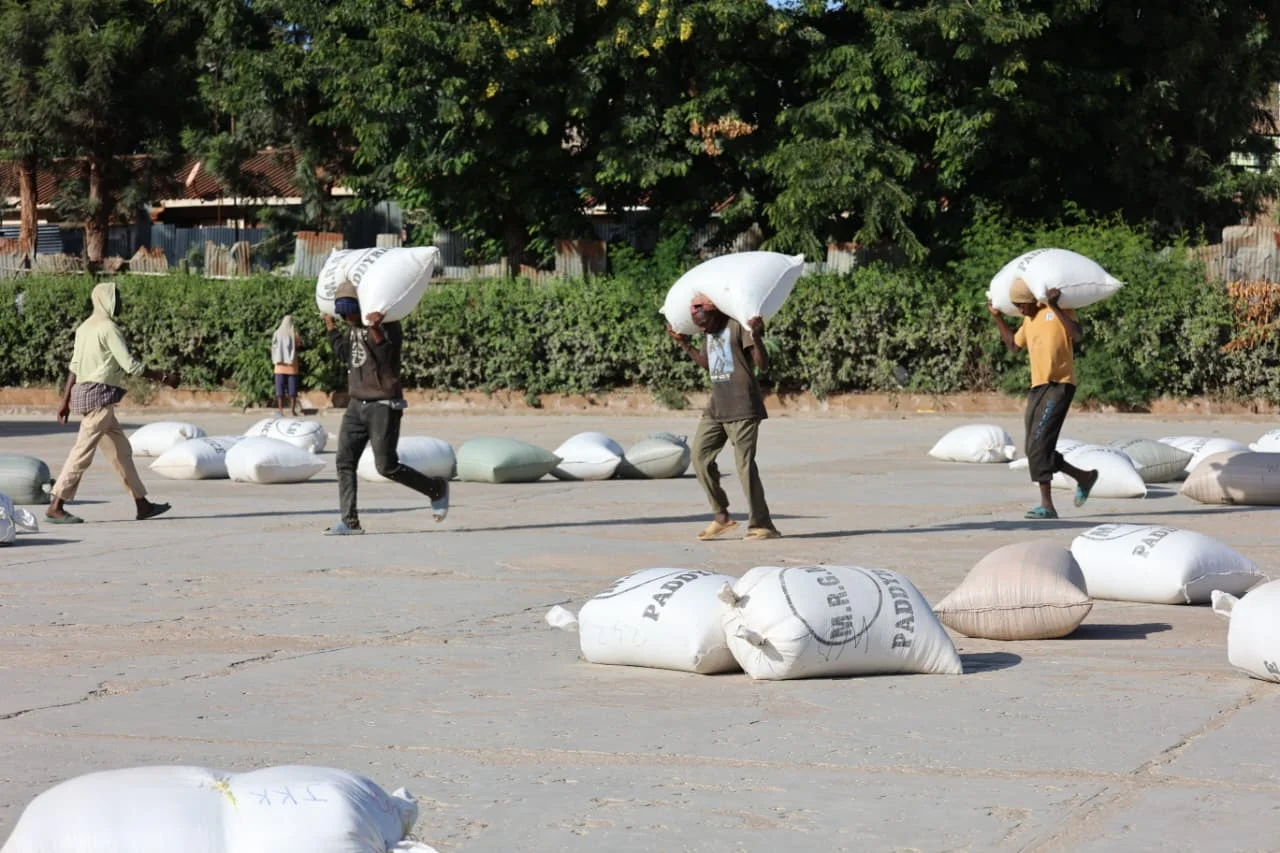
Rice farmers in Mwea and other major production areas have finally received full payment for their crops, ending concerns over delayed payouts and unsold stock that have plagued the sector in recent years.
In a press statement seen by Business Today, Officials from the Agriculture and Food Authority (AFA), Kenya National Trading Corporation (KNTC), and the National Cereals and Produce Board (NCPB) visited the Mwea Rice Growers Multipurpose Co-operative Society (MRGM) this week to check on rice offloading and payments.
Speaking during the visit, MRGM Managing Director Anthony Waweru confirmed that all rice delivered has been purchased and paid for. “Offloading of stocks has been happening, and we have no complaints. Payment was done as agreed by KNTC,” he said.
He added that carry-over stock from 2025 into 2026 was less than 1 per cent, compared to nearly 30 per cent the previous year.
MRGM Chairperson Ndege Muriuki said the cooperative is confident that KNTC will continue buying all the rice farmers bring.
“We are assured that every bag of rice will be taken up,” he said.

The cooperative also dismissed concerns that rice imports are hurting local farmers, noting that Mwea rice occupies a premium market. While imported rice sells at Kshs 80–100 per kilogram, locally grown Pishori rice goes for Kshs 140–160 per kilogram due to its aroma and quality.
Kenya produces rice in two irrigated seasons and one rain-fed season. The main irrigated season runs from January to August, with production centred in Mwea, Ahero, West Kano, Bunyala, and Perkerra. Milled rice output has risen steadily, from 123,916 metric tonnes in 2022 to 169,291 MT in 2024. Paddy production for 2026 is projected at 302,000 MT, equivalent to 181,200 MT of milled rice.
Despite growth, local rice still meets less than 20 per cent of national demand, making imports necessary to stabilise prices. In November 2025, the government imported 250,000 MT of non-basmati rice, helping reduce prices from Kshs 166–189 per kilogram to Kshs 149–155.
AFA Director General Dr Bruno Linyiru said the government is committed to ensuring timely payment for farmers. “This protects farmers from market volatility, encourages increased production, and complements strategic imports,” he said.
Farmers with stocks are urged to contact NCPB or KNTC for immediate sale.











Leave a comment