

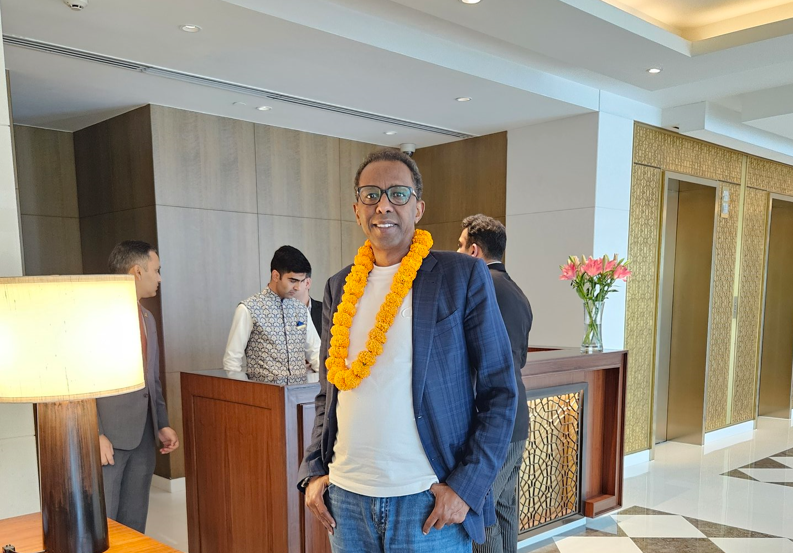
Senior Counsel Ahmednasir Abdullahi has hit out at the Supreme Court after it lifted a two-year ban that had barred him, his partners and associates from appearing before the apex court.
The ban, imposed on January 23, 2024, effectively locked Ahmednasir’s law firm out of Supreme Court practice. On Friday, the court vacated the order, allowing his partners and associates to resume appearances. While the decision restores the firm’s right to practice, Ahmednasir says it does not address the deeper institutional issues he has raised against the court.
He acknowledged the senior lawyers who took the lead in pursuing the matter, saying their intervention played a key role in ending the ban. He described their actions as professional and selfless, noting that they stepped in at a difficult moment.
“I thank my learned friends Paul Muite SC, Fred Ngatia SC and Dennis Mosota, for the initiative they took in bringing this matter to an end. The professionalism they exhibited and their sacrifice are commendable.”
Ahmednasir also noted that the Supreme Court had, in his view, recognised that it went too far by extending the ban to his partners and associates. He said the court deserved credit for correcting that aspect of its earlier decision.
“I thank members of the court for realising the unfairness of their action and for appreciating that they overreached themselves in banning my partners and associates for no reason at all.”
Despite the lifting of the ban, the senior counsel said his long-standing disagreement with the court remains unresolved. He stressed that the dispute is rooted in principle and doctrine, not personal hostility.
“My difference with the court has never been personal. My difference with the court is principled, ideological and doctrinal.”
He said those concerns cannot be settled through procedural decisions alone, arguing that the Supreme Court must undertake far-reaching reforms to restore public confidence and institutional credibility.
“That difference remains and can’t be resolved by the mere lifting of the ban. That difference can only be resolved by deep institutional reforms.”
Not going back
Ahmednasir explained that he has chosen not to return to practice before the Supreme Court, despite being free to do so. He said the current structure gives too much power to a small number of judges over who appears before the court.
“I can’t go back to a court where seven men and women can decide who practices before it, the Constitution of Kenya notwithstanding. The court has become the personal property of a mere seven judges.”
He further argued that the court must openly confront the serious allegations he has raised about integrity and competence, warning that ignoring them only deepens the legitimacy crisis facing the judiciary.
“The court faces weighty accusations of integrity and competence. These issues can’t be swept under the carpet or wished away by merely lifting the ban.”
Framing his stance as a sacrifice, Ahmednasir said staying away from the Supreme Court allows him to continue speaking out against what he describes as the commercialisation of justice, which he refers to as JurisPESA.
“If I go back to practice before the Supreme Court, who will fight JurisPESA in our courts? Who will speak against the vices of the judiciary?”
He said a few lawyers are willing to challenge the system openly, arguing that most are constrained by professional interests. In his view, remaining outside the Supreme Court gives him the freedom to continue that fight.
“I have elected to fight JurisPESA in our courts and to refuse to go back to the Supreme Court if that is the sacrifice I have to make.”
Ahmednasir dismissed the lifting of the ban as a symbolic gesture that does not address the underlying problems, describing it as an attempt to calm criticism without real change.
“The lifting of the ban is an appeasement ploy I refuse to accept.”
He said he remains ready to support genuine judicial reforms. Citing his experience as a former Law Society of Kenya chairman and former Judicial Service Commission member, he said he is available to assist the Chief Justice if she chooses to pursue reforms.
“I am at her service, ready to help if and when she decides to reform the courts and fight JurisPESA judges. Madam Chief Justice, mimi niko ready. Are you ready?”












Leave a comment