

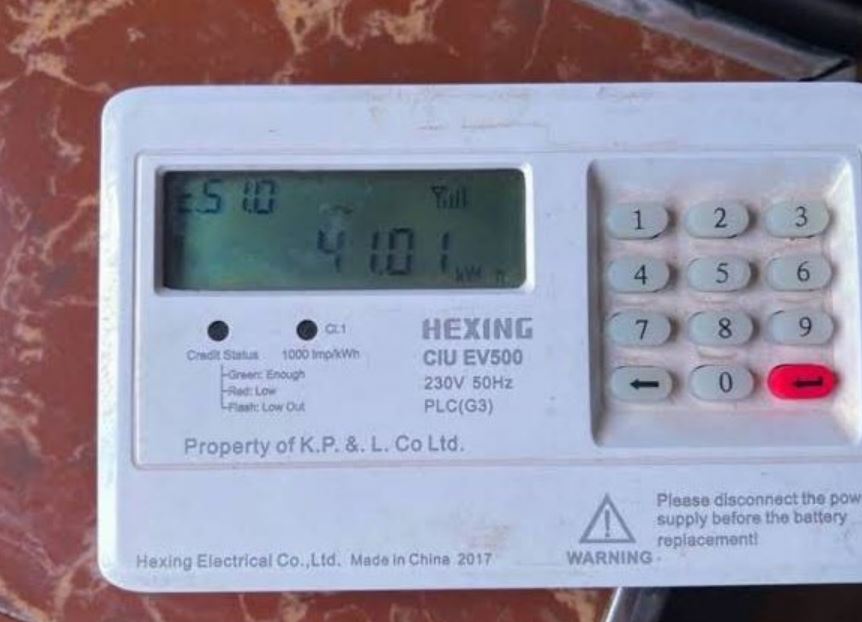
Electricity consumers across Kenya will pay more for power in November after the Energy and Petroleum Regulatory Authority (EPRA) introduced additional charges amounting to approximately Ksh 4.56 for every unit of electricity consumed.
The latest adjustment affects both prepaid and postpaid customers, meaning households and businesses will spend more to purchase electricity tokens or settle their monthly bills.
In a Gazette Notice dated Friday, November 20, 2026, EPRA announced three additional charges that will apply to electricity meter readings taken during the November billing period.
The charges include a Fuel Energy Cost Charge of Ksh 3.54 per kilowatt-hour (kWh), a Foreign Exchange Fluctuation Adjustment of Ksh 1.0031 per unit and a Water Resource Management Authority (WRMA) levy of Ksh 0.013606 per unit.
Combined, the three charges amount to Ksh 4.5567 for every unit of electricity consumed during the applicable billing period.
The fuel energy cost charge accounts for the largest portion of the adjustment. EPRA uses this charge to recover expenses associated with fuel used in electricity generation, particularly at thermal power plants that rely on diesel and other petroleum products.
The cost of generating electricity from thermal plants changes depending on fuel prices, the amount of electricity produced and the demand placed on the national grid.
When the cost of fuel used in electricity generation rises, the additional expense is reflected in the monthly electricity charges paid by consumers.
EPRA stated that the November fuel charge would stand at 354 cents per kilowatt-hour, applying to all meter readings taken during the month.
Foreign exchange adjustment
The second component is the Foreign Exchange Fluctuation Adjustment, which stands at Sh1.0031 per unit for November.
This charge accounts for currency-related gains and losses incurred by electricity sector players, including Kenya Power, the Kenya Electricity Generating Company (KenGen) and Independent Power Producers (IPPs).
The electricity sector relies on equipment, fuel and contractual obligations that involve foreign currencies. Changes in the exchange rate can therefore affect the amount companies spend to generate, purchase and distribute electricity.
According to the November adjustment, the three categories of electricity sector players recorded combined foreign exchange gains of approximately Ksh 1.16 billion in October 2026.
The adjustment reflects how these financial movements are factored into the electricity pricing system.
Although the shilling’s performance can influence the cost of electricity, the foreign exchange component changes depending on the gains and losses recorded during the relevant assessment period.
Hydropower levy also applies
Consumers will also pay a Water Resource Management Authority levy of Sh0.013606 per kilowatt-hour.
The charge applies to electricity purchased from qualifying hydropower stations with an installed generation capacity of at least one megawatt.
EPRA reported that 314.19 million units of electricity were purchased from qualifying hydropower plants in October. This figure formed part of the calculation used to determine the levy applicable in November.
The contribution supports water resource management activities associated with hydropower generation.
November increase follows previous adjustments
The latest increase comes after several months of additional electricity charges that have affected household and business expenses.
In October 2026, consumers faced combined additional charges of approximately Ksh 4.10 per unit, comprising a fuel energy cost charge of Ksh 3.22, a foreign exchange adjustment of Ksh 0.87 and a water resource management levy of Ksh 0.0134.
In September, the additional charges amounted to approximately Ksh 4.16 per unit, while August recorded an adjustment of about Ksh 4.70 per unit.
The November figure of Ksh 4.56 represents an increase compared with October’s combined adjustment.
For illustration, a household consuming 50 units in November would incur approximately Ksh 227.84 from the three additional charges. A consumer using 100 units would incur approximately Ksh 455.67.
These amounts are calculated before the applicable base electricity tariff, taxes and other statutory levies.
Kenya’s electricity pricing structure includes several components beyond the cost of generating power. These include the base tariff, fuel costs, foreign exchange adjustments, inflation-related charges, regulatory levies and taxes.
EPRA regulates electricity prices and reviews certain cost components monthly to reflect changes in the energy sector.
The adjustments are passed on to consumers through Kenya Power’s electricity billing system, affecting the number of units customers receive when purchasing prepaid tokens and the amounts charged to postpaid customers.
The November adjustment adds to the costs households and businesses must account for when budgeting for electricity consumption.










Leave a comment