

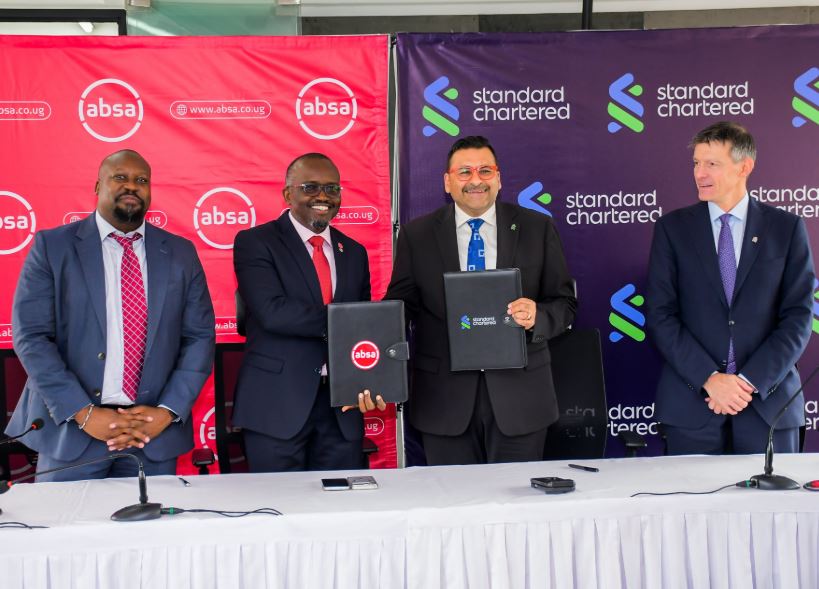
Thousands of banking customers in Uganda are beginning a new chapter after Absa Bank Uganda took over Standard Chartered Bank Uganda’s wealth and retail banking business, ending the latter’s direct involvement in personal banking in the country.
The transaction was completed on Friday, November 13, 2026, following regulatory approvals and a transition process that began when the two banks announced their agreement in October 2025.
The acquisition transfers Standard Chartered’s wealth and retail banking customers, products and employees to Absa. The integration of customer accounts and banking services took place between November 13 and 15, with affected customers expected to start accessing their accounts through Absa’s banking platforms from Monday, November 16.
For customers who have banked with Standard Chartered for years, the biggest change is the institution responsible for their everyday banking services.
What happens to Standard Chartered customer accounts?
Customers holding savings accounts, current accounts, loans, cards and wealth management products under Standard Chartered’s retail division are now moving to Absa.
The transfer means their banking relationships will continue under a different financial institution. Absa intends to maintain existing products, pricing arrangements and customer relationships during the transition.
This is expected to reduce disruptions for customers who have built their financial arrangements around Standard Chartered’s services.
However, customers should pay attention to official communication from Absa regarding digital banking access, cards, account details and any changes to the channels they previously used.
Absa operates 39 branches, 85 ATMs and 25 cash deposit machines across Uganda, giving former Standard Chartered customers access to its existing physical banking network.
Will customers lose access to their money?
The transition does not mean customers lose their deposits or outstanding financial obligations. Instead, the banking business and associated customer relationships are being transferred to Absa.
Customers with outstanding loans will still be required to meet their repayment obligations, while those with savings and current accounts will continue their banking relationships under the new institution.
The two banks have emphasised continuity of service throughout the handover. Customers should nevertheless check their account statements and confirm that standing orders, loan repayments, card payments and other regular transactions are working as expected.
Any unfamiliar deductions or difficulties accessing accounts should be reported directly to Absa through its official customer support channels.
Why Standard Chartered is leaving retail banking
The sale is part of Standard Chartered Group’s wider strategy to concentrate on corporate and investment banking rather than maintaining personal banking operations in selected African markets.
In November 2024, the international lender announced plans to explore the sale of its wealth and retail banking businesses in Uganda, Botswana and Zambia.
The group has been reducing its consumer banking operations in several African countries to concentrate on businesses and customers where it sees stronger growth opportunities.
The bank previously transferred its wealth and retail banking business in Tanzania to Access Bank in 2025.
However, its departure from Uganda’s personal banking market does not mean it is shutting down its entire operation in the country.
Standard Chartered will retain its Corporate and Investment Banking business, continuing to serve large companies, financial institutions and businesses involved in international trade.
Its remaining operations will focus on services such as trade finance, capital markets, corporate lending and cross-border financial transactions.
What the acquisition means for Absa
For Absa, the acquisition provides an opportunity to increase its customer base and strengthen its position in Uganda’s banking industry.
The lender gains an established retail banking portfolio, wealth management customers and experienced employees who previously worked under Standard Chartered.
An assessment by the COMESA Competition Commission projected that the combined business could account for between 20 and 30 per cent of Uganda’s retail deposits and between 10 and 20 per cent of retail lending.
This places Absa in a stronger position to compete with established lenders such as Stanbic Bank Uganda, Centenary Bank, Equity Bank and dfcu Bank.
The financial terms of the acquisition were not publicly disclosed.
Ultimately, former Standard Chartered customers will have to familiarise themselves with Absa’s banking platforms and services. The immediate priority for the lender will be ensuring that the migration does not interfere with customers’ access to their money, loan arrangements and everyday banking activities.









Leave a comment