

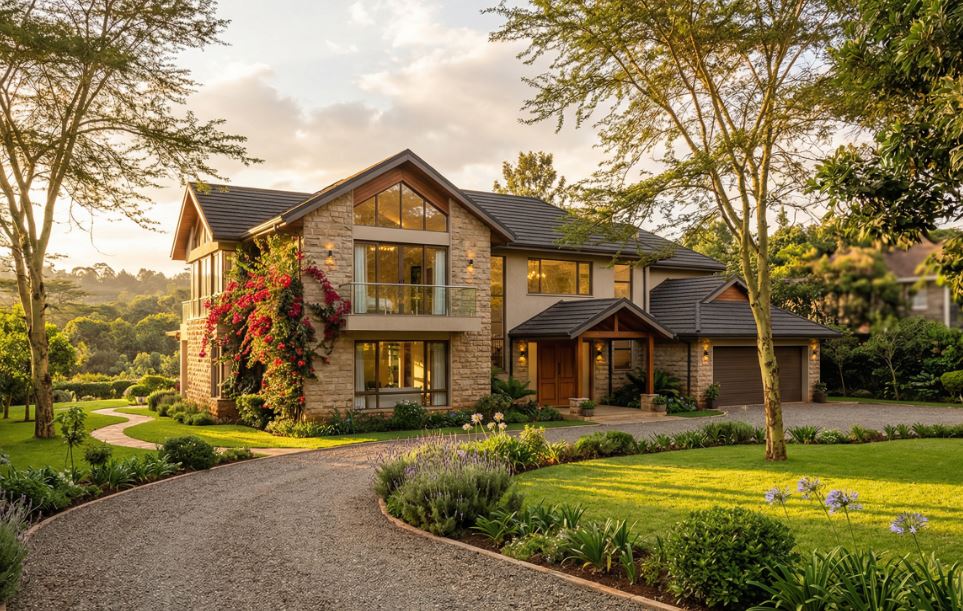
HassConsult House Price Index has revealed that house prices in Nairobi’s established suburbs increased by 2.3 per cent in the third quarter of 2026, while rental prices rose by 2.7 per cent as demand for residential properties remained strong.
The latest figures show that property prices continued to rise in some of the city’s most sought-after neighbourhoods, supported by improved access to credit, lower borrowing costs and limited housing supply.
Spring Valley recorded the highest quarterly growth in house prices at 6.8 per cent, followed by Westlands at 5.9 per cent. Muthaiga registered a 5.5 per cent increase, while Karen and Loresho recorded growth of 5.2 per cent each.
The performance reflects continued demand for homes in established residential areas, particularly neighbourhoods that attract high-income earners, expatriates and professionals seeking access to Nairobi’s main commercial centres.
Rental prices also recorded stronger growth during the quarter, rising from 1.4 per cent in the previous three months to 2.7 per cent.
Loresho led rental price growth at 6.2 per cent, bringing the average monthly rent to Sh338,100. Kitisuru followed with an increase of 5.1 per cent, taking the average monthly rent to Ksh 350,100.
In Muthaiga, rental prices increased by 4.5 per cent to an average of Ksh 370,900, while Gigiri recorded a 3.9 per cent rise, bringing monthly rent to Ksh 402,100.
The report attributed the stronger property market performance partly to lower borrowing costs, increased private-sector lending and limited housing supply in established suburbs.
These conditions have supported demand for both home purchases and rental properties, allowing landlords and property sellers in prime neighbourhoods to increase their asking prices.
Satellite Towns Record Decline
The property market presented a different picture in Nairobi’s satellite towns, where house asking prices declined for the second consecutive quarter.
According to the index, house prices in the satellite towns fell by 0.6 per cent, bringing the average asking price to Sh14.43 million.
Ngong recorded the steepest decline at 1.2 per cent, with average house prices dropping to Sh19.1 million. Ongata Rongai followed with a 1 per cent decrease to Sh15.4 million.
In Juja, house prices declined by 0.6 per cent to Sh12.8 million, while Kitengela recorded a 0.5 per cent drop to Sh13.2 million.
Rental growth in satellite towns also slowed to 0.4 per cent during the quarter, compared to 1.1 per cent in the previous quarter.
HassConsult attributed the weaker performance to affordability challenges and increased competition from alternative housing options.
The figures point to growing differences between Nairobi’s established suburbs and its surrounding residential markets. While prime neighbourhoods continue to attract buyers and tenants willing to pay higher prices, satellite towns are facing pressure from households seeking more affordable housing.
The contrasting performance also highlights the influence of purchasing power, access to financing and housing supply on property prices across different parts of the Nairobi metropolitan area.













Leave a comment