

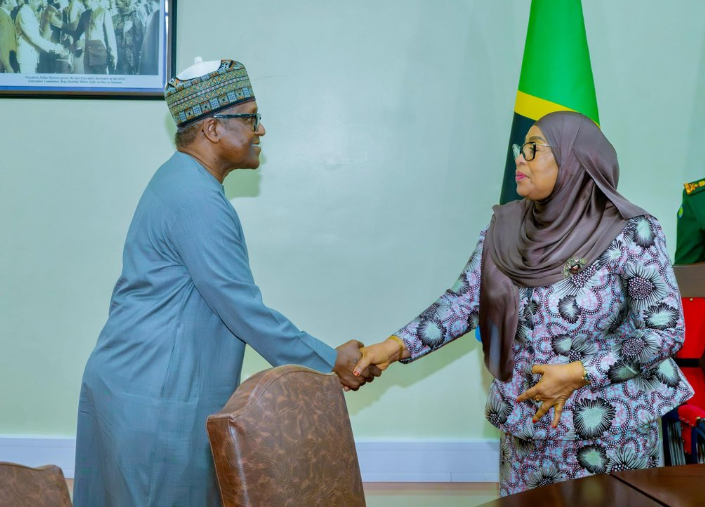
Before Kenya could secure one of the region’s biggest industrial investments, Tanzania had already moved to strengthen its ties with Africa’s richest man.
President Samia Suluhu has held fresh talks with Nigerian billionaire Aliko Dangote as Tanzania pushes to attract more large-scale investments in manufacturing, energy and transport infrastructure. The discussions come at a time when East African countries are increasingly competing to position themselves as the region’s industrial powerhouse, with Kenya also seeking to partner with Dangote on a multi-billion-shilling oil refinery.
The meeting in Dar es Salaam focused on investment opportunities that could accelerate industrial growth while creating jobs and expanding value addition within the country.
President Samia later instructed government ministries and agencies to begin technical discussions on the proposed projects to ensure they align with Tanzania’s development agenda and legal framework.
Dangote welcomed Tanzania’s investment climate, saying the country has strong potential for industries that process local resources instead of exporting raw materials.
“We have identified areas that can deliver significant value for Tanzania, and we are ready to work together to develop them for mutual benefit,” he said.
The discussions covered transport infrastructure, fertiliser production and energy, three sectors the government considers critical to achieving its industrialisation goals.
For Tanzania, attracting investment into fertiliser manufacturing could have a far-reaching impact on agriculture, which remains the country’s largest employer. Farmers across East Africa continue to rely heavily on imported fertiliser, exposing them to high prices and supply disruptions whenever global markets are affected.
Dangote on fertiliser
A local fertiliser plant would reduce dependence on imports while ensuring a more stable supply for farmers. It could also lower production costs, improve food security and strengthen Tanzania’s position as a supplier of agricultural inputs across the East African Community.
Dangote is no stranger to the fertiliser business. His fertiliser complex in Nigeria is one of Africa’s largest industrial projects, producing millions of tonnes annually for both local consumption and export. The company has steadily expanded its reach across African markets, making Tanzania a logical destination if it decides to establish another major production facility.
Energy also featured prominently during the discussions because fertiliser production depends on reliable supplies of natural gas and electricity.
Tanzania has spent years investing in power generation while seeking to commercialise its vast natural gas reserves. The country holds significant offshore and onshore gas deposits, particularly around Mtwara, and successive governments have viewed those resources as the foundation for future industrial growth.
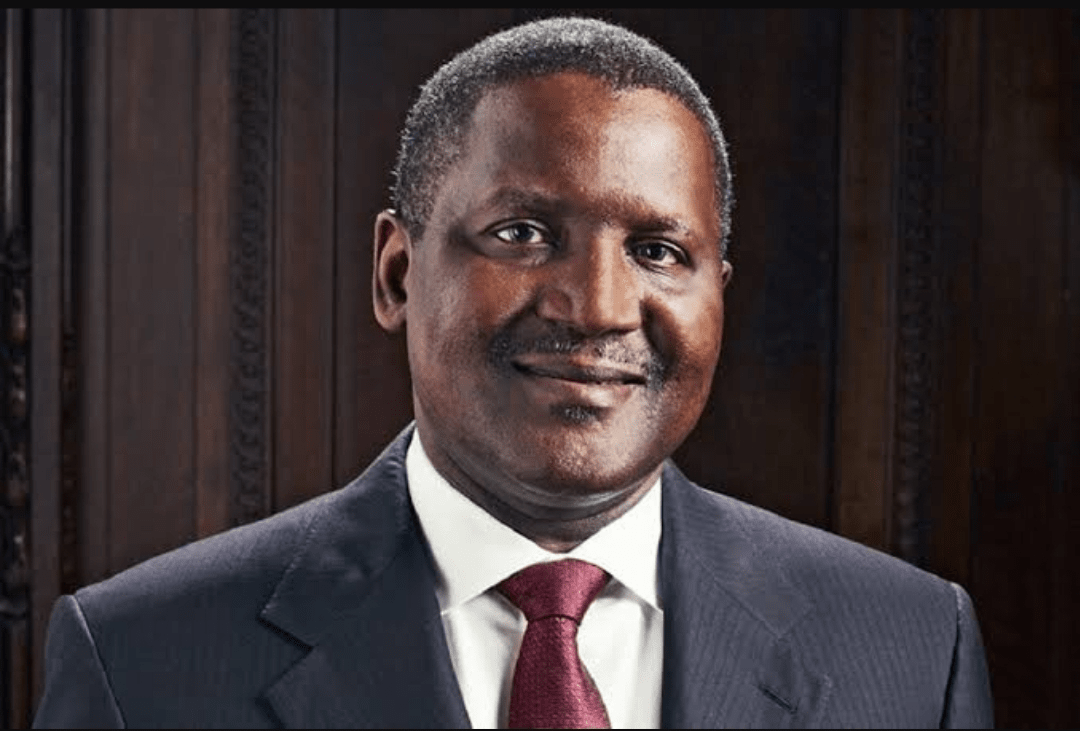
Officials believe increased investment in energy-intensive industries would help transform Tanzania from a supplier of raw materials into a manufacturing economy capable of serving both domestic and regional markets.
The meeting also reflected the government’s broader strategy of attracting investors willing to establish industries that create employment, transfer technology, and increase exports.
Dangote already has a significant footprint in Tanzania through his cement factory in Mtwara, one of the largest industrial investments in the country. The plant supplies cement to Tanzania and neighbouring countries and has played a key role in boosting local manufacturing capacity.
The latest talks suggest both sides are now looking beyond cement and exploring opportunities in sectors that could deliver even greater economic benefits.
While Tanzania pursues multiple investment opportunities with Dangote, Kenya has focused much of its attention on convincing him to build a regional oil refinery.
President William Ruto has repeatedly argued that refining crude oil within East Africa would reduce fuel import costs, strengthen energy security and create thousands of jobs. Speaking during the National Prayer Breakfast in May, he revealed that he had discussed the project with Dangote.
“I had a chat with Mr Dangote yesterday, and he was telling me how much resistance has been built by the people we are buying fuel from now because they want to continue buying their fuel. But we have to make those decisions that will change our country,” Ruto said.
Dangote first proposed building a refinery in East Africa during the Africa We Build Summit held in Nairobi earlier this year. The project would be modelled on his massive Lagos refinery, which has become one of the world’s largest single-train refineries and is expected to reshape Africa’s fuel market.
The refinery is expected to process crude oil from Kenya’s Turkana fields, Uganda and other regional producers. However, its final location has yet to be agreed upon. Mombasa, Lamu and Tanzania’s port city of Tanga have all been mentioned as possible sites because of their existing infrastructure and strategic access to regional oil transport routes.
As both Kenya and Tanzania compete for Dangote’s next major investment, the outcome could shape the future of industrial development in East Africa. Whether through fertiliser production, energy projects or oil refining, governments across the region see private-sector investment as essential to creating jobs, boosting exports and reducing dependence on imported products.












Leave a comment