

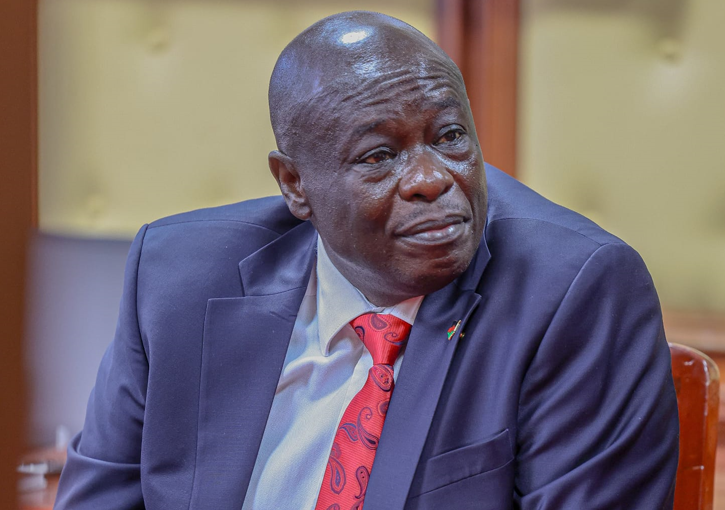
As Kenya awaits a court ruling on former Deputy President Rigathi Gachagua’s impeachment case, attention is increasingly shifting from the legal outcome itself to its potential political consequences.
Whether the court upholds or overturns his impeachment, the bigger question is what Gachagua’s return to the political centre stage could mean for an opposition coalition that is still searching for a clear leader ahead of the 2027 General Election.
A favourable ruling for Gachagua would not simply mark a legal victory. It could fundamentally alter the balance of power within the opposition, creating a new political force capable of influencing coalition negotiations, presidential ambitions and leadership succession battles.
Battle for Opposition Leadership
For months, the opposition has operated under a relatively loose coalition of leaders, including Wiper leader Kalonzo Musyoka, former Interior Cabinet Secretary Fred Matiang’i, Narc-Kenya leader Martha Karua and DAP-K leader Eugene Wamalwa.
Among them, Kalonzo has been widely viewed as the most likely flag bearer owing to his long-standing national profile, previous presidential bids and experience as a former vice president.
However, Gachagua’s re-emergence would immediately complicate that equation.
Unlike many opposition leaders who are still building momentum, Gachagua commands significant influence in the Mt Kenya region, one of the country’s most critical voting blocs. A court victory could strengthen his claim as a key opposition principal and potentially position him as a kingmaker—or even a contender for greater influence within the coalition.
Pressure on Kalonzo’s Presidential Bid
A strengthened Gachagua could present both an opportunity and a challenge for Kalonzo.
On one hand, Kalonzo would benefit from having a powerful ally capable of mobilising support in Central Kenya, a region that has often proved decisive in presidential contests.
On the other hand, Gachagua’s political weight could reduce Kalonzo’s room to manoeuvre within coalition negotiations.
Questions would inevitably emerge over who speaks for the opposition, who determines coalition strategy and how power-sharing arrangements would be structured ahead of 2027.
The possibility of Gachagua demanding a larger role in coalition decision-making could complicate Kalonzo’s efforts to consolidate support around his presidential ambitions.
New Calculations for Matiang’i
Perhaps no figure could feel the impact of Gachagua’s resurgence more than Matiang’i.
The former Interior CS has increasingly been viewed as a potential presidential candidate capable of attracting support across regional and ethnic lines.
However, Gachagua’s entry into the opposition’s top leadership ranks would alter those calculations.
Both leaders would likely compete for influence over voter blocs that are critical to building a national coalition capable of challenging President William Ruto in 2027.
A stronger Gachagua could also force Matiang’i and his allies to reassess coalition strategies and negotiate from a more complicated political environment.
Karua and Wamalwa Face New Dynamics
For Martha Karua and Eugene Wamalwa, Gachagua’s return would introduce another powerful voice into an already crowded opposition leadership structure.
Karua has built her political brand around constitutionalism, governance reforms and accountability, while Wamalwa has sought to position himself as a key figure in Western Kenya politics.
A revitalised Gachagua could overshadow some of those efforts by drawing media attention and political energy toward debates over Mt Kenya’s role in the opposition and his own future ambitions.
The challenge for both leaders would be ensuring that their political relevance and negotiating power are not diminished as the opposition reorganises itself.
Unifier or Rival Power Centre?
One of the biggest questions facing the opposition is whether Gachagua would act as a unifying force or emerge as a competing centre of power.
His allies argue that he has the ability to consolidate support in the Mt Kenya region and help broaden the opposition’s national appeal.
Critics, however, point to the possibility of parallel power structures emerging within the coalition, with different leaders pursuing separate political agendas while publicly presenting a united front.
Such a scenario could complicate efforts to build a coherent opposition movement and increase internal competition over leadership positions and coalition control.
Rising Anxiety Within Opposition Ranks
A favourable court ruling could also trigger anxiety among some opposition figures.
While many leaders would publicly welcome Gachagua’s return, privately it could create uncertainty over political hierarchies that have begun to take shape since his impeachment.
Questions over presidential tickets, running mate positions, campaign financing, coalition agreements and regional influence would likely become more pronounced.
Political observers note that opposition unity often becomes more difficult when several influential figures are competing for the same political space.
More Than a Legal Case
Ultimately, the court’s decision may determine Gachagua’s legal fate, but it is unlikely to settle the broader political questions surrounding his future.
Instead, it could open a new chapter in opposition politics, forcing coalition leaders to redefine relationships, negotiate power-sharing arrangements and decide who will ultimately lead the challenge against President Ruto in 2027.
For the opposition, therefore, the most consequential issue may not be whether Gachagua wins or loses in court.
It may be what happens if he wins—and returns as one of the most influential figures in Kenya’s opposition landscape.
Read: Gachagua to Unveil DCP Alternative Budget Amid Finance Bill 2026 Debate
>>> Gachagua Insists Opposition Will Field One Candidate Against Ruto














Leave a comment