

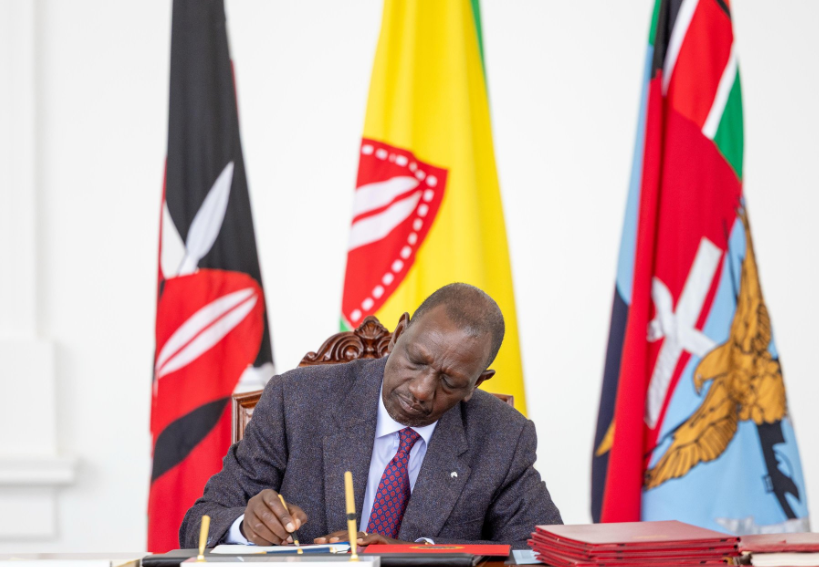
President William Ruto’s administration is preparing a major shift in tax policy, signalling a move away from aggressive revenue collection towards relief measures aimed at easing pressure on households, a strategy many see as carrying both economic and political calculations ahead of the 2027 General Election.
After months of defending tax increases as necessary to fund development and reduce borrowing, the government is now leaning toward reforms designed to put more money back into the hands of workers, with Pay As You Earn (PAYE) relief emerging as a key focus.
Fresh proposals under discussion in the 2026/27 budget process include possible PAYE adjustments, changes to tax thresholds and measures meant to increase disposable income without significantly reducing government revenue.
The shift comes as the administration faces rising public frustration over the high cost of living, shrinking household incomes and growing criticism over the tax burden placed on salaried Kenyans.
Rather than framing the next Finance Bill around new taxes, Treasury is increasingly presenting the coming reforms as part of a broader effort to balance relief, growth and fiscal discipline.
The 2026 Budget Policy Statement places cost of living, job creation and tax base expansion at the centre of that message, signalling a clear change in tone from earlier policy positions.
From tax pressure to tax relief
For much of the past two years, the Kenya Kwanza administration focused on expanding taxes to fund government programmes.
That approach generated significant political backlash, particularly among formal workers who have seen deductions rise through PAYE, housing levy, SHIF and NSSF contributions.
Now, the government appears to be recalibrating.
Treasury officials have indicated that any PAYE review could be incorporated into the Finance Bill 2026, allowing the administration to package relief measures as part of a wider tax reform agenda rather than isolated amendments.
At the heart of the strategy is a simple calculation: raising take-home pay is one of the quickest ways the government can show it is responding to economic pain.
A reduction in PAYE, even a modest one, would be immediately felt by salaried workers and could help improve public sentiment at a time of growing political pressure.
It also allows the administration to shift its message from taxation to affordability.
Revenue needs remain a challenge
But offering tax relief while maintaining government revenues remains a difficult balancing act.
Kenya still faces heavy debt obligations, spending pressures and ambitious revenue targets.
The Budget Policy Statement projects a gradual reduction in the fiscal deficit over the medium term, but that plan depends on stronger revenue mobilisation and tighter control of expenditure.
That means even as the government talks about relief, it is unlikely to abandon its focus on revenue collection.
Instead, the strategy appears to be shifting toward improving compliance, sealing leakages and widening the tax net rather than relying on politically unpopular tax hikes.
That could mean stricter enforcement in under-taxed sectors even as salaried workers receive targeted relief.
In effect, the government is trying to lower pressure in one area while strengthening collections in another.
Political timing is hard to ignore
The timing of the shift has also drawn attention.
With 2027 slowly coming into view, the focus on disposable income is being seen by some analysts as more than economic policy.
It is also politics.
For many voters, abstract promises about economic growth mean little compared to changes they can feel in their pay slip.
That makes PAYE reform politically powerful.
If workers see even modest increases in take-home pay, the administration could use it as evidence that it has listened to public concerns and adjusted course.
That may help soften anger generated by earlier tax battles.
UDA controversy adds pressure
The emerging tax relief strategy is also unfolding against uncomfortable scrutiny over compliance within the ruling coalition.
The Kenya Human Rights Commission has accused the United Democratic Alliance of failing to remit PAYE and other statutory deductions for employees, claims that have added pressure on the government to demonstrate accountability as it pushes a new tax message.
The allegations have sharpened debate over whether the government can credibly demand tax compliance from citizens, while questions linger around compliance closer to power.
That context makes the tax relief push not just an economic adjustment, but part of a broader effort to rebuild confidence.
Relief alone may not be enough
Still, analysts warn that lower PAYE alone may not resolve wider frustrations if food, fuel and everyday costs remain high.
Much will depend on whether the reforms are matched by spending discipline and whether households feel genuine relief rather than temporary political messaging.
That is likely to be the real test of the Finance Bill 2026.
If the proposed reforms increase disposable income without triggering new burdens elsewhere, they could become one of the administration’s most important economic and political moves before 2027.
If not, they risk being seen as a short-term reset rather than meaningful reform.
For now, one thing is becoming clearer: after two years of defending taxation, the government is now trying to sell relief. And that may mark the biggest shift yet in Ruto’s economic strategy.












Leave a comment