

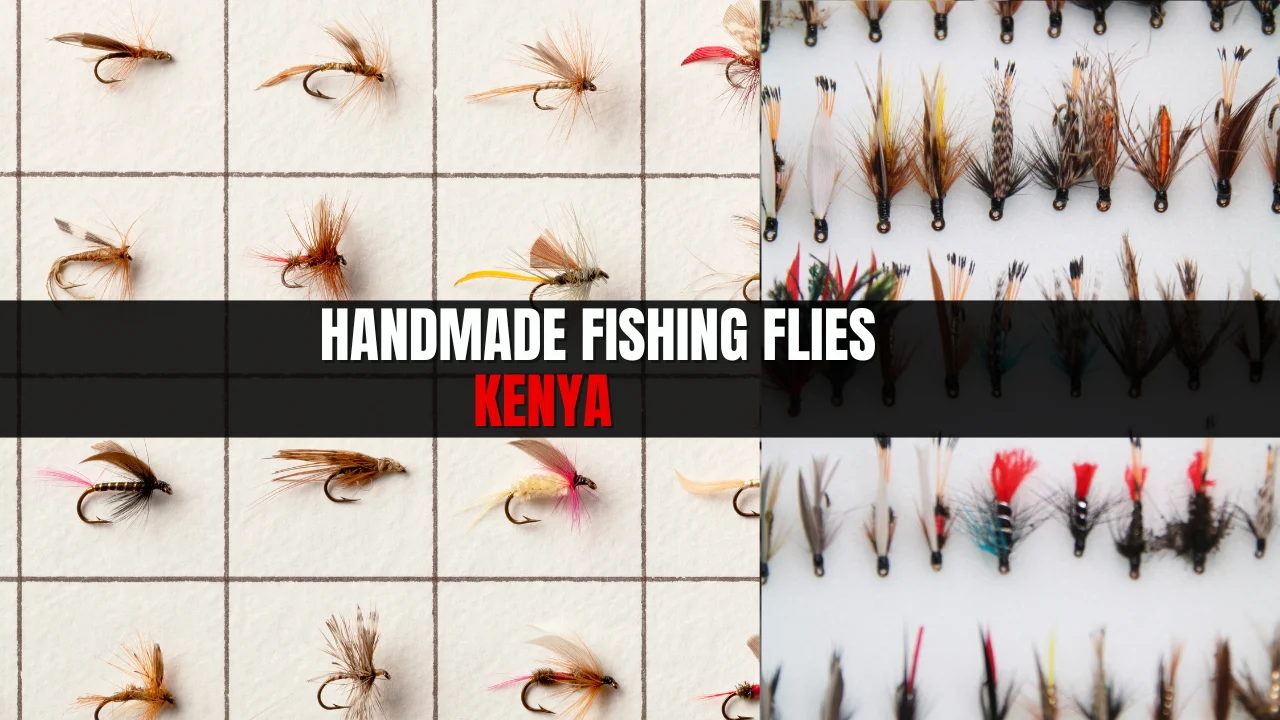
Kenya is now a dominant player in the Global Handmade Fishing Fly market with figures from International Trade. It has emerged as the world’s leading manufacturer of handmade fishing flies., with factories producing over four million flies per year.
Companies in the country employ hundreds of skilled fly tiers, with some facilities operating 300-strong workforces capable of producing 30,000 dozen flies per month.
The scale of handmade fly fishing flies’ production in Kenya is remarkable given Kenya’s geographic distance from major fly fishing markets.
Today, European retailers source roughly 1 in 3 flies from Kenya, while North American wholesalers rely heavily on Kenyan production for both standard and custom patterns.
Handmade fishing flies the country produces reach every continent except Antarctica, supplying the global fly fishing community with millions of precisely crafted flies annually.
According to TrendEconomy, the value of fishing rods, fish hooks and other fishing tackles, fish landing nets, butterfly nets, decoys and similar fish hunting gear from Kenya totalled US$ 1.91 Million in 2023.
This data provides information on export directions of more than 6,000 commodities by the importing country and its trade partners.
Available data also shows that Kenya produces over 60% of the world’s handmade fishing flies. The $1.9M export industry supplies Europe, North America, and global fly fishing markets.
How Kenya Became the World’s Fly Fishing Powerhouse
Kenya has achieved this dominance from decades of skill development, export-oriented production, high-quality hand craftsmanship, competitive wholesale pricing and strong quality control systems.
Historical Origins
The Country’s handmade fly fishing industry traces back to the 1920s when Denis Whethan, a British schoolboy, began making flies during recovery from a severe rugby injury. After relocating to Kenya, he turned his hobby into a commercial operation to support his family.
By 1939, production of the fish flied reached 65–70 dozen per month and by the early 1960s – 30 fly dressers were being exported to over 20 countries. Whethan sold the business to UK-based Brookbond Tea Company which then expanded it and laid the groundwork for Kenya’s modern fishing fly dominance. Why Kenyan Handmade Fishing Flies
The country now has a skilled workforce with deep pattern knowledge. Kenyan fly tyers can master catalogues of up to 1,000 different fly patterns, including Woolly Buggers, Red-Eyed Damsels, Gotchas, Dry flies, nymphs, streamers and saltwater flies.
Many artisans possess 20 to 30 years of tying experience. The precision hand craftsmanship ensures that each fly is hand-tied as well as ensure quality inspection, pattern verification and that the hook is aligned and tension-tested.
This level of hand-detail is difficult to automate — and the country has preserved that manual expertise.
Major handmade fishing fly outlets and facilities employ between 250–300 full-time tyers, have daily production cycles, structured pattern allocation systems and a centralized quality control.
Output can range from small boutique custom orders to over 10,000 dozen wholesale batches at competitive wholesale pricing.
The Country offers lower production costs than Western countries, has skilled labour specialization and bulk export logistics experience. This makes Kenya the preferred source for Fly shops, Online fly retailers,
Fly tying workshops use premium global materials including rabbit and deer hair, arctic fox and muskrat, Elk and moose hair, synthetic fibres, high-carbon hooks and saltwater corrosion-resistant components.
Despite dominance, the sector faces several challenges such as global retail slowdowns, inventory overstock cycles in US/EU markets, currency volatility and rising material costs. However, premium fly anglers continue to prefer hand-tied flies, preserving Kenya’s competitive advantage.
The East African nation’s rise as the global leader in handmade fishing flies demonstrates how specialized craftsmanship, export focus, and workforce development can create market dominance in a niche industry.
ALSO READ: In Kenya’s Arid Region, Fish Farming is Surprisingly Taking Root














Leave a comment