

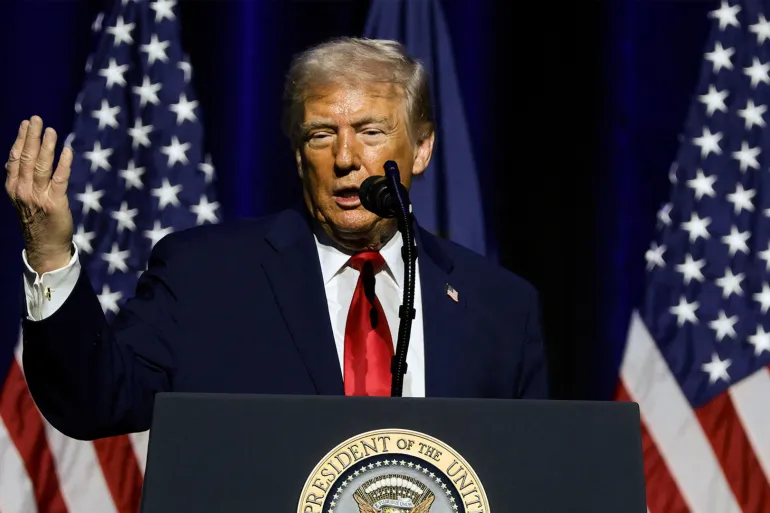
A recent survey by the Central Bank of Kenya (CBK) shows that many Kenyan companies are still feeling the effects of changes in U.S. trade policy introduced under President Donald Trump.
According to the survey, firms across several industries have seen higher costs and weaker demand because of new tariffs and ongoing uncertainty in the trade relationship with the United States.
Last year, President Trump introduced a 10 % global tariff on imports from most countries, including Kenya. This made it more expensive for Kenyan exporters to sell goods in the U.S., and many local businesses said it increased their costs and hurt their competitiveness.
On February 20, 2026, the U.S. Supreme Court ruled that the way Trump imposed those tariffs was unconstitutional because he overstepped his authority under U.S. law.
The court said that only Congress can approve major tariff changes like these. This decision threw the tariff programme into legal doubt and stopped the collection of those taxes.
In response to the Supreme Court ruling, the Trump administration announced plans to introduce a new 10 % levy on goods entering the United States using a different legal approach. These plans are expected to cause continued uncertainty for trading partners.
The CBK survey found that several parts of Kenya’s economy have been hit hard by these policy shifts. Chief executives in the professional services, ICT, hospitality, financial services and wholesale and retail trade sectors said they felt the most pressure.
“Most respondents reported that they continue to be impacted by these developments. In particular, the professional services, ICT, hospitality, financial services and wholesale and retail trade sectors were reported to be the most affected,” the report said.
Some firms also highlighted specific challenges. Those in the hospitality and health sectors said they were struggling partly because donor funding has fallen, leaving them with tighter budgets and less flexibility.
On the positive side, there has been some relief for Kenyan exporters. The United States extended the African Growth and Opportunity Act (AGOA) to 2026, keeping Kenya’s duty‑free access to American markets for a range of products.
AGOA has been a key source of growth for Kenyan exports like apparel, tea, coffee and horticultural products, and the extension helps protect jobs and foreign earnings.
Even with the AGOA extension, many Kenyan business leaders are still cautious. The uncertainty over tariffs, higher costs for imported inputs, and tighter global markets have made planning harder for companies that depend on trade with the U.S. economy.











Leave a comment