

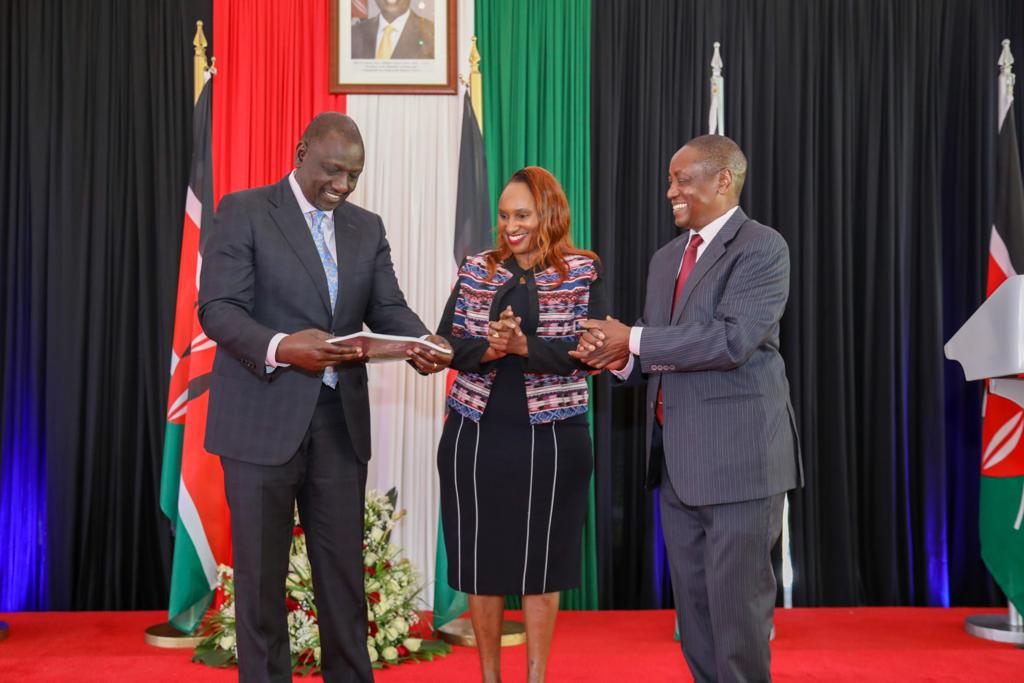
A proposal to link mobile money companies and Kenya Revenue Authority (KRA) systems is causing jitters. The proposal contained in the draft budget policy statement is one of several measures intended to ensure the taxman hits its target of collecting Ksh3 trillion in the next financial year (2023/2024).
KRA collected Ksh2.031 trillion in the 2021/2022 fiscal year, a record performance. The taxman is however under pressure from the President William Ruto-led Kenya Kwanza administration to significantly increase tax revenues, a key plank of the plan to rein in ballooning public debt.
Ruto, who last year challenged the KRA to increase tax revenues by a trillion shillings in the next financial year and to double them within the next five years, had also publicly posed a question on the massive mobile money user and revenue numbers versus taxpayer figures. Central Bank of Kenya (CBK) data indicates that in the first six months of 2022, Ksh3.8 trillion was handled by mobile money agents, or a third of Kenya’s GDP.
Safaricom’s M-Pesa remains the market leader with a 99.99% mobile money market share, even as rivals Airtel and Telkom intensify lobbying efforts to stem its dominance.
“There are only 7 million people with KRA pin numbers. In the same economy, Safaricom’s MPESA has 30 million registered customers, transacting billions daily. The fact that this opportunity remains unclear to KRA demonstrates why radical changes are necessary,” Ruto observed in October, stating that all Kenyans aged 18 and above should have a KRA pin.
READ ALSO>Beauty Tax: KRA Turns to Cosmetics for More Tax Revenues
“Integration of KRA tax system with the Telecommunication companies (telcos),” along with expansion of the tax base by roping in the informal sector, and cutting the VAT and corporate tax gaps – the difference between taxes legally owed and taxes collected – are the key planks of the administration’s plan to increase revenues contained in the draft budget policy statement.
KRA is looking to reduce the VAT gap from 38.9% to 19.8%, and the corporate tax gap from from 32.2% to 30.0%.
The proposal to offer KRA access to mobile money account transactions and information has left a section of Kenyans jittery, with some predicting an increase in cash transactions if the move were to be effected. Coupled with the focus on increasing revenues collected from the informal sector, small traders and businesses are likely to be among the most affected groups.
Other Kenyans raised data privacy concerns and demanded government action to seal wastage of public resources through corruption, and proper utilization of public funds.
“This will undermine the move towards being a cashless economy and will hugely affect the earnings of our number one taxpayer @SafaricomPLC,” wrote @ahmedhilalmohd.
“Hmmm will be interesting to see how they get around data privacy. Even if its just access to till and paybill accounts. And what the procedure would be re following up on millions of accounts and tonnes of data without further privacy breaches,” observed @mwendesusu.
NEXT READ>Local Content Reigns In The Most-watched Titles On Showmax Kenya In 2022











Leave a comment