

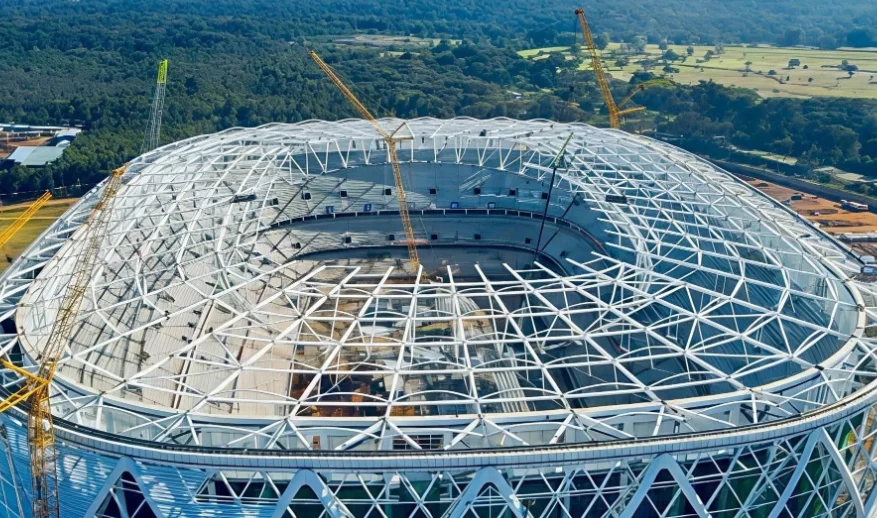
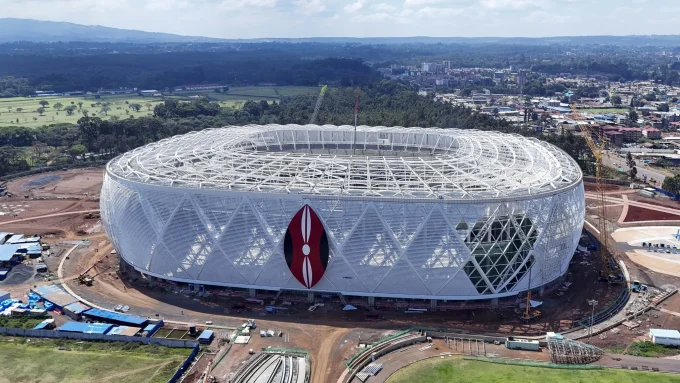
As Kenya races toward co-hosting the 2027 Africa Cup of Nations (AFCON), the under-construction Talanta Sports Stadium stands out as a game-changer for the nation’s sports infrastructure.
Stakeholders say the modern facility offers more than just a stadium, it is a long-overdue answer to years of underinvestment in world-class venues.
“Sometimes we’ve been putting government to task,” says sports analyst Japheth Muneyndo.
“With the Talanta Stadium now stands as a strong response that atones for the past construction of stadia by county governments. The facility brings genuine satisfaction as it will fully mitigate the huge challenges facing the sector.”
Built for 2027 and beyond
Talanta Sports Stadium broke ground on March 1, 2024. Construction is being led by the China Road and Bridge Corporation (CRBC) under supervision from the Kenya Defence Forces (KDF).
The facility is designed to have a capacity of 60,000 seats, dedicated exclusively to football and rugby, and excludes an athletics track, a departure from multipurpose stadiums of the past.
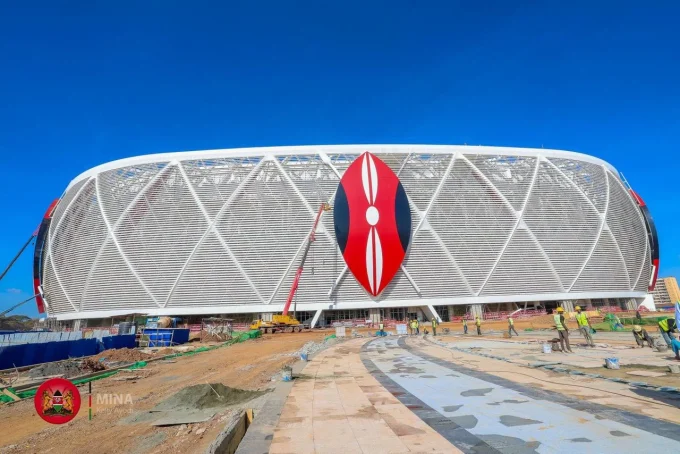
By November 2025, government updates indicated the stadium had reached 66 percent completion. Officials say all major external works are slated to finish by December 2025, with full operational readiness expected by February 2026.
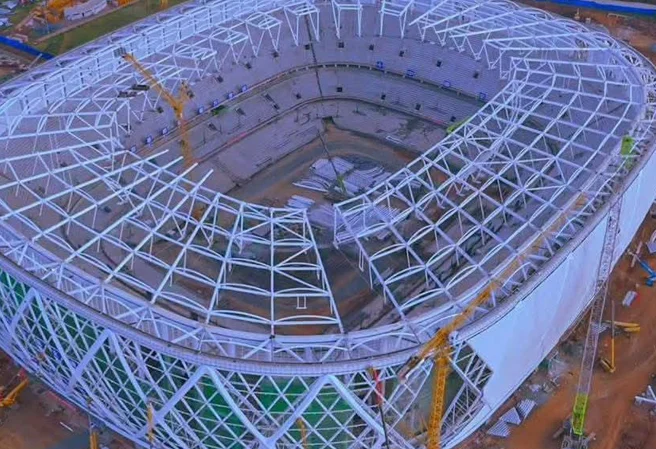
The facility’s construction has been budgeted at around KSh44.7 billion (approximately US$344.5 million), making it the most expensive sports complex ever built in Kenya.
Once completed, Talanta will be Kenya’s first major stadium built since the 1980s, when the Moi International Sports Centre, Kasarani and the Nyayo National Stadium opened.
New hub for regional football
For many, Talanta symbolizes a new era.
“This facility gives a green light to host AFCON and CAF Confederation matches, attracting teams from across East Africa. It positions Kenya as a central hub for major regional football without requiring other countries to co-host,” says commentator Zitah Jimoni.
Sports journalist Jacob Icia adds: “This project is a source of pride, delivering a truly international-standard facility that goes beyond football to support rugby and other sports. While it reflects what’s possible when there is willingness, attention to accessibility and crowd management will be key for major events like AFCON.”
Others note that the project is already having ripple effects beyond the pitch.
“Talanta stadium has spurred road expansions that will ease normal traffic while serving major events, setting a new benchmark beyond the old stadiums. With advanced technology like automated lights and robotic fire extinguishers, it rivals some of the best facilities in Africa,” says infrastructure analyst Steve Shitera.
Indeed, the design of the stadium is not just functional but ambitious. In addition to the main arena, plans include a commercial hub, training pitches, a public transport terminus, parking for thousands of vehicles, medical and doping-control facilities, and media and broadcasting infrastructure, all aligned with modern global standards.
For decades, Kenya’s top sporting venues had stagnated. Many built in the 1970s and 1980s lacked modern amenities, and the country had fallen behind regional peers in hosting capacity. Talanta represents a bold bid to reverse that trend.
As Muneyndo observed, the stadium is more than concrete and steel, it’s an atonement for past neglect. For fans and players alike, it signals hope that Kenya can once again compete at continental and global levels, not only in athletics but across football and rugby.
With less than two years to the AFCON 2027 kickoff, Talanta Stadium is on track to become a central venue not only for international matches, but also for major concerts, cultural events, and national celebrations. As the final brick is laid and the lights go up, Kenya may be poised to reclaim its place on the African sporting map.
Read: NSE Market Value Jumps by Ksh360B Despite Foreign Investor Exit
>>> Ruto Announces Hefty Cash Awards For Winning Kenyan Athletes









Leave a comment