

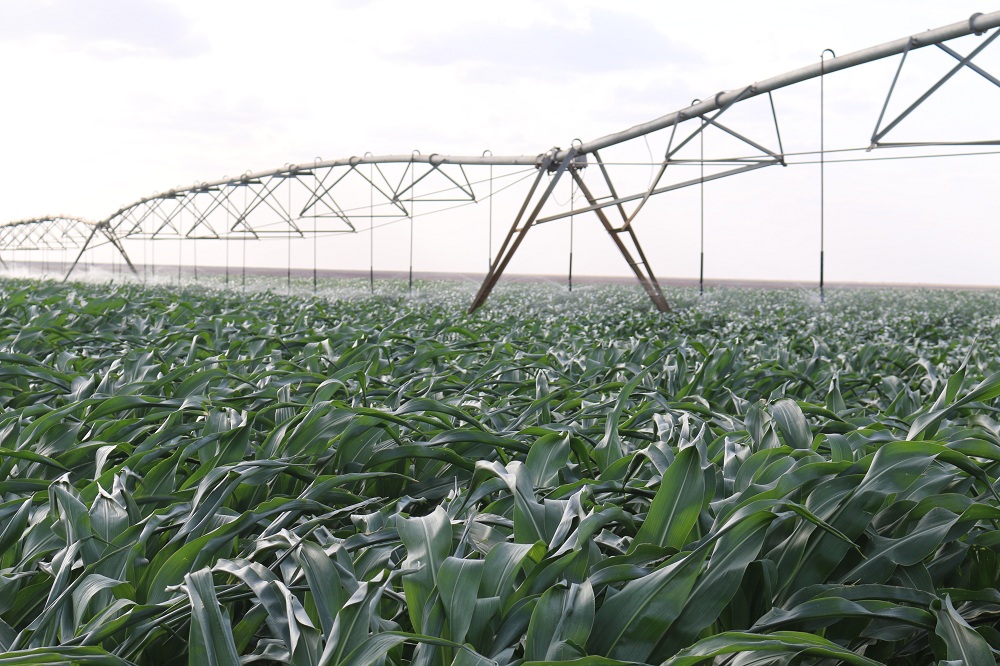
Kenya is preparing for a major shift in how it feeds itself, with the government planning to rely less on rainfall and more on stored water to grow food.
The State Department for Irrigation has outlined plans to construct at least six mega dams and expand irrigation to around two million acres of farmland, a move officials say is critical as climate change continues to disrupt traditional farming seasons and push food prices higher.
The strategy is anchored in the National Irrigation Sector Investment Plan and targets areas that have long been left behind due to low and unreliable rainfall. More than 70 per cent of Kenyan farmers depend on rain-fed agriculture, leaving them highly exposed whenever drought strikes.
Principal Secretary for Irrigation Ephantus Kimotho said the government can no longer afford to treat irrigation as an emergency response. He said water storage and controlled irrigation are now essential tools for protecting farmers and ensuring stable food production.
“Whenever rains fail, farmers are affected greatly, and that is one of the effects of climate change,” Kimotho said. “Irrigation comes in as a mitigating factor. When there is rain, we store water, and when there is drought, we use that water for irrigation.”
The government has already identified nearly two million acres across the country for irrigation development. According to Kimotho, ongoing rehabilitation and expansion of irrigation schemes will begin delivering visible results this year as more farmers gain access to reliable water.
At the centre of the plan are large dams designed to support commercial-scale agriculture. Head of Irrigation Infrastructure Engineer Vincent Kabuti said preparations are underway to allow construction of six major dams to start in 2026, once technical studies and funding arrangements are completed.
“We are confident that in 2026 we will start construction of at least six large-scale dams,” Kabuti said. “These projects will unlock commercial agriculture, create jobs and go a long way in meeting our food security needs as a country.”
The bulk of the new infrastructure will be located in arid and semi-arid counties, where land is abundant but farming has been limited by water scarcity. Irrigation Secretary for Programmes Michael Thuita said regions such as Mandera, Turkana, Baringo and the Galana area offer the greatest opportunity for expanding irrigated agriculture.
“These regions have land, sunlight and labour, but lack reliable water infrastructure,” Thuita said, adding that large dams are the most practical way to support long-term irrigation in such areas.
Arid and semi-arid lands make up between 80 and 89 per cent of Kenya’s total land area, yet they contribute only a small share of the country’s food supply. Repeated droughts have also turned these regions into recurring centres of food shortages and humanitarian assistance.
Unavoidable
Irrigation Secretary for Land Reclamation, Climate Resilience and Irrigation Water Management Joel Tanui said focusing on ASALs is both strategic and unavoidable. Between 80 and 89 per cent of the country falls under arid and semi-arid areas. This is where we must focus because it holds the greatest potential for irrigation development,” he said.
Beyond stabilising food production, the irrigation programme is expected to stimulate rural economies through job creation, agro-processing and value addition. The government also hopes the expanded irrigation network will reduce dependence on food imports, particularly maize, rice and wheat, which often rise during periods of poor harvests.
While officials acknowledge challenges such as financing, land ownership disputes and environmental concerns, they insist the shift to irrigation is no longer a choice but a necessity in a warming climate.
As part of the wider plan to construct 50 mega dams nationwide, the government intends to break ground on six flagship projects in 2026.
These include the Lowaat Dam in Turkana, Radat Dam in Baringo, Thuci Dam in Embu, Basilinga Dam in Isiolo, the High Falls Dam serving Kitui and Tharaka Nithi, and the Galana Dam covering parts of Tana River and Kilifi counties.
Once operational, the dams are expected to support irrigation on roughly two million acres, helping Kenya grow more food consistently, reduce drought-related losses and transform livelihoods in some of the country’s most vulnerable regions.














Leave a comment