

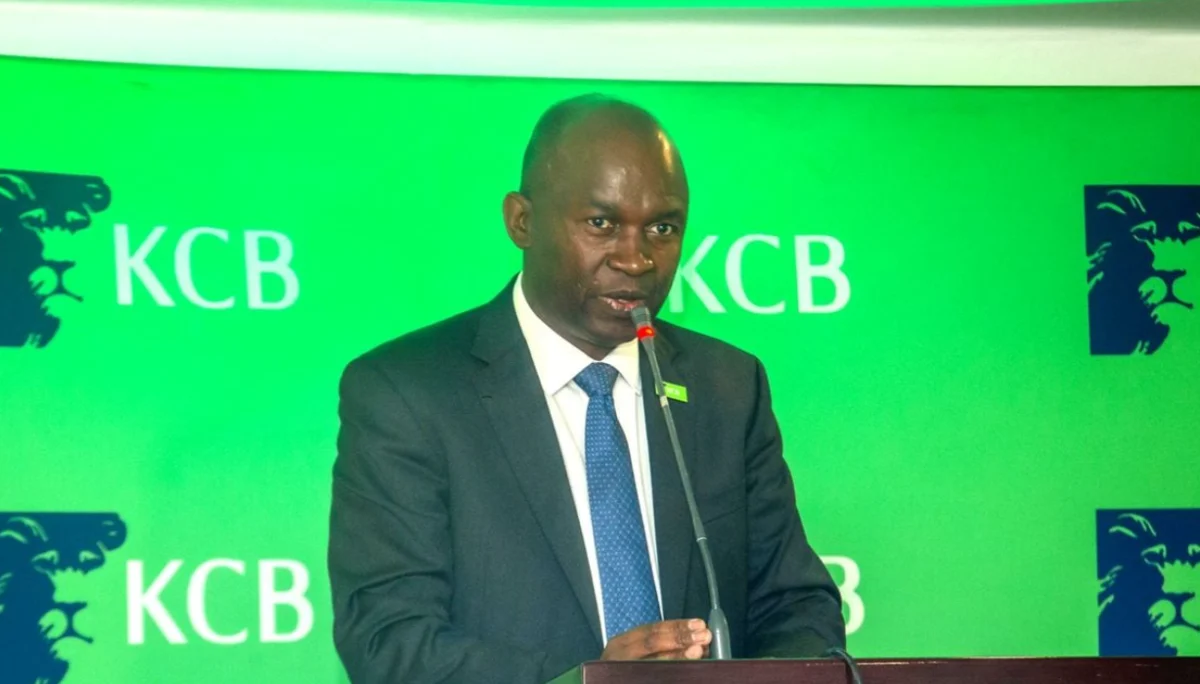
Sidian Bank, a hitherto colourless Tier II lender, has appointed John Okulo as its new Managing Director and Chief Executive Officer.
John Okulo is a seasoned banker from KCB Bank, and will succeed former Sidian Bank CEO/MD Chege Thumbi, whose leaves the C-Suite and corner office on June 30, 2026, on retirement after a nine-year tenure.
The lender is expected to benefit from Okulo’s more than 30 years banking experience regional and international banks, including Standard Chartered, Barclays, Citibank, and Stanbic Holdings.
He most recently served as the Director of Corporate Banking at KCB Bank Kenya, where he managed one of East Africa’s largest corporate banking portfolios.
Okulo joins Sidian Bank as a time when its fortunes are looking up as shown by the 2025 financial performance.
The lender’s net earnings for period ended 31st December 2026 leaped 501.5% to KSh 1.73Bn, a sharp rebound, with non-interest income doing the heavy lifting with a growth of 119.9%, ahead of its lending business which brought in a 54.6% growth in Net Interest Income.
Sidian Bank Balance Sheet Expansion
The lender saw its balance sheet size grow 50.8%, boosted by growth in Customer Deposits at 62.9% while net loans growth was lower at 10.8%. This signals strong inflows of liquidity — but slower credit deployment
The lender is benefiting from proximity to power and institutional alignment within the current operating environment. In practical terms, that often translates to stronger deposit inflows (institutional and quasi-government flows), preferred transactional positioning and visibility in public-sector-linked financial activity.
Sidian Bank is quietly wrestling government institutions deposits from major banks. Latest financials shows the bank booked their first deposits from KEMSA and Communications Authority of Kenya in the last financial year.
This helps explain the aggressive deposit growth relative to lending at Sidian. Rather than aggressively lending, the lender is heaping its cash in Government Securities so as to benefit from the elevated yields in the fixed income market.
Improvement is clear — but experts including Dedan Maina of Ketu Capital warns that at 73%, Sidian’s efficiency is still structurally weak.
“Sidian Bank is today liquid, profitable again and benefiting from structural positioning. But it still needs to prove independence of earnings from flow advantages, efficient conversion of deposits into high-quality assets and have sustainable, cycle-resilient growth,” said CFA Dedan Maina.
Okulo, the new CEO at Sidian Bank has to the task of turning the huge deposits into growth of the balance sheet.
His expertise in corporate banking, trade finance, and risk management fits well with aligns perfectly with the mid-to-large corporate segments that currently drive Sidian’s balance sheet.
The Board of Directors expressed high confidence that John Okulo’s strategic depth will lead the bank into its next phase of growth. His arrival coincides with recent governance changes that was saw James Macharia became the Board Chairman. Centum PLC, a major shareholder also offloaded all its interests from Sidian in March 2026.
ALSO READ: Sidian Bank Upgraded to Medium-Size Status by CBK: Facts and Figures















Leave a comment