

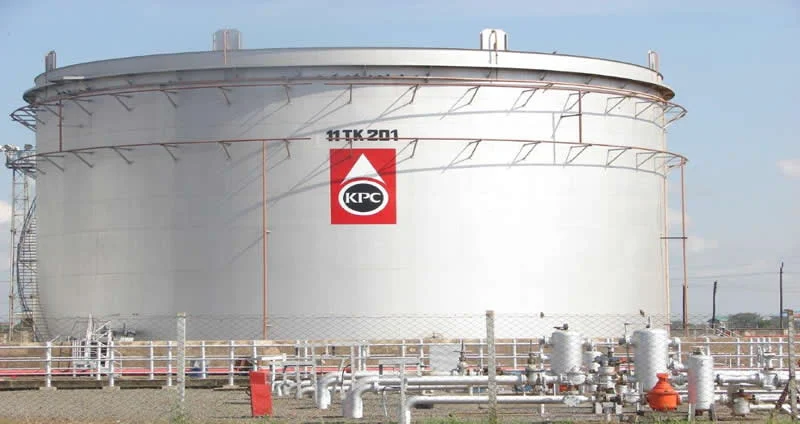
Standard Investment Bank (SIB) has pegged the value of Kenya Pipeline Company (KPC) at Ksh 102 billion, just months before the government moves to list the state-owned firm at the Nairobi Securities Exchange.
The valuation is slightly higher than the Ksh 100 billion the National Treasury hopes to raise from selling a 65 per cent stake, but the announcement has already stirred fierce debate on whether the country is getting a fair deal for one of its most strategic assets.
To the government, the IPO represents a bold new era, an attempt to attract investors, free up cash, and inject private sector discipline into a company that controls the movement of petroleum across the country. To its critics, it is a risky handover of national sovereignty to market forces.
Treasury officials say listing KPC publicly is the most transparent way to privatise the firm, offering ordinary Kenyans a chance to own shares in a profitable state enterprise while deepening the capital markets.
SIB analysts say KPC closed the 2024 financial year with a book value of Ksh 89 billion, of which Ksh 77 billion, about 86 per cent, was retained earnings.
“Further, looking at the business’s cash position and leaning on our understanding of intrinsic valuation, we tend to believe that the value of the business based on its ability to generate cash may be significantly higher, quite similar to what we have seen with TotalEnergies,” the report noted.
The firm generated a net profit of Ksh 6.9 billion in the review period, translating to a 7.7 per cent Return on Investment, and ended the financial year with a Ksh 6.5 billion cash balance.
“Our back-of-the-envelope calculations, looking at the book value of similar businesses in the broader oil and gas sector, placed the fair value estimates at Ksh 102 billion,” SIB added.
But the figures are not calming the storm.
Deputy Minority Leader and Kathiani MP Robert Mbui has dismissed the plan as a daylight auction of a national treasure. “The fundamental question is: what is the value of KPC? Such a national asset is being given away at only Sh100 billion,” he said.
Wiper Party leader Kalonzo Musyoka went further, warning President William Ruto to back off the deal.
“Ruto, don’t dare sell the Kenya Pipeline Company! If you attempt to fast-track the auction of this strategic asset, despite the court orders, we will come after you just like we did in the Adani-JKIA and stop it,” he posted on X.
Even allies within the ruling coalition are uneasy. Kiharu MP Ndindi Nyoro called the proposed listing “opaque and skewed,” predicting that “after the announcement of the share capital in February, the share price will collapse.” He added, “The current investor in the NSE is not buying assets; they are buying revenue.”
Outside Parliament, the matter has also found its way to the courts. The Consumers Federation of Kenya (COFEK) obtained a conservatory order blocking the sale, arguing that the process lacks public participation, threatens national security, and violates the Energy Act, 2019. The case is scheduled for a hearing in September 2025.
Despite the opposition, the government is pressing forward. Last week, President Ruto signed the Privatisation Bill, 2025, into law, paving the way for the Treasury to sell stakes in several state enterprises, including loss-making corporations, in a bid to reduce public debt and boost revenue.
The planned sale of KPC is part of that wider strategy. The company, which was first earmarked for privatisation in 2008, has remained a central pillar of Kenya’s energy security, a factor critics argue makes it too strategic to hand over to private investors.
If the listing proceeds as planned, it will be the largest IPO in Kenya since Safaricom’s in 2008, a moment that could either revitalise the Nairobi Securities Exchange or ignite a political and economic backlash.
The real question now is whether Kenyans see the KPC sale as an opportunity for economic growth or a sign that the country is cashing out on its most critical infrastructure.













Leave a comment