

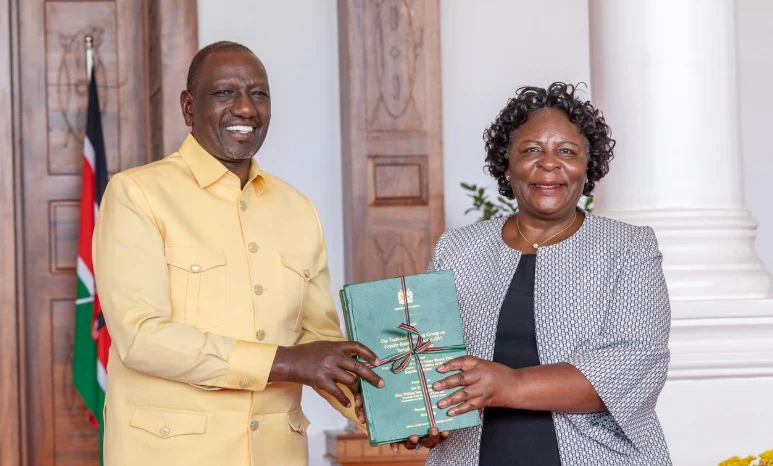
At least 34 per cent of Kenyan women have experienced physical violence since the age of 15, underscoring the scale of gender-based violence (GBV) facing the country, a new national report on GBV and femicide has shown.
The findings are contained in a report compiled by a Presidential Technical Working Group (TWG) appointed in January 2025 to investigate rising cases of violence and killings of women. The taskforce was chaired by former Deputy Chief Justice Dr Nancy Baraza following sustained public concern over the increasing number of women killed, many in domestic or intimate partner settings.
The report further reveals that 13 per cent of women in Kenya have experienced sexual violence in their lifetime, while violence cuts across all regions, ages and socio-economic groups.
Women aged between 30 and 44 are the most affected, although cases involving adolescents and young women are on the rise.
Between 2022 and 2024, the country recorded at least 1,639 femicide cases, with urban counties such as Nairobi, Nakuru and Meru reporting the highest numbers, though under-reporting remains a major concern.
“Kenya is facing a quiet but deadly crisis. Gender-Based Violence (GBV), including the killing of women and girls – known as femicide – has been rising despite existing laws and institutions meant to protect citizens. Public outrage over recurring cases, many involving intimate partners or family members, has pushed the government to act decisively,” the report noted.
According to the taskforce, weak legal and institutional frameworks continue to undermine prevention and justice. Femicide is not recognised as a distinct offence in Kenyan law, with killings of women recorded simply as homicide.
The report notes that this legal gap “obscures gendered patterns of violence, weakens accountability and limits targeted prevention.” Survivors also face delayed investigations, limited access to medical and psychosocial support, and prolonged court processes that often discourage reporting.
Cultural practices and informal dispute resolution mechanisms were also cited as key contributors to impunity. Many cases of GBV are settled outside the justice system through family or clan negotiations, with survivors pressured to withdraw complaints in the name of reconciliation. The report warns that such practices normalise violence and leave perpetrators unpunished, fuelling repeat offences.
“Many GBV cases are quietly settled by families, clan elders, or informal systems. Survivors are pressured to withdraw cases, protecting perpetrators and perpetuating violence,” the report added.
The taskforce further highlights chronic underfunding of GBV interventions, noting that most survivor support services rely heavily on donor funding. Several counties lack shelters, trained personnel and integrated referral systems, while the absence of a unified national database has resulted in fragmented and inconsistent data across police, health and judicial institutions.
To address the crisis, the report recommends declaring GBV and femicide a national crisis, amending the Penal Code to introduce a specific offence of femicide, criminalising out-of-court settlements in serious GBV cases, and establishing One-Stop GBV Recovery Centres in all counties. It also calls for the creation of a National GBV and Femicide Database and a dedicated national fund to ensure sustainable financing of prevention and response efforts.
The report concludes that violence against women and girls is not a private matter but a constitutional, social and development challenge that demands urgent, coordinated action. It warns that without decisive reforms, Kenya risks entrenching a cycle of violence that continues to deny women and girls their right to safety, dignity and justice.
Ruto’s recommendation
In his recommendations, President William Ruto said Kenya must adopt a whole-of-society approach to end gender-based violence.
“Every Kenyan has a role to play. Together as a nation, we must ensure that none of our citizens live in fear because of their gender. Change must begin at home, with parents bringing up their children in a peaceful and respectful environment. Religious leaders must stand firm in defence of life and human dignity. Community leaders must confront harmful practices and end the silence that protects abuse. Citizens must speak out, report abuse, and stand with survivors,” he said.
Read: PS Omollo: Use of Gangs and Violence Not an Option in Politics
>>> MCK Calls for Action Over Increased Violencé Against Journalists in Wajir













Leave a comment