

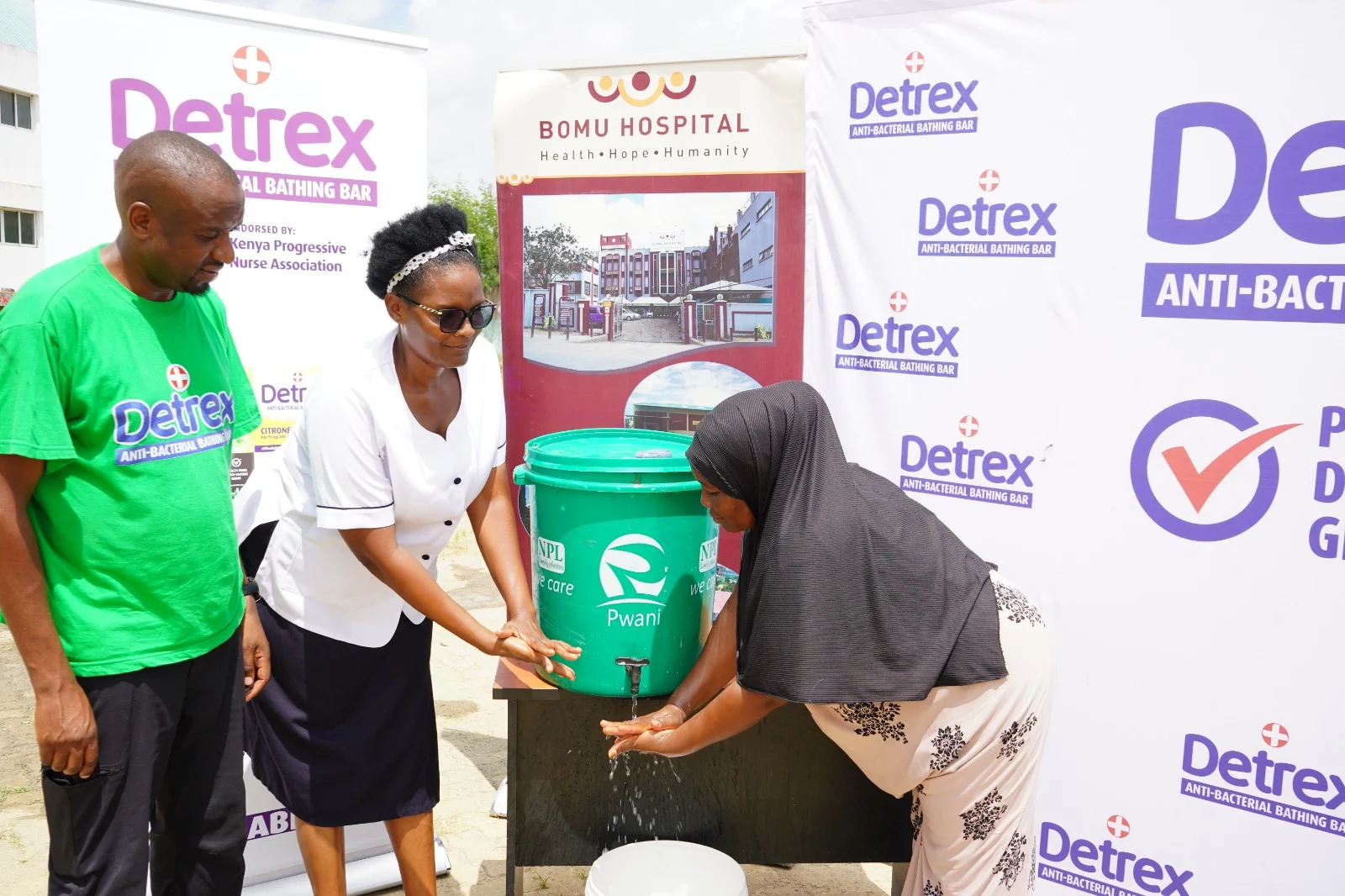
Pwani Oil Products Ltd., one of East Africa’s largest manufacturers of fast-moving consumer goods, is pivoting its public health outreach to address chronic water shortages in Kenya’s coastal corridor—a move that signals how consumer brands are navigating the reality of climate-stressed markets.
The manufacturer’s Detrex Soap brand, in partnership with the Kenya Progressive Nurses Association (KPNA), launched a hygiene intensive this month in Mariakani, a fast-growing settlement where water is a scarce commodity. The program trained more than 200 women and children at Bomu Hospital on sanitation techniques designed specifically for environments where water access is severely restricted.
For companies like Pwani Oil, hygiene education in these regions is no longer about “ideal conditions” but about adaptation. In Mariakani, chronic water shortages have historically driven up rates of waterborne diseases and skin infections, particularly among children under five.
“Hand washing remains one of the most cost-effective public health interventions available, yet it is often underestimated,” said Rajul Malde, Commercial Director at Pwani Oil. Malde noted that the initiative focused on providing “practical tools” to mothers who already understand the health risks but lack the resources to mitigate them.
The initiative highlights a growing trend of “trust-based marketing” in emerging markets. Rather than traditional advertising, Pwani leveraged existing relationships with community health workers to drive participation.
-
Target Demographic: Over 200 women and children in high-risk zones.
-
Infrastructure Support: Distribution of hygiene kits to facilitate household-level prevention.
-
Tactical Shift: Moving from general hygiene messaging to “limited-water” handwashing techniques.
Triza Ireri, a representative of the KPNA, emphasized that demonstrating proper hygiene within the “daily reality” of water scarcity is the only way to achieve lasting behavioral change.
The stakes for the region are high. As coastal settlements expand rapidly, infrastructure often lags behind, leaving public health as the first line of economic defense. Health workers involved in the project noted that by using familiar faces and providing tangible support (soap), the program shifted hygiene from a theoretical concept to a daily habit.
For Pwani Oil, the Mariakani project serves as a blueprint for “shared responsibility.” As Malde puts it, maintaining healthier communities in water-stressed environments requires a synchronized effort between industry, healthcare providers, and the families on the ground.













Leave a comment