


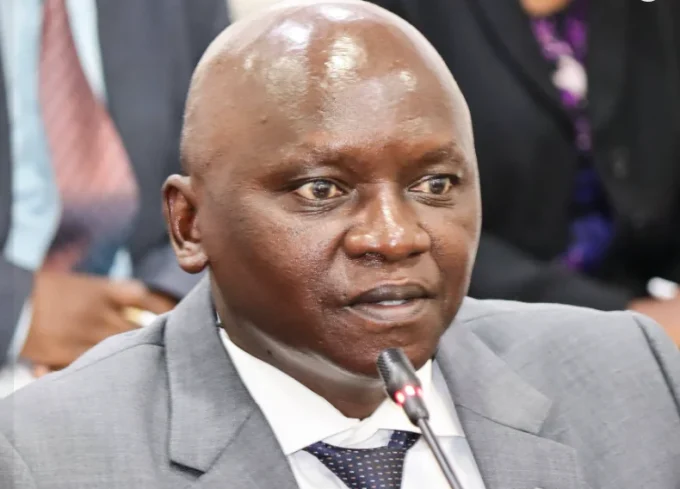
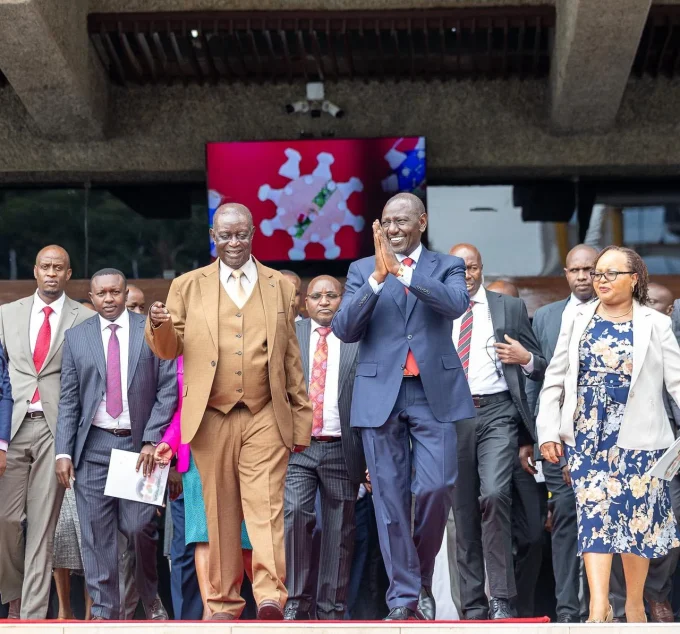
Orange Democratic Movement (ODM) party leader Oburu Odinga has defended the progress of the broad-based government arrangement between President William Ruto and opposition leader Raila Odinga, dismissing claims that the initiative has failed to deliver on its promises.
Speaking to supporters in Siaya on Sunday, March 8, 2026, Oburu said the 7th of the month was deliberately chosen as the date to present an interim update on the coalition’s reform agenda because it marks the anniversary of the political arrangement that brought together the government and opposition.
“I want to tell you, my people, that the 7th was chosen deliberately because it was the anniversary of the broad-based government. That’s all,” he said. “It was not that the world was coming to an end on the 7th, and it was not that the ODM and the government were divorcing on the 7th.”
According to Oburu, the date was meant to provide an opportunity to present an interim report on the progress of the coalition’s 10-point agenda, which was agreed upon when the political détente was reached.
“On the 7th, it was just to give an interim report of the 10-point agenda. And we have gone through that report with His Excellency the President,” he said.
The ODM leader said the review showed that notable progress had been made on several commitments, although some areas still require further implementation.
“We have seen the progress. There is a lot of progress which has been made,” he said.
However, Oburu criticised political opponents who have claimed that the agenda has yielded no results.
“Yet there are some people who are saying that the 10-point agenda has zero performance. They don’t take their time to go through the details of what is in the agenda and see what has been implemented and what has not,” he added.
Broad-based government
The broad-based political arrangement emerged in 2024 following months of political tension and nationwide protests over the rising cost of living and governance issues. The protests, led largely by young Kenyans, forced the government to engage opposition leaders in dialogue.
The discussions between President Ruto and Raila Odinga culminated in a reform framework centred on a 10-point agenda addressing key national concerns. These include measures to tackle the high cost of living, reforms to the electoral system, strengthening anti-corruption efforts, expanding opportunities for youth employment, and improving governance and inclusivity in public institutions.
The cooperation between the ruling United Democratic Alliance and the opposition Orange Democratic Movement marked a significant shift in Kenya’s political landscape, bringing together leaders who had previously been fierce rivals in the 2022 general election.
The arrangement has, however, faced criticism from sections of the opposition who argue that the partnership has weakened oversight of the government.
Despite the criticism, Oburu insisted the initiative remains on course and urged Kenyans to evaluate its progress based on facts rather than political rhetoric.
“They should take time to examine what has been implemented and what still needs to be done,” he said.
Read: ODM Rift Deepens as G8 Faction Accuses Oburu Odinga of Double Standards
>>> ODM Says Azimio Leadership Changes Null and Void, Cites Coalition Agreement Breach









Leave a comment