

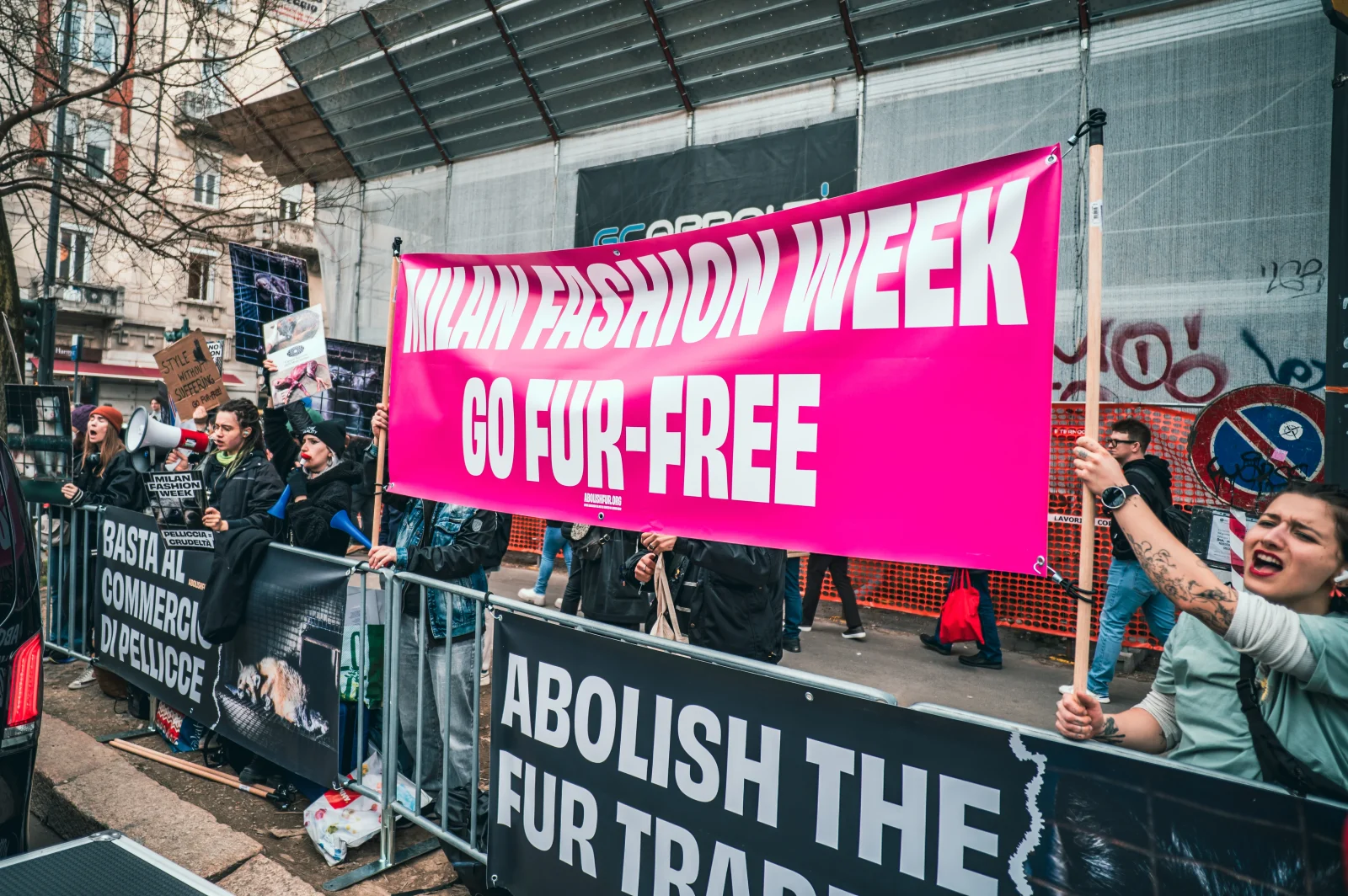
As Milan Fashion Week opened this week, anti-fur activists escalated pressure on Italy’s fashion establishment, staging daily protests and targeting one of the event’s most prominent holdouts: Fendi.
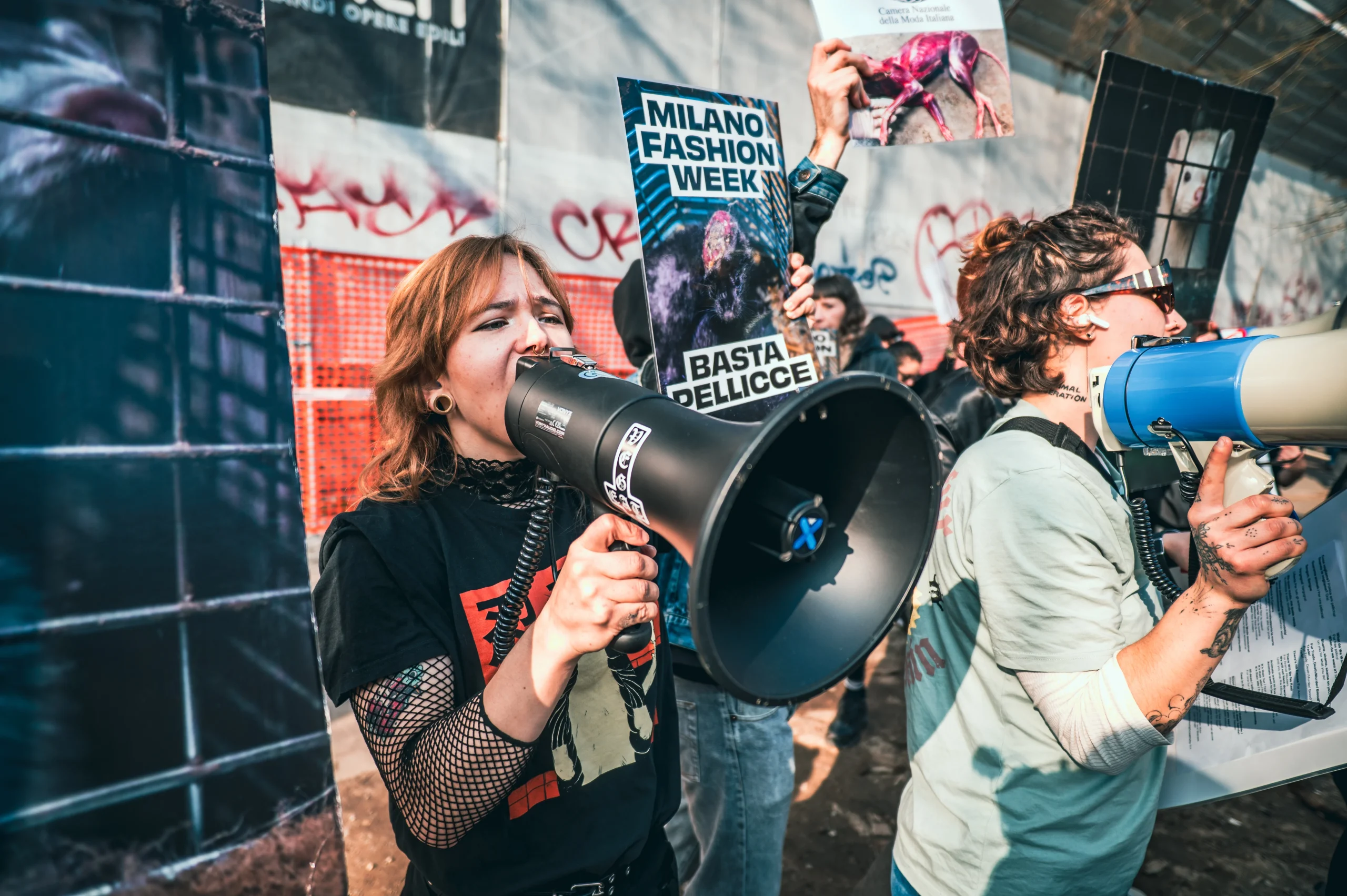
Demonstrators gathered outside Fendi’s runway presentation on the second day of shows, calling on the event’s organizer, Camera Nazionale della Moda Italiana (CNMI), to adopt a formal fur-free policy. The protest marked the fifth since the February 24 start of Milan’s autumn/winter showcases, with organizers pledging further disruptions throughout the week.
The campaign is being coordinated by the Coalition to Abolish the Fur Trade (CAFT), a grassroots network that launched a global push against fashion weeks on Jan. 8. The group argues that Milan risks reputational damage by resisting a shift already embraced by other major fashion capitals.
In recent years, both New York Fashion Week and London Fashion Week have moved to eliminate fur from their official platforms, reflecting mounting scrutiny of the material’s ethical and environmental footprint. A growing list of brands and media groups — including Rick Owens, Condé Nast and Hearst Magazines — have also announced permanent fur bans over the past year.
By contrast, Fendi, owned by LVMH, remains the only CNMI board member still using fur in its collections, according to activists. The Roman house has long been associated with fur craftsmanship, a legacy that has become increasingly contentious as regulators and consumers reassess the material.
The standoff has spilled beyond the runway. Last month, CNMI lost two strategic partners, Wella and DHL, following sustained activist campaigns that included demonstrations outside executives’ homes. Financial terms of those partnerships were not disclosed, but the departures underscore the growing commercial sensitivity around fur.
Tensions flared further on Feb. 23 at Bocconi University, where activists interrupted a sustainability panel featuring CNMI President Carlo Capasa. Protesters unfurled banners and accused the organization of lagging behind industry standards. Capasa responded by calling the demonstrators “liars” and “violent,” according to video shared by activists.
The broader regulatory backdrop in Europe adds pressure. More than 20 European countries, including Italy, have banned fur farming, and the European Commission is expected to respond in March to the “Fur Free Europe” citizens’ initiative, which has gathered more than 1.5 million signatures.
For Milan, the debate cuts to the heart of its identity as a luxury manufacturing hub. While many Italian houses have pivoted away from fur or substituted alternative materials, CNMI has stopped short of imposing a blanket prohibition. Activists say protests will continue until that changes, framing the issue as both an ethical imperative and a competitive one in an industry increasingly shaped by sustainability metrics and shifting consumer values.











Leave a comment