BUSINESSECONOMY

Mbadi Warns of Global Economic Risks as Middle East Tensions Rise

Share
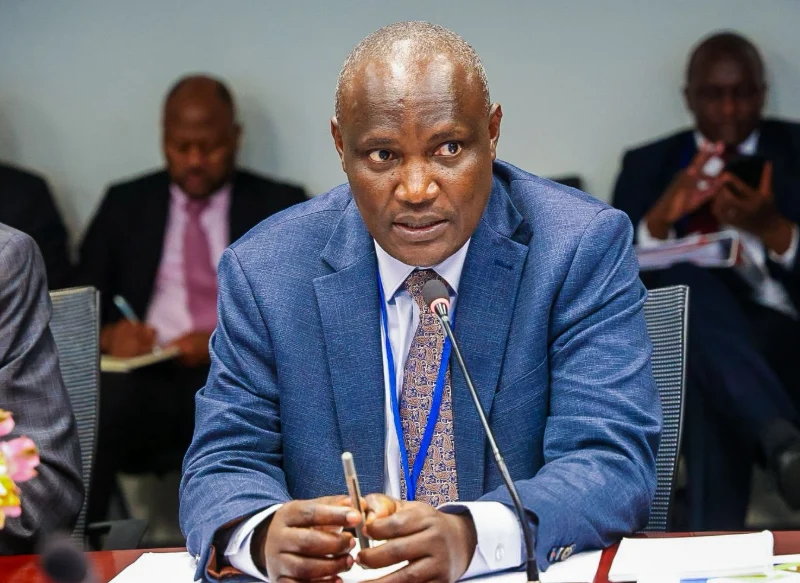
Treasury Cabinet Secretary John Mbadi

Share

Mounting instability in the Middle East is beginning to cast a shadow over the global economy, even as Kenya maintains a relatively steady outlook, Treasury Cabinet Secretary John Mbadi has told lawmakers.

Appearing before the National Assembly Committee on Finance and Planning on Thursday, April 2, 2026, Mbadi said the international environment is becoming increasingly unpredictable, with energy markets, trade flows and financial systems all under strain.

He noted that tensions in the Middle East are not isolated events, but developments that are already influencing economic conditions worldwide.

“The global economic outlook is under pressure due to escalating Middle East tensions, with risks to energy markets, trade, and financial stability,” Mbadi said

Kenya, which relies heavily on imported fuel and global trade links, is particularly sensitive to fluctuations in oil prices and shipping routes. Disruptions in key maritime corridors have already led to increased shipping costs and delays in the movement of goods.

Despite these external pressures, Mbadi maintained that Kenya’s domestic economy continues to show resilience, supported by reforms and performance across major sectors.

“Kenya’s economy remains resilient, with growth projected at 5.3% in 2026 and 2027, supported by agriculture recovery, a strong services sector, and ongoing economic reforms,” Mbadi added.

He pointed to macroeconomic indicators that, in his view, reflect improving stability. Inflation has remained within manageable levels, interest rates have been easing, and the exchange rate has remained broadly stable.

“Macroeconomic stability has been sustained, with inflation at 4.3 per cent, declining interest rates, a stable exchange rate, and strong foreign exchange reserves.”

Diaspora remittances continue to play a significant role in supporting households and boosting foreign exchange inflows. Kenya has in recent years relied on these inflows as a buffer against external shocks.

“Diaspora remittances remain robust at USD 5.05 billion, continuing to support the economy and external sector stability,” the statement reads.

Mbadi on capital markets

Mbadi also highlighted improvements in capital markets, saying that investor activity at the Nairobi Securities Exchange has shown signs of renewed confidence.

“Capital markets have strengthened significantly, with notable growth in the NSE index and overall market capitalisation,” the statement read.

However, he acknowledged that fiscal pressures remain. While government spending is progressing as planned, revenue collection has not yet reached expected targets.

“Budget implementation is on course, with improved revenue performance, though still below target, and a fiscal deficit of 3.7% of GDP,” he stated.

The Treasury CS cautioned that the ongoing Middle East conflict could have direct consequences for Kenya, particularly through higher fuel prices and disruptions in supply chains. Rising oil prices tend to feed into transport costs, production expenses, and ultimately the cost of living.

“The Middle East conflict poses key risks, including rising oil prices, potential fuel cost increases, and disruptions to trade, exports, and supply chains,” he said.

Sectors such as agriculture, livestock, tourism and exports were identified as especially vulnerable because of their dependence on stable logistics and international markets.

“Key sectors such as agriculture, livestock, tourism, and exports are vulnerable to external shocks and logistics disruptions.”

Kenya’s export earnings, particularly tea and horticultural products, are closely tied to global shipping routes. Any disruption in maritime transport can lead to delays, increased costs, and reduced competitiveness in international markets.

To mitigate these risks, Mbadi said the government has introduced several interventions aimed at cushioning the economy from external shocks and maintaining stability.

He further noted that Kenya is positioning itself to take advantage of shifting global trade dynamics, including increased interest in alternative logistics corridors within the region.

Lamu Port, part of the LAPSSET corridor, is expected to play a growing role in regional trade as global shipping patterns evolve in response to geopolitical tensions.

Mbadi assured Parliament that the government remains focused on maintaining stability while pursuing inclusive growth and fiscal discipline.

Leave a comment

Leave a Reply

Your email address will not be published. Required fields are marked *

PAST ARTICLES AND INSIGHTS

Related Articles
content creation tips
SMART MONEY

Students Turn to Content Creation for Income

More than 500 students at Pwani University spent Friday learning how to turn social...

Overall Golf winner Duncan Kung'u
NEWSSPORTS

From 334 Golfers, Duncan Kung’u Clinches Ruiru Captain’s Prize 2026

A staggering field of 334 golfers descended upon the Ruiru Sports Club...

Sasini entered the avocado segment between 2017 and 2020 as part of a wider plan to diversify beyond its traditional tea and coffee businesses.
BUSINESS

Sasini Puts Nairobi Avocado Plant Up for Sale in Strategic Shift

Agribusiness firm Sasini Plc has put its Nairobi-based avocado processing and packing...

CBK headquarters in Nairobi
FEATURED STORY

CBK Seeks Additional KSh 20 Billion for Budgetary Spending in April

Central Bank of Kenya(CBK) is inviting investors to bid for a new...