

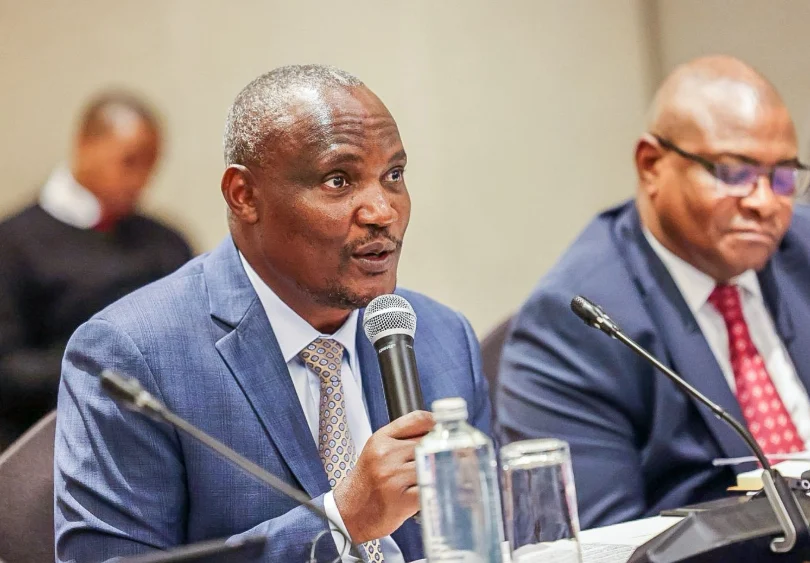
Treasury Cabinet Secretary John Mbadi has projected that Kenya’s economy will grow by 5.3 per cent in 2026, signalling confidence in the country’s recovery momentum amid ongoing fiscal and debt pressures.
Appearing before the National Assembly’s Budget and Appropriations Committee, chaired by Samuel Atandi, Mbadi presented the 2026 Budget Policy Statement (BPS), outlining the government’s economic outlook and fiscal plans for the coming financial year.
The CS said the economy remains resilient, having recorded an average growth of about five per cent over the past three years. Growth stood at 4.9 per cent in 2022, rose to 5.7 per cent in 2023, and slowed slightly to 4.7 per cent in 2024.
Mbadi attributed the performance to what he described as prudent macroeconomic management and a diversified economic base.
“Key macroeconomic indicators remain stable, with inflation within target, a reduced budget deficit and a stable public debt position,” he said.
The 2026 Budget Policy Statement, prepared in line with the Public Finance Management Act, sets out the government’s medium-term fiscal framework, revenue projections, expenditure ceilings and policy priorities. It will guide the preparation of the 2026/27 national budget.
Inflation eases
Latest data from the Kenya National Bureau of Statistics shows that inflation has continued to ease in early 2026. The overall inflation rate slowed to 4.3 per cent in February, remaining within the government’s target range.
Lower food prices and stable fuel costs have supported the slowdown, offering some relief to households and businesses that have faced high living costs in recent years. Even so, the cumulative effect of inflation over the past few years continues to weigh on consumers.
Stable inflation gives room for predictable borrowing costs and supports business planning. The Treasury said maintaining price stability remains a priority to protect purchasing power and sustain growth.
Focus on jobs and productivity
Mbadi said strategic sectors, including agriculture, manufacturing and ICT, will remain central to the government’s growth agenda. These sectors are expected to drive job creation, boost exports and enhance productivity.
He added that public investments in transport, energy and digital infrastructure will continue, to unlock economic potential across counties and support inclusive growth.
At the same time, the Treasury faces the delicate task of balancing development spending with debt management. Kenya’s public debt remains elevated, and the government has been under pressure to strengthen revenue collection while controlling expenditure.
The Cabinet Secretary said the National Treasury is committed to fiscal discipline and efficient use of public resources. “We remain focused on safeguarding macroeconomic stability while accelerating socio-economic development,” he said.
The Budget Policy Statement will now be reviewed by Parliament before lawmakers adopt recommendations that will shape the final 2026/27 budget estimates.










Leave a comment