

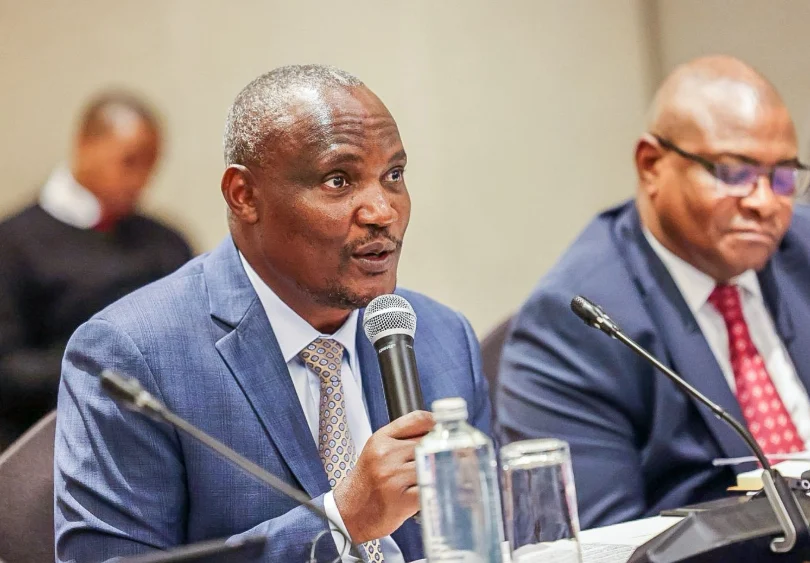
Treasury Cabinet Secretary John Mbadi has announced a major shift in government policy, with Kenya abandoning plans to procure petrol-powered vehicles and moving towards electric mobility in response to rising global oil market instability.
Speaking before the National Assembly Finance and National Planning Committee, Mbadi said the State will now support the local assembly of about 3,000 electric vehicles, replacing an earlier plan to acquire 2,500 fuel-powered units.
“We have secured a supplier to assemble the electric-powered cars. That will also create jobs for locals,” Mbadi said.
The move signals a growing urgency within government to cut reliance on imported petroleum as geopolitical tensions in the Middle East continue to disrupt global energy supply. Ongoing conflict involving Israel, the United States and Iran has strained key oil routes and triggered price volatility, with ripple effects being felt across economies that depend on fuel imports.
Rising global risks expose Kenya’s vulnerability
Mbadi told lawmakers that the Middle East remains central to global energy supply, producing between 30 and 35 per cent of the world’s crude oil and nearly 20 per cent of natural gas. Any instability in the region, he said, directly threatens supply chains and pricing.
“The strikes have affected energy infrastructure and shipping routes, resulting in production and supply disruptions,” he said.
Particular concern has been placed on the Strait of Hormuz, a vital shipping lane for global oil and gas. Disruptions in the corridor have tightened supply and driven uncertainty in international markets.
For Kenya, the effects are already being felt. Petroleum imports account for about 20 per cent of the country’s import bill, making the economy highly sensitive to price fluctuations.
“As an open economy, Kenya is exposed to external geopolitical shocks. While the country maintains genuine macro-economic strengths, underlying vulnerabilities limit the scope of policy response,” Mbadi said.
“The conflict presents risks to our economy, potentially affecting key sectors through several channels, including petroleum imports.”
Fuel price volatility has pushed up the cost of transport, manufacturing and basic commodities, increasing pressure on households and businesses. Global benchmarks such as Murban and Brent crude have recorded sharp swings in recent weeks, feeding into local inflation concerns.
To manage the immediate impact, the government is considering measures, including a review of VAT on petroleum products and the use of the Ksh 17 billion fuel stabilisation fund to cushion consumers against further price increases.
Shift to electric vehicles gains momentum
Beyond short-term interventions, the government is now pursuing a long-term transition aimed at reducing dependence on fossil fuels and strengthening economic resilience.
Mbadi said the decision to prioritise electric vehicles is part of a broader strategy to protect the economy from recurring global oil shocks while promoting local industry.
“This is the route to take, given the rapidly evolving war in the Middle East, which could pose additional risks to global growth through disruptions to energy markets, trade and financing stability,” he said.
The plan is backed by proposed policy changes under the Tax Laws Amendment Bill, which seeks to incentivise the uptake of locally assembled electric vehicles. The government is also working to expand charging infrastructure and attract private sector investment into the electric mobility space.
Officials believe the shift could help reduce the country’s fuel import bill, ease pressure on foreign exchange reserves and lower long-term transport costs.
At the same time, local assembly of electric vehicles is expected to create jobs and support industrial growth, aligning with Kenya’s broader economic development goals.
While challenges such as high upfront costs and limited charging infrastructure remain, the government sees electric mobility as a necessary step in securing the country’s economic future.
With global oil markets increasingly unpredictable, the transition marks a decisive move by Kenya to reduce its exposure to external shocks and build a more stable and self-reliant energy and transport system.














Leave a comment