

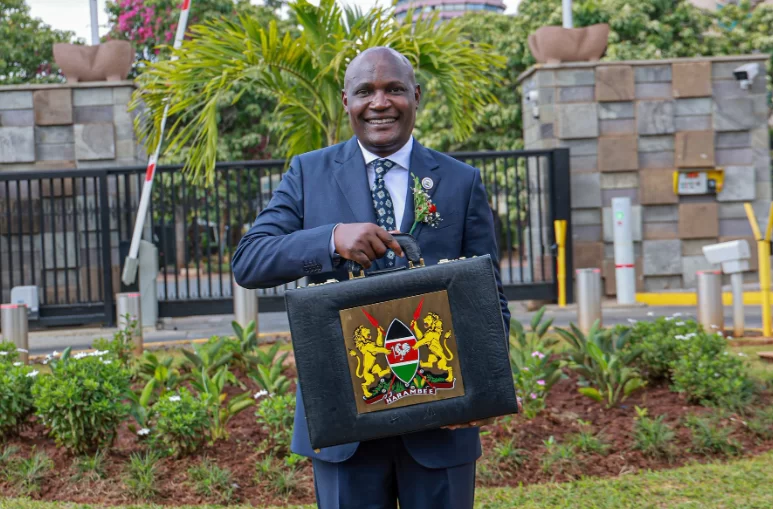
The government has moved to calm fears over taxation ahead of the next budget cycle, assuring Kenyans that no new taxes will be introduced in the 2026 Finance Bill.
Appearing before Parliament, National Treasury Cabinet Secretary John Mbadi said the government is not considering raising tax rates, a statement likely to ease tension after the backlash that followed previous Finance Bills.
Mbadi spoke on Thursday, March 26, 2026, during a session with the National Assembly Committee on Budget and Appropriations in Kiambu County. The committee is chaired by Alego Usonga, MP, and Sam Atandi.
The meeting focused on the FY 2025/26 Supplementary Budget Estimates I, but attention quickly shifted to the upcoming Finance Bill, especially given the events of 2024 when tax proposals triggered nationwide protests.
Kibwezi West MP Mwengi Mutuse raised concerns about whether the government might introduce new tax measures, recalling the unrest that followed previous proposals.
“I want to state that we are not looking at a possibility of increasing tax rates because there is no difference between this year and last year. Kenyans are the same, and the rates are still the same,” he told the committee.
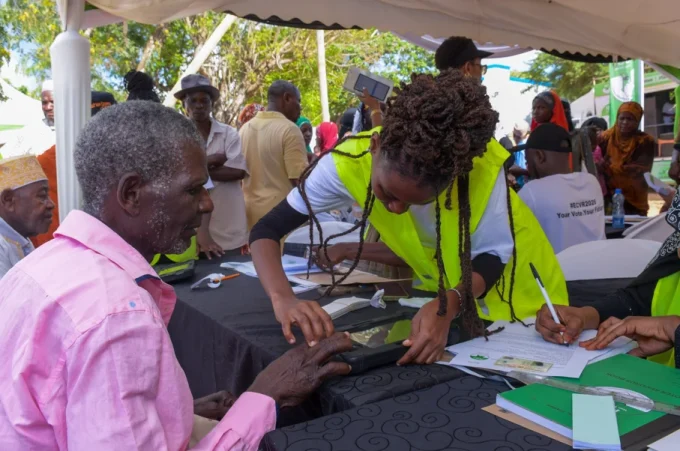
Instead of increasing taxes, Mbadi said the government will focus on widening the tax base—bringing more people and businesses into the tax net rather than adding pressure on those already paying.
Mbadi admitted that revenue collection remains a major challenge, despite efforts to digitise the system through the Kenya Revenue Authority.
“I know this has been talked about a lot, and the base is not expanding as expected, but we are putting pressure on KRA, and some changes must be seen in terms of revenue collection. Failure to which we must make reforms to adapt to the fast-moving automation of revenue collection,” he said.
His remarks point to ongoing concerns that Kenya is not collecting enough taxes relative to its economic activity, partly due to inefficiencies, tax evasion, and a large informal sector.
The Treasury now plans to lean heavily on automation and digital systems to seal loopholes, improve compliance, and make it easier to track transactions. This includes expanding electronic tax systems, integrating databases, and reducing reliance on manual processes that are prone to errors and manipulation.
Lessons from 2024 protests
Mbadi’s assurances come against the backdrop of the 2024 Kenyan Finance Bill protests, where thousands of Kenyans took to the streets to oppose what they saw as punitive tax measures.
The protests forced the government to rethink parts of its fiscal strategy, with officials now more cautious about introducing policies that could trigger public backlash.
By avoiding new taxes, the government appears to be shifting its approach—prioritising efficiency in collection rather than increasing rates.
Concerns over global risks
Beyond taxation, Mbadi also addressed concerns about external economic shocks that could affect Kenya’s economy.
He cited risks such as the ongoing Middle East conflict, which could disrupt global oil supply chains, as well as the possibility of fuel hoarding by local oil marketers.
To manage this, he said the government has put in place government-to-government fuel supply arrangements to ensure stability in the local market.
However, he admitted that some risks remain beyond control.
“No country can fully anticipate abrupt shocks like wars or pandemics,” he noted, pointing to the need for flexible economic planning.
Parliamentary review of budget changes
During the same session, the committee also received updates from various departmental committees, including those handling finance, education, and the blue economy.
These reports are part of the ongoing review of the supplementary budget, which adjusts government spending to reflect current priorities and economic realities.
As the country moves closer to the 2026 Finance Bill, all eyes will be on how the government balances revenue needs with public pressure—without triggering the kind of resistance seen in recent years.











Leave a comment