

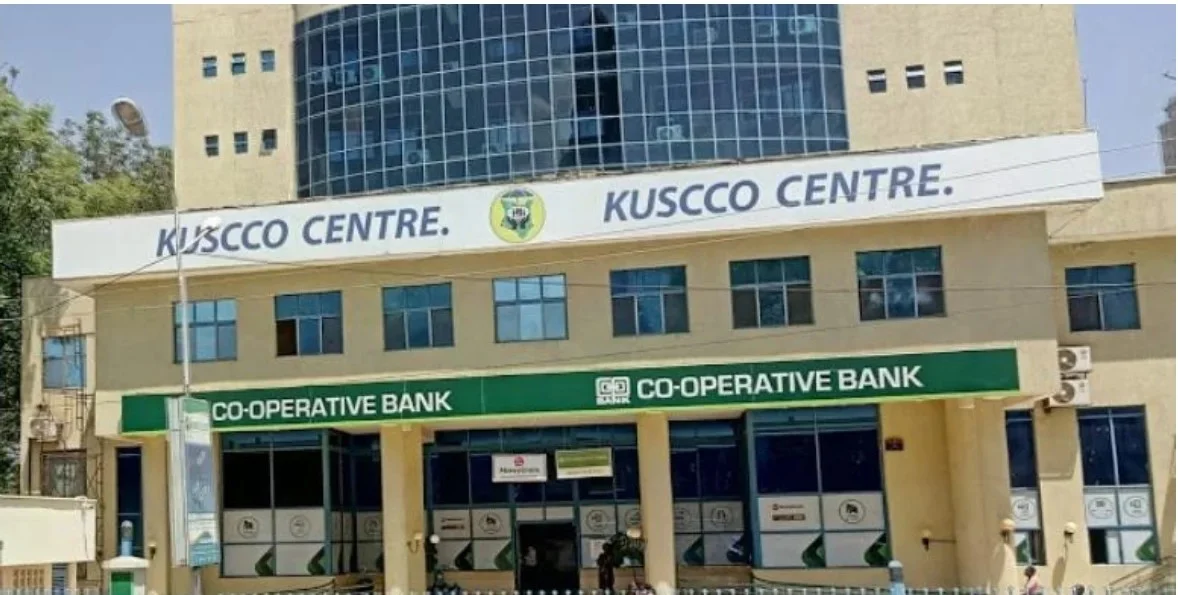
KUSCCO (Kenya Union of Savings and Credit Cooperatives) should consider rebranding and change its status to a federation, so as to rebuild lost credibility.
This is part of a recommendations report by a Committee of Experts(CoE), Commissioned by Hon. FCPA Dr. Wycliffe A. Oparanya (EGH) – Cabinet Secretary, Ministry of Co-operatives and MSMEs Development.
This report, which was handed over to President William Ruto on February 16th 2026, says the KUSCCO brand is currently associated with insolvency, fraud, and poor oversight.
A new identity can help distance the organisation from past scandals. With the appointment of the new board and sector-wide reforms underway, rebranding can reinforce the message of accountability and transparency.
KUSCCO HEIST: Highlights of PwC Audit Findings
The push for KUSCCO to rebrand comes after a forensic audit revealed that some KSh 13.3 billion belonging to members, had gone up in smoke.
The audit outlines schemes created by past KUSCCO top managers and directors to steal from the giant Union, including illegal cash withdrawals, unauthorised transfers, and unsupported executive loans.
These illicit transactions were allegedly authorised using the signature of a deceased official, exposing severe internal control failures at KUSCCO.
At least 23 senior staff have been implicated in the KUSCCO Heist, including its past top leadership. Legal action has so far been taken against four suspects, with KSh 82 million allegedly used to buy land in Nairobi, recovered.
However, deposits from over 247 SACCOs are at risk, with KSh 12.5 billion still unaccounted for.
This PwC Audit Report draws a horrific picture of a KUSCCO that was entangled with deep governance failures, gross financial mismanagement, and regulatory blind spots that have severely eroded public trust. When the KUSCCO scandal became public, reads begun to roll that saw the exit of the Union’s entire Board and the appointment of a new one headed by David Mategwa-also the board chairman at Kenya National Police DT SACCO.
Experts now recommend that KUSCCO should undergo rebranding not merely as a cosmetic exercise, but to also send a signal of a genuine institutional reset, especially when paired with structural reforms.
This Committee of Experts(COE) comprised Marlene Shiels OBE – Chairperson; Dr. Nelson Kuria – Vice Chairperson; Dr. Gamaliel Hassan; Odhiambo Collins Harrison; Maurice Smith. The Technical bench had Dr. Moses Gweyi; Jeremiah Were Otieno and Joan Atuhurra.
At present, the KUSCCO scandal is seen as one of the most sobering wake-up calls in Kenya’s cooperative finance history. The fraud exposed deep systemic vulnerabilities that threaten not just financial stability, but public trust in SACCO governance.
The new Board at the Union, led by David Mategwa, has been urged to consider the future strategy of the organisation, particularly as it transitions to a Federation.
The report said that in order to minimise fraud in the SACCO sector, the lessons from the KUSCCO scandal must be translated into proactive, systemic safeguards and where possible for these to be mandatory through the regulatory environment, not just for the Apex and Unions, but also for SACCOs.
It recommends that a Consultation within the SACCO Sector is undertaken. This could be facilitated either through the Cabinet Secretary’s office or by the National Federation KUSCCO. If an independent consultation is required, it could potentially be undertaken by the African Confederation of Co-operative Savings and Credit Associations (ACCOSCA). A recommended Draft Consultation Paper is included in this report.
With its extensive network and trusted relationships across the SACCO movement, KUSCCO is uniquely positioned to promote awareness and uptake of the Central Liquidity Fund and shared services among SACCOs.
KUSCCO can also support SACCOs with compliance, audit readiness, compliance training and sector discipline; facilitate onboarding, training, and technical support for SACCOs transitioning into the new framework and Advocate for inclusive governance and represent member interests in sector-wide forums.
As Kenya moves toward a National Cooperative Federation model, CoE insists that KUSCCO must reflect the professionalism, digital readiness, and ethical leadership expected of a central institution.
This report also recommends that KUSCCO should set up a Stabilisation Protection Scheme – Kenya (SPS-K). This platform will provide a mechanism to support SACCOs that are experiencing difficulties but can be supported back to health and to meeting minimum regulatory requirements.
The purpose of the Stabilisation Scheme is to provide an effective capital support mechanism for undercapitalised SACCOs; protect reputational damage by avoiding liquidations and wind-up and is more cost effective than using government bailouts.
A re-branded KUSCCO, with a renewed focus, operating as a Federation needs to be central to transformation of the SACCO sector in Kenya. It is critical to the SACCO sector to have an umbrella body at the helm of the structure as it is best placed to organise and run, on behalf of the sector, a Stabilisation Protection Scheme – Kenya (SPS-K).
ALSO READ:











Leave a comment