

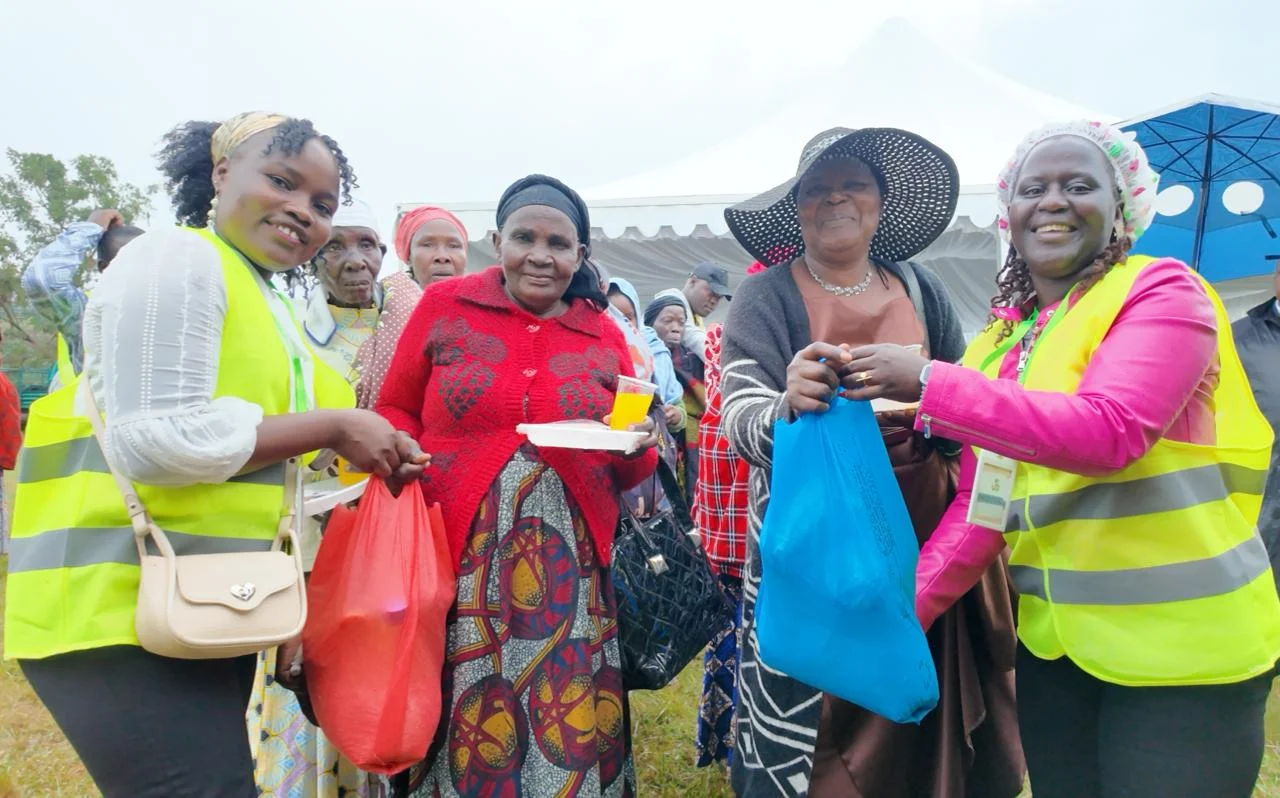
For many widows across Kenya, loss has often been followed by silence, economic hardship, social exclusion, and the slow erosion of dignity. But over the past three years, a quietly transformative initiative spearheaded by Raymond Omollo has been rewriting that story, one household, one group, and one community at a time.
What began as a targeted empowerment effort has grown into a KSh200 million-plus investment in human resilience. The Widows Empowerment Program has reached 377 organized widow groups across 13 counties, delivering direct financial support to 22,620 widows. Yet early lessons reshaped its direction: money alone was not enough.
“A grant can ease pressure, but it doesn’t rebuild a life,” Omollo often notes. That understanding pushed the program beyond cash disbursements into comprehensive, practical interventions designed to restore stability, dignity, and opportunity.
Across counties from Kabondo Kasipul to Turbo, Uriri to Mwala, the program has constructed 26 permanent houses for widows living in extreme vulnerability. These are not symbolic gestures but solid, lived-in homes—each furnished so that “a house feels like a home.” For women who had spent years in unsafe or temporary shelters, the impact has been immediate and profound.
Water access, another daily burden, has been addressed through the installation of 5,000-litre water tanks in communities such as Wagwe South and Wedewo. For many beneficiaries, this single intervention has reclaimed hours previously spent fetching water, time now redirected to farming, small businesses, or rest.
The program has also focused on widows living with disabilities, an often invisible group within an already marginalised population. Eight women, including Teresa Wamboga in Kisumu East and Mama Perez Akinyi Okoth in Nyakach, received wheelchairs, restoring not only mobility but independence and dignity.
Community, the backbone of widow support systems, has not been overlooked. More than 2,200 chairs were donated to 44 widow groups, ensuring that meetings, savings circles, and communal gatherings happen with dignity.
“Dignity,” Omollo says, “includes having a proper place to sit when your community comes together.”

Economic sustainability remains a central pillar of the program. Widow-run bakeries, sewing cooperatives, and small enterprises across Nyanza, Central, Eastern, and Rift Valley regions have received targeted support. In parallel, 69 groups have participated in tree-planting initiatives, creating long-term income through agroforestry while strengthening environmental resilience.
Education, often the first casualty of household disruption, has been aggressively protected. Through the German Program, 601 students from widow-led families have been supported to attend Tom Mboya University. In addition, books have been donated to 10 schools, reinforcing the belief that empowering widows also means securing the futures of their children.
Behind the statistics are lives with names and stories. Rose Achieng’ Odhiambo of Karachuonyo. Dorcas Achieng’ Osewe in Kabondo Kasipul. Zainabu Anyango Otieno in Ugenya. Consolata Adongo in Homa Bay Town. These are not abstract beneficiaries but women whose homes have been rebuilt, whose livelihoods have stabilised, and whose sense of worth has been restored.
What stands out most, according to those involved in the program, is the systematic resilience of these women. Given structure, trust, and sustained support, they have not merely survived—they have organised, invested, and lifted one another.
This is why Omollo is clear that the initiative is not charity. It is a long-term, data-driven investment in community transformation. Every one of the 377 widow groups has received financial backing. Every intervention, from housing and water to education and enterprise, has been designed to compound impact over time.
As the program enters its next phase, the commitment remains unchanged.
“We’re in this for the long haul,” Omollo says. And with thousands of lives already transformed, the evidence suggests that this model—grounded in dignity, sustainability, and accountability—is not only working, but setting a new standard for social empowerment in Kenya.
Read: Perfect Valentine Gift: Inside PS Raymond Omollo’s Program Building Houses For Widows
>>> PS Omollo’s Programme Opens A New Chapter of Hope for Widow in Sakwa









Leave a comment